
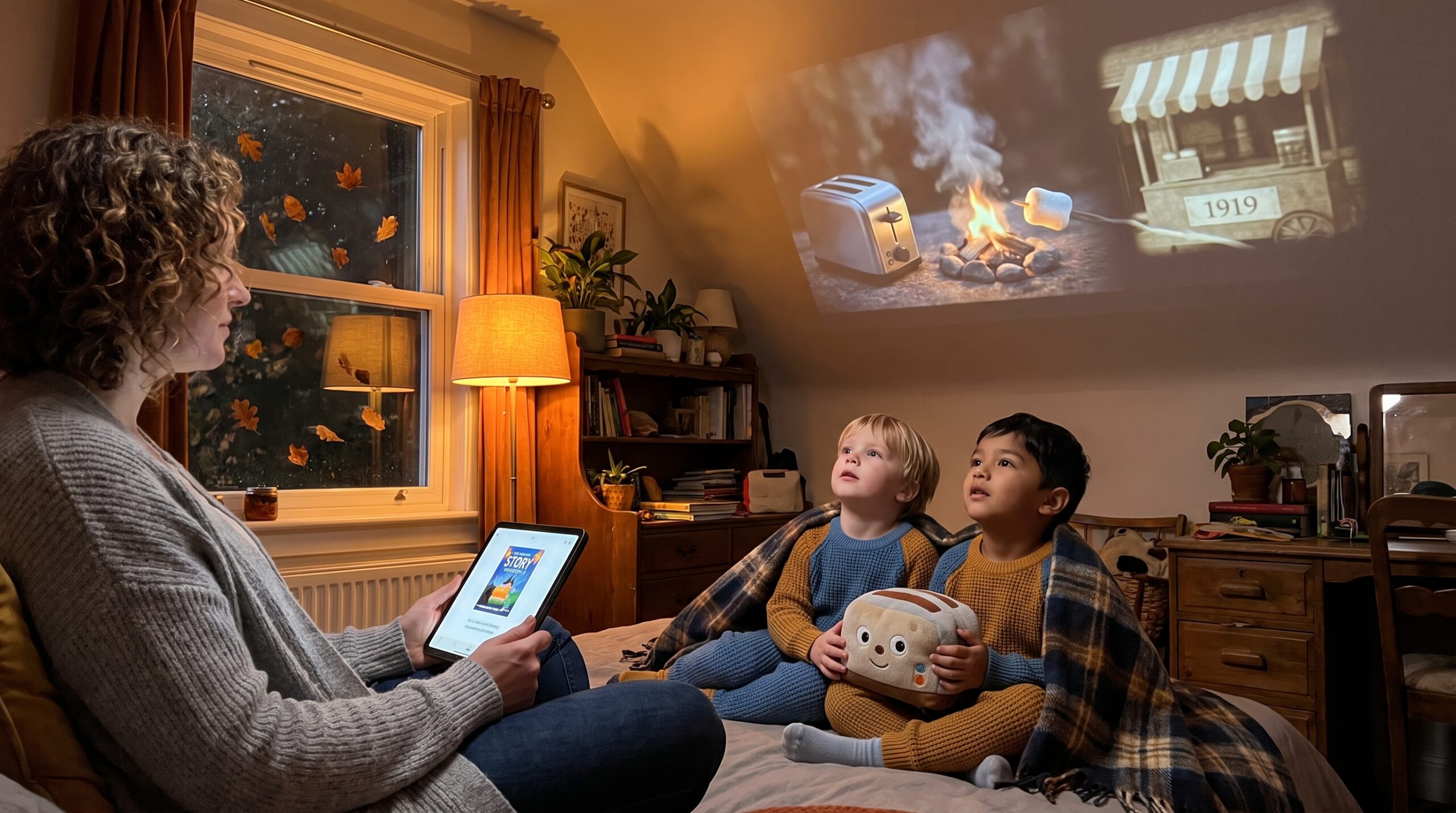
The toaster invention for kids feels like a tiny miracle. Today it brightens mornings and sparks small curiosities. This post looks at the toaster’s history, how it works, and simple care tips. Read on for friendly facts and playful details.
Toaster invention for kids: a short timeline
People toasted bread over open flame for centuries. Later, electric toasters appeared in homes during the late 1800s and early 1900s. Then, in 1919, Charles Strite patented the pop-up toaster. That design helped sliced bread and breakfast rituals become widespread. Since then, designers made long-slot models, toaster ovens, conveyor units, and smart toasters. Each change made mornings simpler and more delightful. In fact, in 2024, 76.81 million U.S. households used a toaster at least once each week, highlighting its role in daily life.
How a toaster works
Most toasters use nichrome wire as a heating element. When electricity flows, the wire heats and gives off infrared energy. As a result, the bread surface browns. Timers or thermostats, like bimetallic strips, control the heating time. In pop-up models a spring lifts the carriage when the cycle ends. The browning comes from the Maillard reaction, which creates toasty flavor and aroma.
Tiny science, simply told
The Maillard reaction starts around 140 to 165 degrees Celsius. For example, it is similar to roasting marshmallows. Also, thickness and moisture change how bread browns. Thinner slices toast faster. Thicker slices take longer and may stay soft inside.
Common types and controls
Toasters come in many shapes. Choose the kind that fits your bread and routine. Here are common types and controls:
- Pop-up two-slice and four-slice toasters for quick breakfasts
- Long-slot toasters for artisan and homemade bread
- Toaster ovens for baking, broiling, and small trays
- Conveyor and commercial toasters for food service
Typical controls include a browning dial, cancel button, bagel and reheat settings, and a removable crumb tray. The global toaster market reached a value of USD 4.6 billion in 2024 and is projected to grow to USD 5.1 billion by 2026, indicating the increasing demand for these kitchen essentials.
Safety, care, and simple maintenance
Keep children supervised around hot appliances. Always unplug a toaster before cleaning. Never use metal tools inside slots. Empty the crumb tray often to reduce fire risk. If bread jams, power off and let the toaster cool before trying to remove it. Also check the cord regularly for wear.
Buying tips
First, match slot width to your favorite bread. Next, look for automatic shutoff and a removable crumb tray. Also consider replaceable parts for longer life. Typical toasters draw between 800 and 1500 watts. The popularity of smart toasters is rising; in 2023, smart toaster launches constituted 12% of new models. Finally, recycle old appliances responsibly.
Simple curiosity activity for kids
Under close adult supervision, try a quick toast test. Toast one thin slice and one thick slice at the same setting. Then compare their color and smell. You will notice differences fast. This small experiment makes the science of toast easy and fun.
Toppings and small traditions
Across English-speaking cultures, toast gets butter and jam, marmalade, peanut butter, or modern avocado smash. Toast shows how food and habit make tiny cultural heroes. It also gives families a warm, shared morning ritual.
Read or listen to a story about Toaster now: Read or listen to a story about Toaster now: For 3-5 year olds, For 6-8 year olds, For 8-10 year olds, and For 10-12 year olds.
Explore Storypie for more cozy characters and gentle narration. Also, try the app to play a short eight-minute story tonight. Sweet dreams and bright mornings await.









