
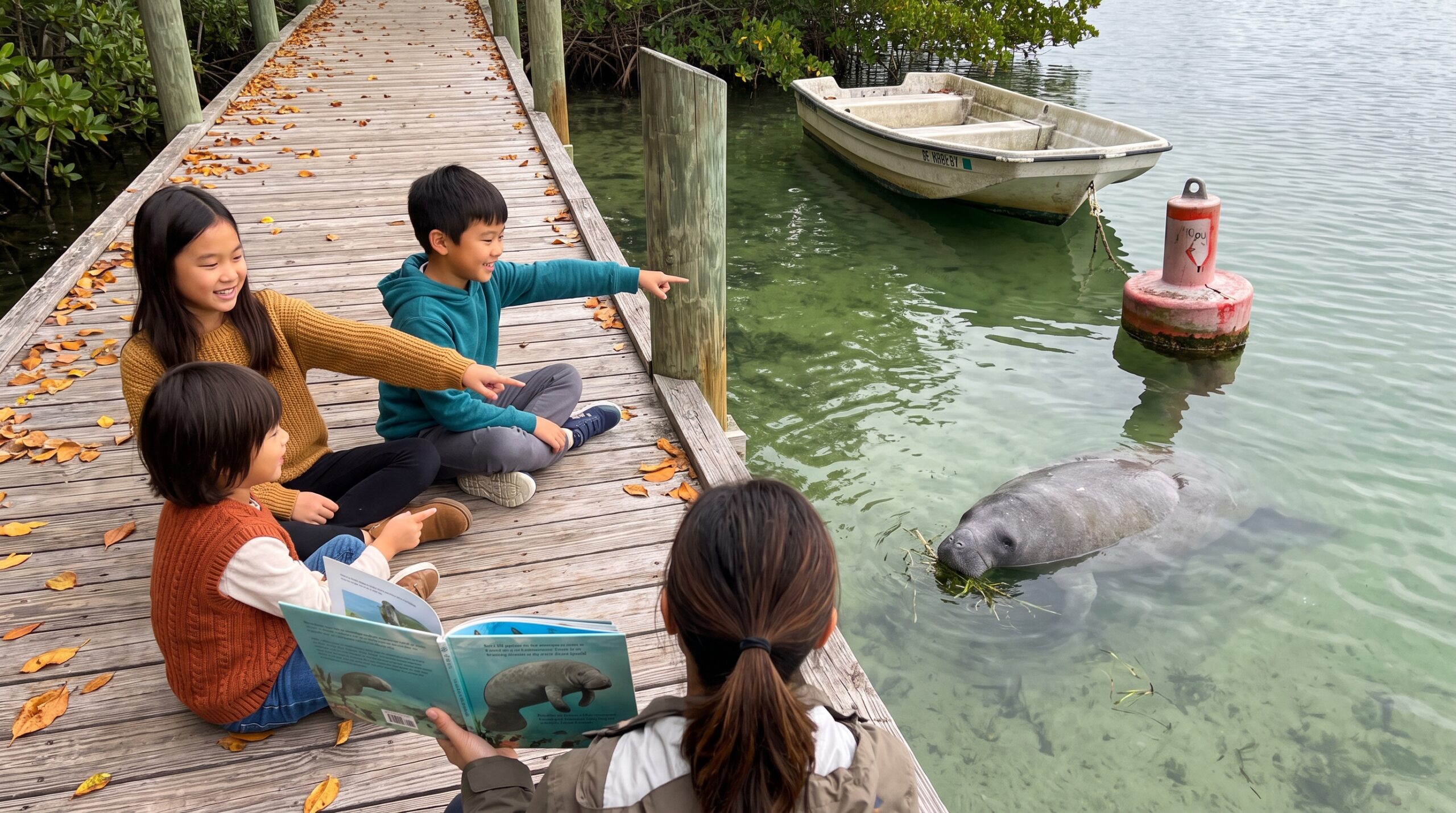
The West Indian manatee is a gentle sea cow that grazes in warm, shallow water. These wrinkled, whiskered mammals use paddle-shaped tails to move and flexible split lips to grab plants. Adults often reach nine to ten feet long and can weigh several hundred to about a thousand pounds. They can live for decades, slow and snuggly and surprisingly resilient. The current range-wide population estimate for the West Indian manatee is at least 13,000 individuals, with at least 8,350 in Florida and fewer than 7,000 in the Antillean subspecies, highlighting the distribution dynamics of these gentle giants.
Who is the West Indian manatee?
The West Indian manatee includes two main groups: the Florida and the Antillean populations. They live in coastal bays, estuaries, rivers, springs, and shallow seas. You find them across the Caribbean, the Gulf of Mexico, and the southeastern United States, especially Florida. In winter they need warm water, so they gather at springs or warm outflows to stay cozy. Recent aerial surveys estimated that the statewide abundance of Florida manatees was approximately 9,790 individuals, indicating ongoing monitoring and conservation efforts in this region.
What they eat and where they live
Manatees are herbivores. A single adult can eat large amounts of seagrass and other water plants every day. Because they trim beds, seagrass often grows back healthier. Mothers teach calves feeding spots and migration routes. Manatees surface often to breathe and swim slowly most of the time, but they can dash faster when needed. Their teeth keep replacing through life to handle a plant-rich diet. Unfortunately, between December 1, 2020, and December 31, 2022, an Unusual Mortality Event along Florida’s Atlantic coast resulted in 1,337 recorded manatee deaths, with 88% of partially evaluated cases showing malnutrition, highlighting the urgent challenges they face in their habitat.
Why the West Indian manatee matters
As gentle grazers, manatees help keep seagrass beds healthy. Healthy beds support fish nurseries, stabilize sediments, and improve water quality. In short, manatees quietly help coastal life in big ways. People who love nature often call them gentle giants for good reason.
Threats and conservation
Unfortunately, human activity can harm manatees. Speeding boats, habitat loss, and discarded fishing line can injure or entangle them. Cold snaps, harmful algal blooms, and coastal development also pose risks. In 2024, Florida recorded 565 manatee mortalities statewide, which was below the five-year average of 739 deaths, including 154 perinatal calf deaths, surpassing the previous high of 129 in 2013. Because of these threats, manatees are considered vulnerable.
Conservation efforts include boat speed zones, protecting warm-water refuges, rescue and rehab programs, and seagrass restoration. Public education plays a big role too. Small family actions help a lot. For example, obey no-wake zones, secure trash, and support local conservation groups.
Safe viewing tips for families
- Observe from shore or a quiet kayak at a distance.
- Follow local boat speed limits and marked manatee zones.
- Never feed, touch, chase, or corner a wild manatee.
- Use binoculars or a zoom lens for photos.
Kid glossary and quick activities
- Seagrass: Underwater plants manatees eat.
- Estuary: Where rivers meet the sea.
- Calf: A baby manatee.
- Vulnerable: At risk of becoming rarer.
- Refuge: A warm safe place for manatees in winter.
- Propeller: The spinning part of a boat that can hurt manatees.
- Entanglement: When manatees get caught in lines or nets.
Places to spot manatees include Crystal River, Blue Spring State Park, the Everglades, the Bahamas, and parts of the Caribbean. A study published in 2022 estimated that Puerto Rico’s Antillean manatee population ranged between 60 and 250 individuals, with broader estimates suggesting an average of about 4,100 individuals, underscoring the need for conservation efforts in these regions. Always follow local guide rules and stay safe.
Read or listen to a story about West Indian Manatee now: For 3-5 year olds, For 3-5 year olds, For 6-8 year olds, For 8-10 year olds, and For 10-12 year olds.
Activity ideas
Draw seagrass beds, map a winter migration, or craft a cuddly manatee model that shows how they keep seagrass healthy. Ask children, How would you help a manatee if its home got cold or its food disappeared? These questions spark caring and curiosity.
Want stories to share with kids? Get the Storypie app for gentle, age-tailored tales and listen-along fun: Get the Storypie app.
Final thought: Manatees are gentle, slow, and quietly mighty. They remind us that small actions often make a big difference.









