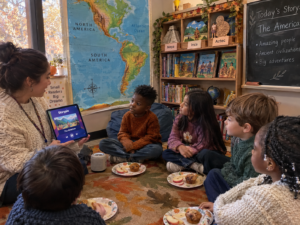
World War I for children can sound big and scary. Use simple facts and calm words to begin. For example, say it was a global war from 1914 to 1918. Then explain that countries grouped into the Allies and the Central Powers. Also mention the immediate trigger: the assassination of Archduke Franz Ferdinand on 28 June 1914.
World War I for children: the basics
Where the war was fought matters when you explain it. The Western Front ran across northern France and Belgium, with trench systems extending roughly 475 miles (about 764 km) from the English Channel to the Swiss Alps. Meanwhile, the Eastern Front moved across eastern Europe. Also, fighting happened at Gallipoli, in the Middle East, in Africa, and at sea.
Life in the trenches was dull, muddy, and dangerous. Soldiers faced artillery, machine guns, and gas. New machines changed warfare. For example, tanks appeared in 1916, aircraft scouted and fought, and submarines menaced ships. The total number of military and civilian casualties in World War I was around 40 million, with 20 million deaths and 21 million wounded, highlighting the immense human cost of the war.
Key moments and what they meant
The war had several turning points that show its shape. First, the First Battle of the Marne stopped a quick victory in 1914. Then Verdun and the Somme in 1916 became long and costly battles, with the Battle of the Somme lasting 140 days and resulting in more than a million casualties while only moving the front lines six miles. Also, Passchendaele in 1917 is remembered for mud and loss.
Next, the United States joined in 1917 and Russia left after the 1917 revolution. Finally, the fighting on the Western Front ended with an armistice on 11 November 1918. After that, the Treaty of Versailles was signed on 28 June 1919, although the U.S. Senate refused to ratify the treaty. The world felt very different.
Human cost and change
Millions of soldiers and civilians died or were wounded. Approximately 60 million European military personnel were mobilized between 1914 and 1918, with around 8 million killed and 15 million seriously injured. Empires collapsed and new countries and borders appeared. Also, the League of Nations began as a new idea for peace. Altogether, the war reshaped politics, maps, and daily life.
Remembrance, small human stories, and hope
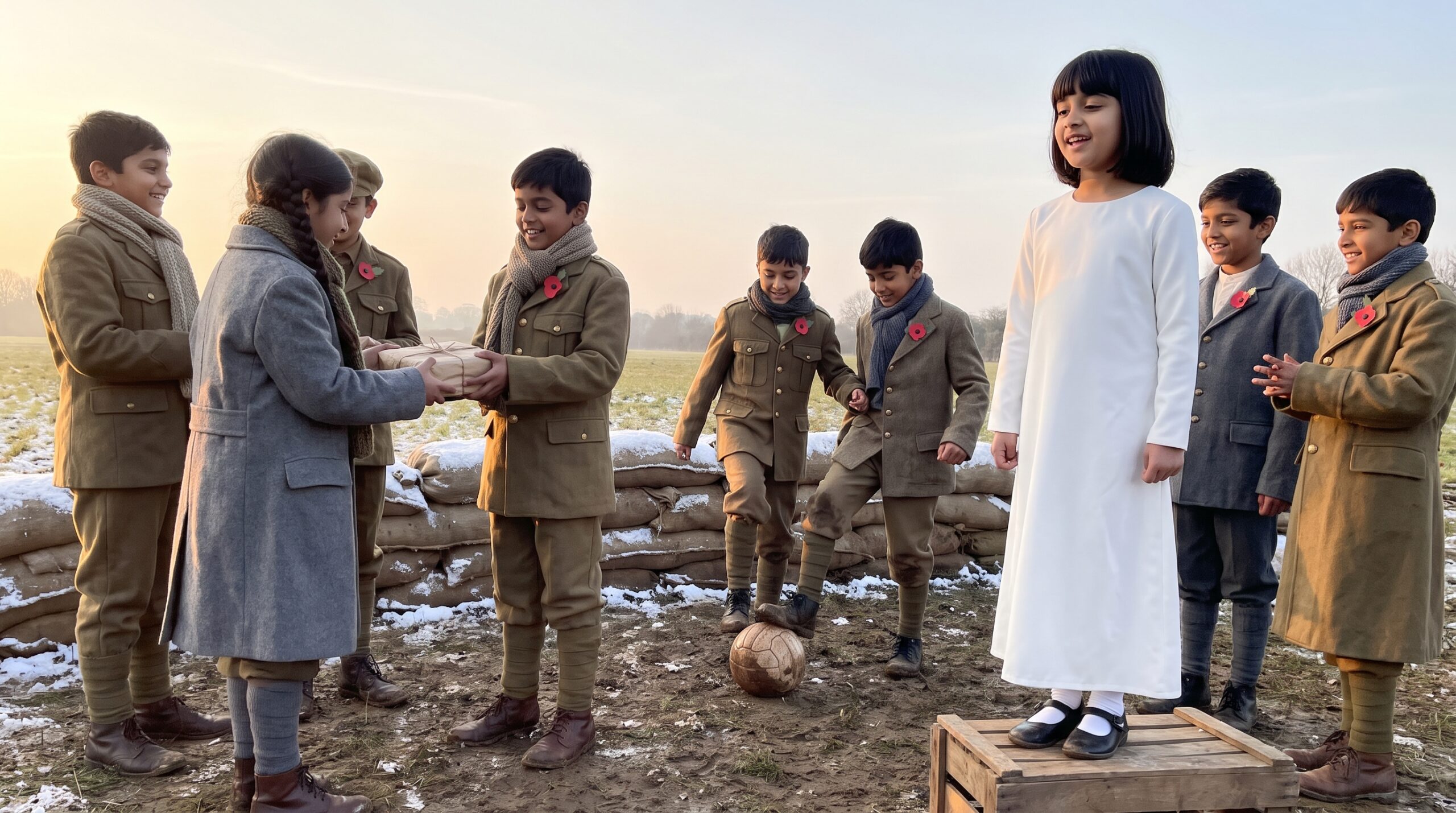
Remembrance helps children connect without horror. For example, explain Armistice Day and show the poppy from the poem In Flanders Fields. Also, share gentle human stories like the 1914 Christmas Truce. During that small pause in fighting, troops sang carols and in some places met and played football. That moment teaches empathy, calm, and courage.
Read or listen to a story about World War I now: For 3-5 year olds, For 3-5 year olds, For 6-8 year olds, For 8-10 year olds, and For 10-12 year olds.
Practical ideas for parents
Use short, age-appropriate facts when you begin. Also avoid graphic detail and keep your tone calm. Ask one simple question after reading. For example, ask, How do you think they felt when they met soldiers from the other side?
Try small activities that feel gentle. For instance, make a paper poppy together or visit a local memorial. Also, read a short letter from a soldier or map where soldiers came from and where battles happened.
At Storypie we released a story about Albie and the 1914 Christmas Truce. It shares summer hope and quiet courage. So listen this afternoon with your child. Tip: ask one calm question afterward to build empathy. You can also get the app at Storypie.
Final thought
History can be taught with gentle care. A short story, a paper poppy, and a calm question help children learn about bravery, loss, and the wish for peace. Above all invite your child to listen, wonder, and talk about World War I for children in a safe way.