English

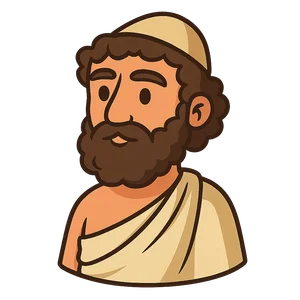
Aristarchus of Samos
Aristarchus of Samos was an ancient Greek astronomer and mathematician who is credited with being the first…
Reads at Grades 6–8 Listens at Grades 4–8
Print & create
Answer keys·No prep·Free with an account
28 worksheets · answer keys · full story · quiz · Ages 10-12 · CEFR B2
Plus adds 244,000+ more stories in 27 languages, audio for every one, and printables for all of them.
Just want Aristarchus of Samos?
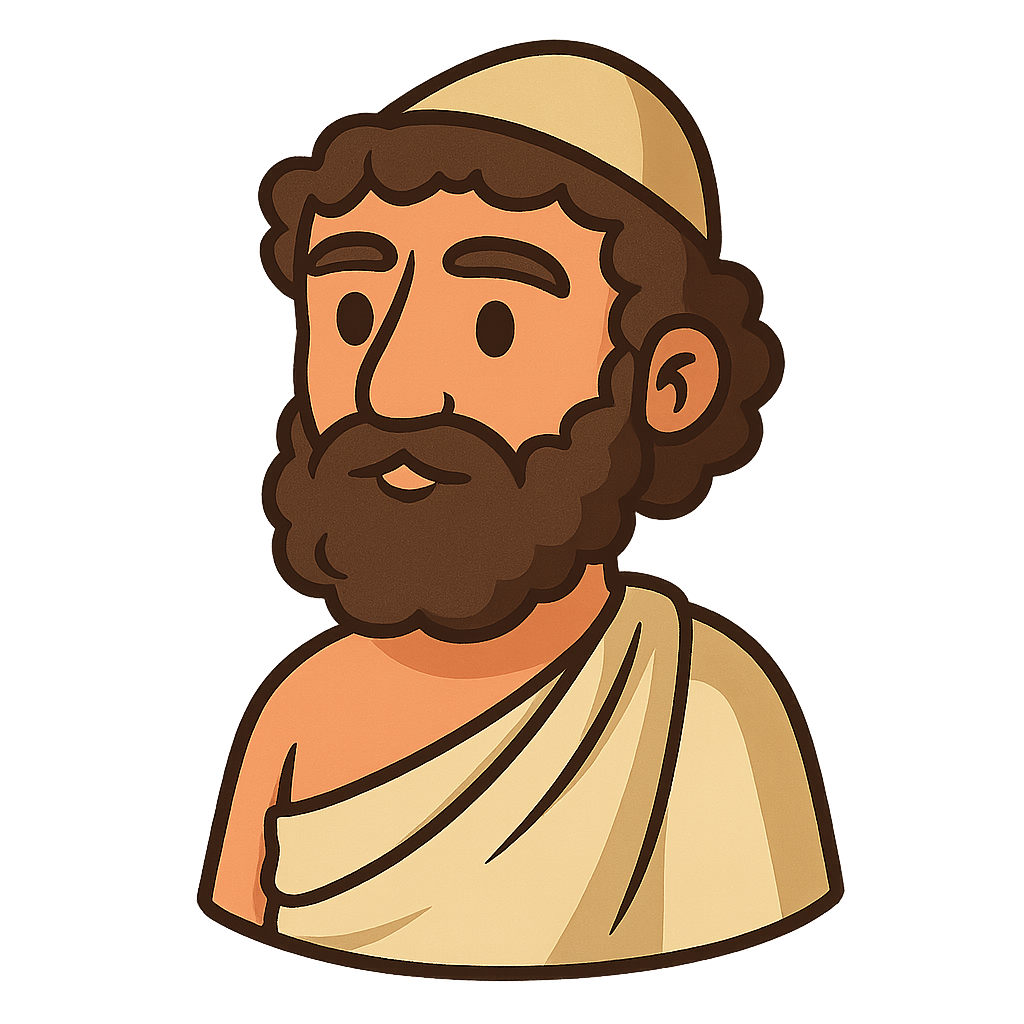
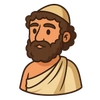
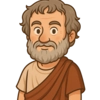
Hello, I am Aristarchus of Samos. My story begins on the beautiful Greek island of Samos, where I was born around the year 310 BCE. Growing up surrounded by the sparkling Aegean Sea, my greatest fascination was not with the world around me, but with the world above. Every night, I would gaze at the sky, watching the steady march of the stars and the changing face of the Moon. I wondered about the brilliant Sun that warmed our days. In my time, nearly everyone believed the same thing: that our Earth was the fixed, unmoving center of everything. They taught that the Sun, the Moon, and all the stars spun around us in perfect circles. This idea, known as the geocentric model, seemed to make sense, but my curious mind was filled with questions that this model could not answer.
My thirst for knowledge eventually led me on a great journey away from my island home. I traveled to the magnificent city of Alexandria in Egypt, which in my time was the greatest center of learning in the entire world. It was a place filled with scholars, scientists, and the largest library imaginable. Around 287 BCE, I had the incredible opportunity to study with a wise and respected teacher named Strato of Lampsacus. He and the other thinkers in Alexandria taught me something vital: to truly understand the universe, we could not rely only on what we see or what we are told. We had to use the powerful tool of mathematics, especially geometry, to measure the world and uncover its secrets. This idea of using numbers to find truth, rather than just guessing, became the guiding principle of my life's work.
Aristarchus of Samos: The Man Who Placed the Sun at the Center
Hello, I am Aristarchus of Samos. My story begins on the beautiful Greek island of Samos, where I was born around the year 310 BCE. Growing up surrounded by the sparkling Aegean Sea, my greatest fascination was not with the world around me, but with the world above. Every night, I would gaze at the sky, watching the steady march of the stars and the changing face of the Moon. I wondered about the brilliant Sun that warmed our days. In my time, nearly everyone believed the same thing: that our Earth was the fixed, unmoving center of everything. They taught that the Sun, the Moon, and all the stars spun around us in perfect circles. This idea, known as the geocentric model, seemed to make sense, but my curious mind was filled with questions that this model could not answer.
My thirst for knowledge eventually led me on a great journey away from my island home. I traveled to the magnificent city of Alexandria in Egypt, which in my time was the greatest center of learning in the entire world. It was a place filled with scholars, scientists, and the largest library imaginable. Around 287 BCE, I had the incredible opportunity to study with a wise and respected teacher named Strato of Lampsacus. He and the other thinkers in Alexandria taught me something vital: to truly understand the universe, we could not rely only on what we see or what we are told. We had to use the powerful tool of mathematics, especially geometry, to measure the world and uncover its secrets. This idea of using numbers to find truth, rather than just guessing, became the guiding principle of my life's work.
In Alexandria, I dedicated myself to solving one of the greatest puzzles of the cosmos: how big were the Sun and Moon, and how far away were they? I didn't have a telescope, so I had to use my mind, my eyes, and my knowledge of geometry. I carefully observed the Moon's phases, realizing that when the Moon is exactly half-full, the Earth, Moon, and Sun form a right-angled triangle. By measuring the angle, I could begin to calculate the distances. I also studied eclipses, watching as the Earth’s shadow fell upon the Moon. Through years of these observations and meticulous calculations, I made an astonishing discovery. My measurements, though not perfectly accurate by today's standards, all pointed to one incredible conclusion: the Sun was enormous, many times larger than our own Earth. This single, powerful fact changed my entire understanding of the heavens and set me on a path to a radical new idea.
My discovery that the Sun was so immense made the old geocentric model feel wrong. How could such a gigantic object like the Sun circle around our much smaller Earth? It seemed completely illogical. My reasoning led me to propose a different arrangement for the universe. I suggested that the Sun, being the largest and most powerful body, was the true center. It was our Earth, I argued, that traveled in a circle around the giant Sun. This idea is now called the heliocentric model. I also reasoned that the stars, which never seemed to change their positions relative to one another, must be incredibly far away. This was a revolutionary concept, and it went against centuries of belief. As you might imagine, very few people accepted my theory during my lifetime. It was too different, too strange, and it challenged the very foundation of how people saw their place in the universe.
I lived to be about 80 years old, passing away around 230 BCE. For a very long time, my sun-centered idea was mostly ignored and forgotten, a curious footnote in the history of astronomy. But great ideas have a way of surviving. More than 1,700 years after my time, another brilliant astronomer named Nicolaus Copernicus rediscovered my work. He developed the heliocentric theory further, and it finally began to change the world. My story is remembered not just for the idea itself, but for the power of using mathematics and observation to ask big questions. It shows that even if the world isn't ready for your answers, the search for truth is always a worthy journey.
Wow facts
About
Aristarchus of Samos was an ancient Greek astronomer and mathematician who is credited with being the first person to propose a heliocentric model of the universe, placing the Sun at the center.
Take a Quiz
Question 1 of 5
Based on the story, what was Aristarchus's most important and radical idea?
Explore next

Want to do even more?
Go beyond exploring. Unlock tools that turn every story into real learning.

Storypie Plus for families
Full stories, quizzes, and printables. Nights and car rides, sorted.
- Unlimited audio stories
- Create Mode: your child stars in the story
- Offline downloads
- Printable worksheets & coloring pages

Why Storypie for Schools
Students engaged. Prep in seconds. Evenings back to you.
- Worksheets & Quizzes
- Classroom Management
- Formative Assessment
- Custom Curriculum & Lesson Plans
- 27 Languages

Why Storypie for Homeschool
Curriculum done. They'll ask for more. Hours back in your day.
- Worksheet Generator
- First-Person Audio Stories
- Built-in Comprehension Quizzes
- Custom Curriculum & Lesson Plans
- Print & Go Activities