English

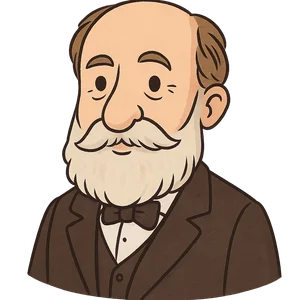
Camille Saint-Saëns
Camille Saint-Saëns was a French composer, organist, conductor, and pianist of the Romantic era.
Reads at Grades 6–8 Listens at Grades 4–8
Print & create
Answer keys·No prep·Free with an account
28 worksheets · answer keys · full story · quiz · Ages 10-12 · CEFR B2
Plus adds 279,000+ more stories in 27 languages, audio for every one, and printables for all of them.
Just want Camille Saint-Saëns?
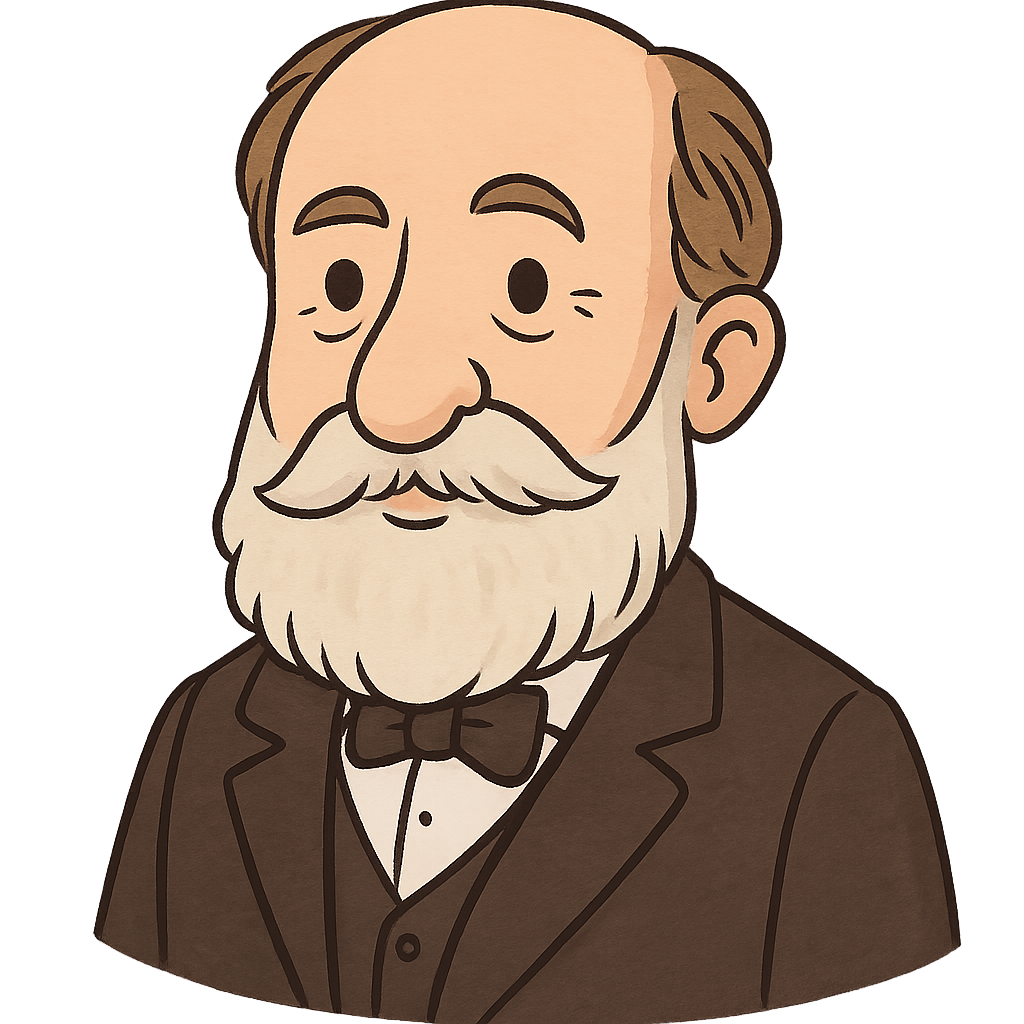
Hello, my name is Camille Saint-Saëns, and my life was filled with music from the very beginning. I was born in the beautiful city of Paris, France, on October 9th, 1835. From my earliest days, it was clear that music was my language. I was what people call a child prodigy, which meant I had a natural talent that was unusual for someone so young. I had perfect pitch, meaning I could recognize or sing any musical note without a reference. My great-aunt began teaching me the piano when I was just two-and-a-half years old, and I took to it instantly. I wasn't just playing music; I was creating it. On March 22nd, 1839, before I had even turned four, I composed my very first piece for the piano. As I grew, so did my skills. In 1846, when I was ten years old, I gave my first public concert. It was a very important night for me. I played challenging pieces by famous composers like Mozart and Beethoven, and I played them all from memory. The audience was amazed. To show them what I could do, I offered to play any of Beethoven’s 32 piano sonatas, a huge collection of difficult music, as an encore, without any sheet music to guide me. That night set the stage for the rest of my life in music.
My early success led me to seek a more formal education. In 1848, I entered the prestigious Paris Conservatoire, one of the best music schools in the world. There, I focused on studying the organ and composition, learning how to build grand pieces of music from scratch. I was a curious student and loved learning about music from all eras, especially the complex and beautiful works of older composers like Johann Sebastian Bach. His music had a structure and logic that I deeply admired. My hard work paid off, and in 1853, I earned my first significant job as the organist at the Church of Saint-Merri in Paris. This was a wonderful experience, but an even greater opportunity came in 1857. That year, I was appointed the organist at La Madeleine, one of the most famous and important churches in the city. It was an incredible honor. Many people came to hear me play, including other famous musicians. One day, the great composer and pianist Franz Liszt heard me perform. He was so impressed that he later called me the best organist in the world. His words were a great encouragement and confirmed that I was on the right path.
Camille Saint-Saëns: A Musical Life
Hello, my name is Camille Saint-Saëns, and my life was filled with music from the very beginning. I was born in the beautiful city of Paris, France, on October 9th, 1835. From my earliest days, it was clear that music was my language. I was what people call a child prodigy, which meant I had a natural talent that was unusual for someone so young. I had perfect pitch, meaning I could recognize or sing any musical note without a reference. My great-aunt began teaching me the piano when I was just two-and-a-half years old, and I took to it instantly. I wasn't just playing music; I was creating it. On March 22nd, 1839, before I had even turned four, I composed my very first piece for the piano. As I grew, so did my skills. In 1846, when I was ten years old, I gave my first public concert. It was a very important night for me. I played challenging pieces by famous composers like Mozart and Beethoven, and I played them all from memory. The audience was amazed. To show them what I could do, I offered to play any of Beethoven’s 32 piano sonatas, a huge collection of difficult music, as an encore, without any sheet music to guide me. That night set the stage for the rest of my life in music.
My early success led me to seek a more formal education. In 1848, I entered the prestigious Paris Conservatoire, one of the best music schools in the world. There, I focused on studying the organ and composition, learning how to build grand pieces of music from scratch. I was a curious student and loved learning about music from all eras, especially the complex and beautiful works of older composers like Johann Sebastian Bach. His music had a structure and logic that I deeply admired. My hard work paid off, and in 1853, I earned my first significant job as the organist at the Church of Saint-Merri in Paris. This was a wonderful experience, but an even greater opportunity came in 1857. That year, I was appointed the organist at La Madeleine, one of the most famous and important churches in the city. It was an incredible honor. Many people came to hear me play, including other famous musicians. One day, the great composer and pianist Franz Liszt heard me perform. He was so impressed that he later called me the best organist in the world. His words were a great encouragement and confirmed that I was on the right path.
My life became a whirlwind of activity as a composer, performer, and teacher. I felt a deep need to create, and I wrote music in nearly every style you can imagine. I composed grand operas, including my most famous one, Samson and Delilah. I wrote powerful symphonies for full orchestras, concertos that showcased the skill of solo instrumentalists, and many smaller pieces for piano and organ. I didn't just want to create my own music; I also wanted to support other French composers. The music world at the time was dominated by German composers, and I felt it was important for French music to have its own voice. So, in 1871, I helped start a group called the Société Nationale de Musique. Our goal was to provide a stage for new and exciting works by French composers. My adventures weren't limited to France. I loved to travel and share my music with the world. In 1906, I became one of the first famous composers to tour America, conducting and performing my own works for new audiences. A few years later, in 1908, I explored another new frontier: cinema. I wrote one of the very first original movie scores for a silent film called The Assassination of the Duke of Guise, proving that music could add powerful emotion to storytelling on screen.
Of all the music I wrote, the story behind my most famous piece is perhaps the most surprising. In 1886, I decided to take a break from my more serious work and compose something just for fun. I created a musical suite I called Le Carnaval des Animaux, or The Carnival of the Animals. It was meant to be a private joke for a concert with my friends. Each movement represented a different animal, and I used music to paint a picture of them. There was a majestic march for the lion, a clumsy waltz for the elephants, and I even made fun of my own work by having skeletons dance to a tune from my composition, Danse Macabre. I wrote it all very quickly and had a wonderful time doing it. However, I was worried that if this playful, silly piece became public, it would harm my reputation as a serious composer. I didn't want people to think of me as the man who wrote funny animal music. Because of this, I forbid it from being published or performed publicly while I was alive. The only exception I made was for one beautiful, gliding melody for the cello called 'The Swan,' which I allowed my friends to play.
I lived a very long and productive life, completely dedicated to music. I traveled across the world, from Europe to America and even to North Africa, performing and composing until the very end. I lived to be 86 years old and passed away on December 16th, 1921, while visiting Algiers. My work served as a bridge between the emotional Romantic era of the 19th century and the new, modern sounds of the 20th century. And what about that little musical joke I was so worried about? After my death, The Carnival of the Animals was finally published and performed for everyone to hear. It became my most popular and beloved work. It is a wonderful irony that the piece I tried to hide is now the one that introduces children all over the world to the joy and magic of classical music, ensuring my music will be remembered for generations to come.
Wow facts
About
Camille Saint-Saëns was a French composer, organist, conductor, and pianist of the Romantic era. A remarkable child prodigy, he is best known for works including 'The Carnival of the Animals,' 'Danse Macabre,' 'Samson and Delilah,' and 'Symphony No. 3,' the 'Organ Symphony'.
Take a Quiz
Question 1 of 5
Why did Camille Saint-Saëns not want 'The Carnival of the Animals' to be performed publicly?
Explore next






Want to do even more?
Go beyond exploring. Unlock tools that turn every story into real learning.

Storypie Plus for families
Full stories, quizzes, and printables. Nights and car rides, sorted.
- Unlimited audio stories
- Create Mode: your child stars in the story
- Offline downloads
- Printable worksheets & coloring pages

Why Storypie for Schools
Students engaged. Prep in seconds. Evenings back to you.
- Worksheets & Quizzes
- Classroom Management
- Formative Assessment
- Custom Curriculum & Lesson Plans
- 27 Languages

Why Storypie for Homeschool
Curriculum done. They'll ask for more. Hours back in your day.
- Worksheet Generator
- First-Person Audio Stories
- Built-in Comprehension Quizzes
- Custom Curriculum & Lesson Plans
- Print & Go Activities