English

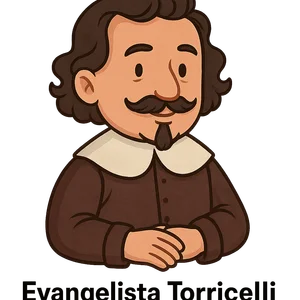
Evangelista Torricelli
Evangelista Torricelli was an Italian physicist and mathematician who was a student of Benedetto Castelli…
Reads at Grades 6–8 Listens at Grades 4–8
Print & create
Answer keys·No prep·Free with an account
28 worksheets · answer keys · full story · quiz · Ages 10-12 · CEFR B2
Plus adds 208,000+ more stories in 27 languages, audio for every one, and printables for all of them.
Just want Evangelista Torricelli?
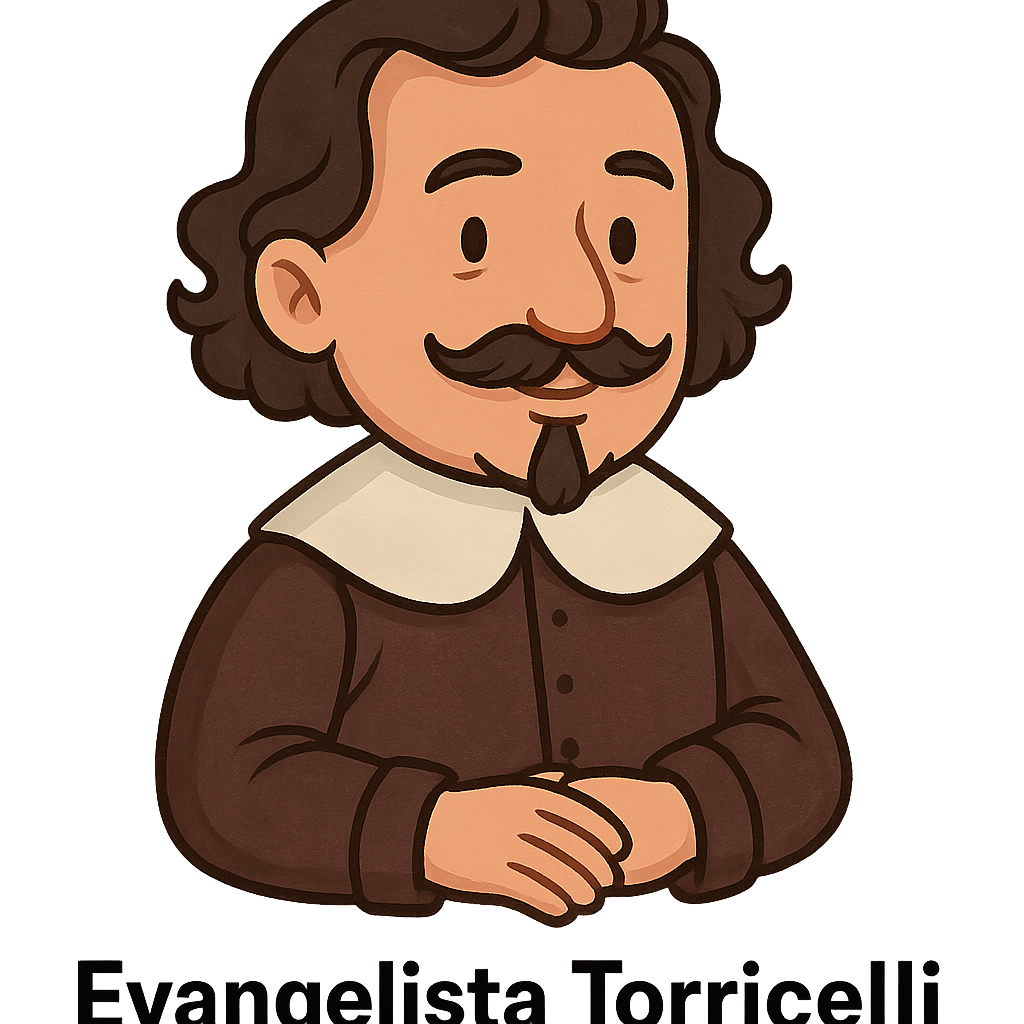
Hello, my name is Evangelista Torricelli, and I am a scientist and mathematician who discovered that the air all around us has weight. I was born on October 15th, 1608, in a town called Faenza, which is in the country we now call Italy. My life had a difficult start, as my father passed away when I was very young. Thankfully, my uncle, who was a monk, took me in and made sure I received a good education. From my earliest days, I was fascinated by mathematics and science. To me, solving a complex problem was like unlocking the secrets of the universe, one exciting puzzle at a time. This passion for understanding how the world worked would guide me for the rest of my life.
My studies eventually led me to move to Rome in 1627. There, I had the great fortune to study under Benedetto Castelli, a brilliant mathematician who himself had been a student of the legendary astronomer, Galileo Galilei. I spent hours reading Galileo’s writings about the motions of the planets and stars, and his work inspired me deeply. Feeling bold, I wrote my own paper on the principles of mechanics, building upon some of his ideas. In 1641, I sent it along with a letter to Galileo himself. I could hardly believe it when I heard back. Galileo had not only read my work but was so impressed that he invited me to come to Florence and work as his assistant. It was a dream come true.
I traveled to Arcetri, a village near Florence, in 1641 to meet my hero. The experience was bittersweet. Galileo was an old man by then, and he had lost his sight. He was also living under house arrest, confined to his home because his scientific ideas had challenged the authorities of the time. Despite these hardships, his mind remained incredibly sharp and curious. For the last three months of his life, I became his hands and eyes. I carefully recorded his final thoughts and helped him continue his work. After Galileo passed away in 1642, I was given a great honor. The Grand Duke of Tuscany, Ferdinando II de' Medici, appointed me to Galileo's old position as court mathematician, allowing me to continue my own scientific investigations.
Evangelista Torricelli: The Man Who Weighed the Air
Hello, my name is Evangelista Torricelli, and I am a scientist and mathematician who discovered that the air all around us has weight. I was born on October 15th, 1608, in a town called Faenza, which is in the country we now call Italy. My life had a difficult start, as my father passed away when I was very young. Thankfully, my uncle, who was a monk, took me in and made sure I received a good education. From my earliest days, I was fascinated by mathematics and science. To me, solving a complex problem was like unlocking the secrets of the universe, one exciting puzzle at a time. This passion for understanding how the world worked would guide me for the rest of my life.
My studies eventually led me to move to Rome in 1627. There, I had the great fortune to study under Benedetto Castelli, a brilliant mathematician who himself had been a student of the legendary astronomer, Galileo Galilei. I spent hours reading Galileo’s writings about the motions of the planets and stars, and his work inspired me deeply. Feeling bold, I wrote my own paper on the principles of mechanics, building upon some of his ideas. In 1641, I sent it along with a letter to Galileo himself. I could hardly believe it when I heard back. Galileo had not only read my work but was so impressed that he invited me to come to Florence and work as his assistant. It was a dream come true.
I traveled to Arcetri, a village near Florence, in 1641 to meet my hero. The experience was bittersweet. Galileo was an old man by then, and he had lost his sight. He was also living under house arrest, confined to his home because his scientific ideas had challenged the authorities of the time. Despite these hardships, his mind remained incredibly sharp and curious. For the last three months of his life, I became his hands and eyes. I carefully recorded his final thoughts and helped him continue his work. After Galileo passed away in 1642, I was given a great honor. The Grand Duke of Tuscany, Ferdinando II de' Medici, appointed me to Galileo's old position as court mathematician, allowing me to continue my own scientific investigations.
In Florence, a peculiar problem caught my attention. It was a practical puzzle known to the local miners and well-diggers. They used suction pumps to draw water out of the ground, but they had all discovered the same frustrating limit: no matter how powerful the pump, it could not lift water higher than about 10 meters. The accepted scientific idea of the day, which came from the ancient Greeks, was that 'nature abhors a vacuum,' meaning that nature would always rush to fill any empty space. According to this theory, the vacuum created by the pump was pulling the water up. But if that were true, why did the 'pull' stop at 10 meters? I began to suspect that this long-held belief was wrong and that we were all looking at the problem from the wrong direction. I wondered, what if something wasn't pulling the water up, but was instead pushing it from the outside?
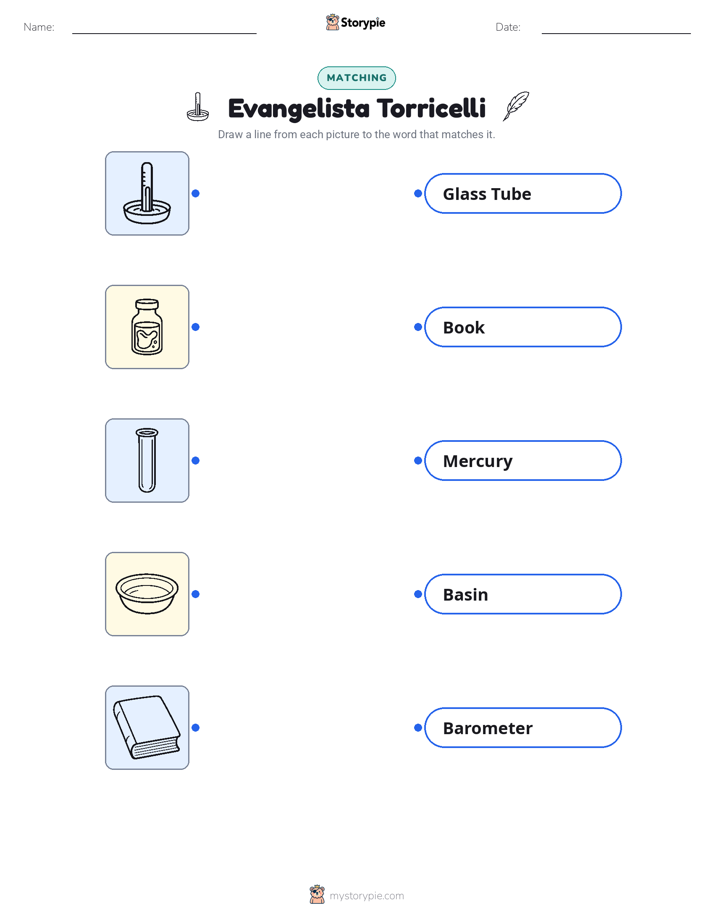
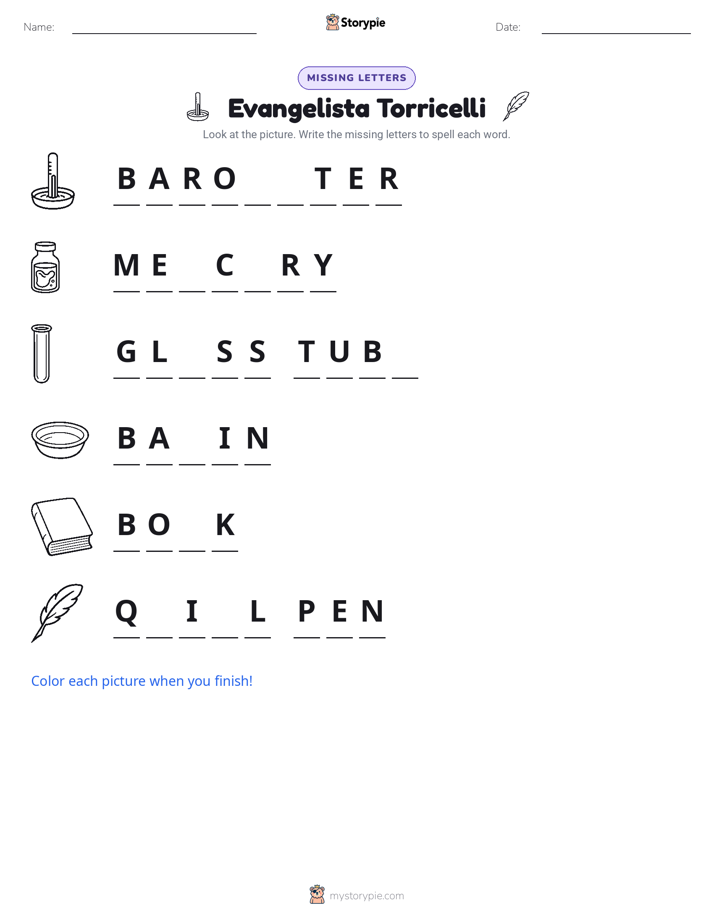
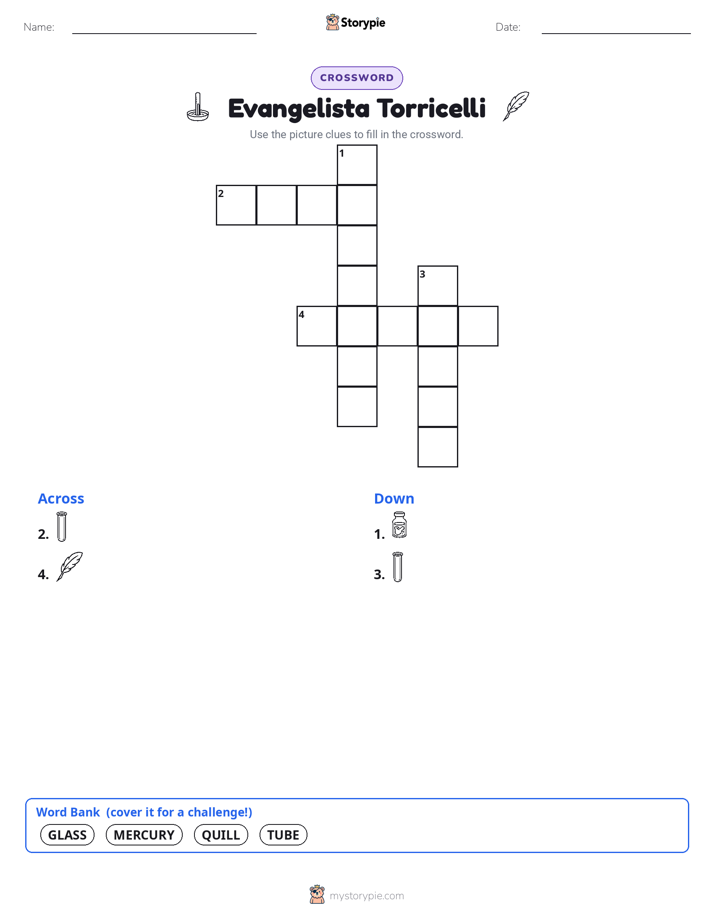
This led me to my great hypothesis. I proposed that we all live at the bottom of a vast 'sea of air'—what we now call the atmosphere—and that this ocean of air has weight. This weight presses down on everything, including the surface of the water in a well. To test my idea in 1643, I designed an experiment. Using a 10-meter tube for water would have been very difficult, so I chose a much denser liquid: mercury. Since mercury is about 14 times denser than water, I calculated that I would only need a much shorter tube. I took a glass tube that was about a meter long and sealed at one end, filled it completely with mercury, and then carefully turned it upside down in a basin also filled with mercury. Just as I predicted, some of the mercury flowed out of the tube, but it didn't all empty. The column of mercury stopped falling when it reached a height of about 76 centimeters. Above the mercury, at the sealed end of the tube, was an empty space. For the first time in history, we had created a sustained, man-made vacuum.
My experiment proved my hypothesis. The only thing that could be holding the heavy column of mercury up inside the tube was the immense weight of the air pressing down on the surface of the mercury in the open basin. This experiment demonstrated that the atmosphere exerts pressure. The device I had created, which could measure this pressure, soon became known as the barometer. I also observed that the height of the mercury in the tube would change slightly from one day to the next. I correctly concluded that these changes were caused by shifts in the atmosphere, a discovery that became the foundation for modern weather forecasting. While this was my most famous work, I also contributed to mathematics by studying geometric curves like the cycloid, and to physics, where I developed what is now called Torricelli's Law, a principle that describes the speed at which a fluid flows from an opening.
My time for discovery, however, was brief. I fell ill and my life ended in Florence on October 25th, 1647. I lived to be 39 years old. Though my life was not long, I am proud of the questions I asked and the answers I helped to uncover. I am remembered today for inventing the barometer, creating the first sustained vacuum, and proving that the invisible air all around us has tangible weight. My work helped to build a new foundation for science, and it is an honor that scientists named a unit of pressure, the 'torr,' after me, ensuring my name continues to be a part of the discoveries of the future.
Wow facts
About
Evangelista Torricelli was an Italian physicist and mathematician who was a student of Benedetto Castelli, a disciple of Galileo, and is best known for his invention of the barometer in 1643, though some sources suggest 1644.
Take a Quiz
Question 1 of 5
What was the main problem that Torricelli's barometer experiment was designed to solve?
Explore next




Want to do even more?
Go beyond exploring. Unlock tools that turn every story into real learning.

Storypie Plus for families
Full stories, quizzes, and printables. Nights and car rides, sorted.
- Unlimited audio stories
- Create Mode: your child stars in the story
- Offline downloads
- Printable worksheets & coloring pages

Why Storypie for Schools
Students engaged. Prep in seconds. Evenings back to you.
- Worksheets & Quizzes
- Classroom Management
- Formative Assessment
- Custom Curriculum & Lesson Plans
- 27 Languages

Why Storypie for Homeschool
Curriculum done. They'll ask for more. Hours back in your day.
- Worksheet Generator
- First-Person Audio Stories
- Built-in Comprehension Quizzes
- Custom Curriculum & Lesson Plans
- Print & Go Activities