English


Evangelista Torricelli
Evangelista Torricelli was an Italian physicist and mathematician who was a student of Benedetto Castelli…
Reads at Grades 3–5 Listens at Grades 1–5
Print & create
Answer keys·No prep·Free with an account
28 worksheets · answer keys · full story · quiz · Ages 8-10 · CEFR B1
Plus adds 208,000+ more stories in 27 languages, audio for every one, and printables for all of them.
Just want Evangelista Torricelli?
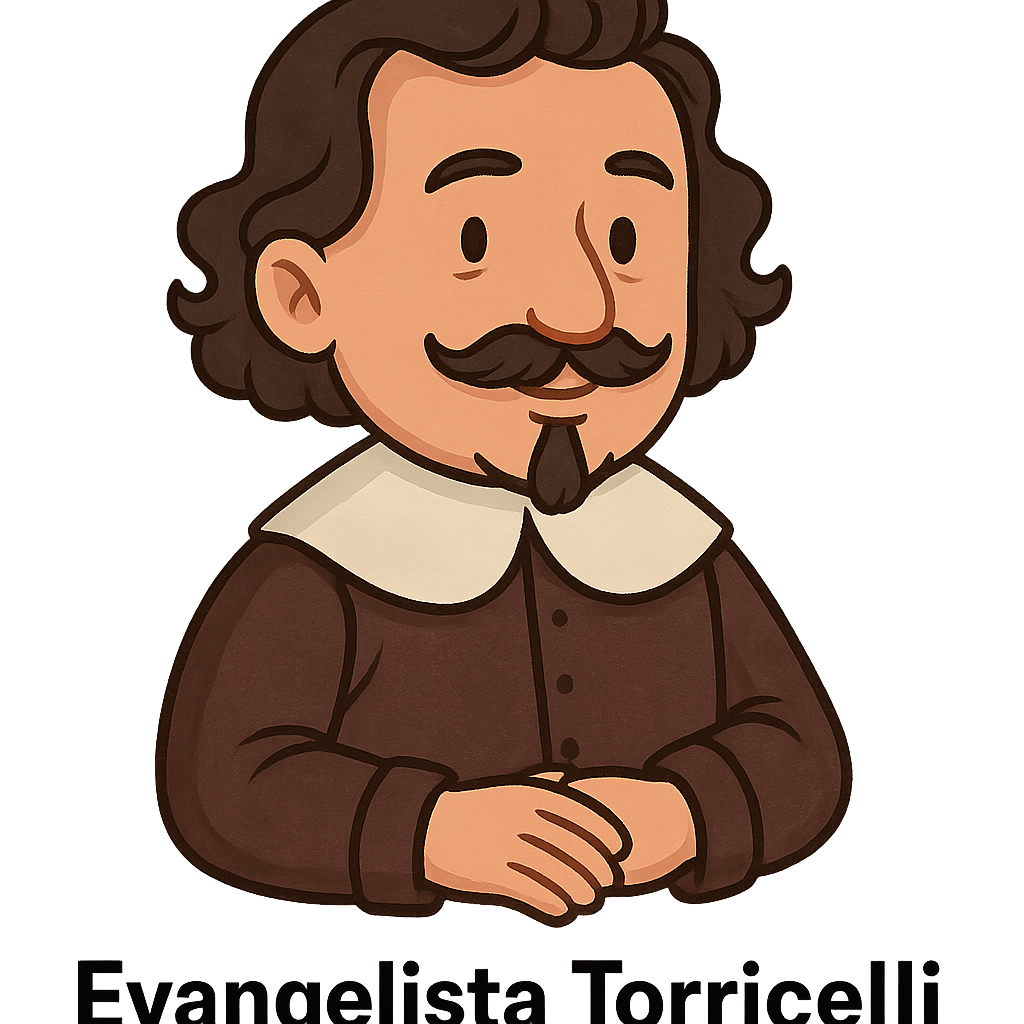
Hello there! My name is Evangelista Torricelli. I was born on October 15th, 1608, in a town called Faenza, in what is now Italy. Even as a young boy, I was fascinated by the world around me. I loved numbers and puzzles, and I was always asking questions about how things worked. My father passed away when I was very young, but my wonderful uncle, who was a monk, saw my curiosity and made sure I received a good education. He sent me to a school in Rome in 1627 where I could study mathematics and science to my heart's content.
While I was studying, I learned about the incredible work of a famous scientist named Galileo Galilei. He had new ideas about how the planets moved and how objects fall. I read everything he wrote and was so inspired. I even wrote a paper about his ideas and, in 1641, I gathered the courage to send him a letter. You can imagine my surprise and delight when he wrote back! He was an old man by then and needed an assistant. He invited me to come live and work with him in Florence. It was a dream come true! For the last three months of his life, I helped him with his experiments and wrote down his thoughts. It was an honor to learn from such a great mind before he passed away in 1642.
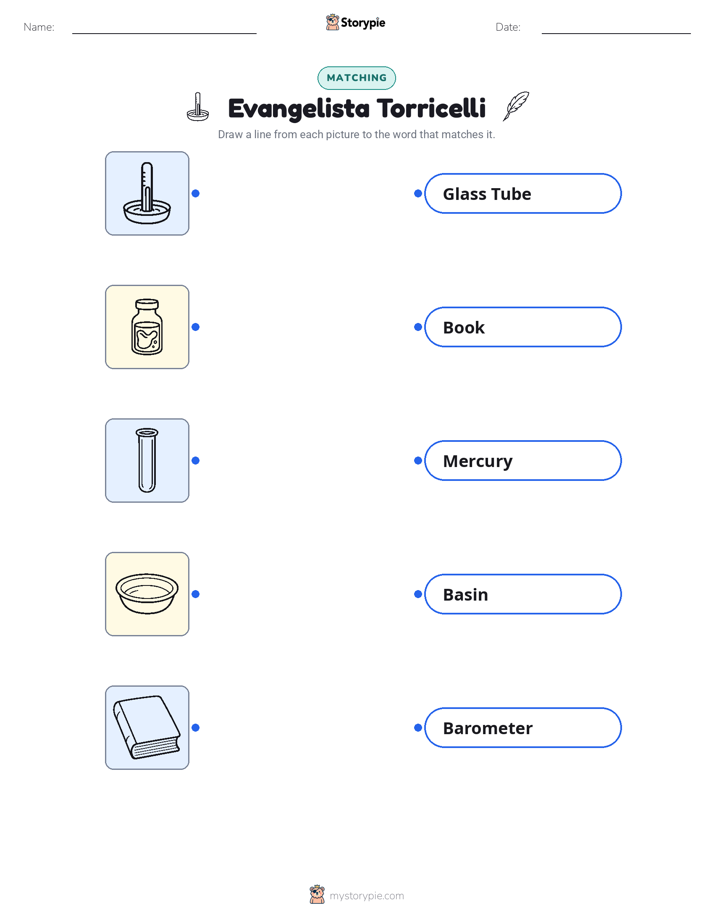
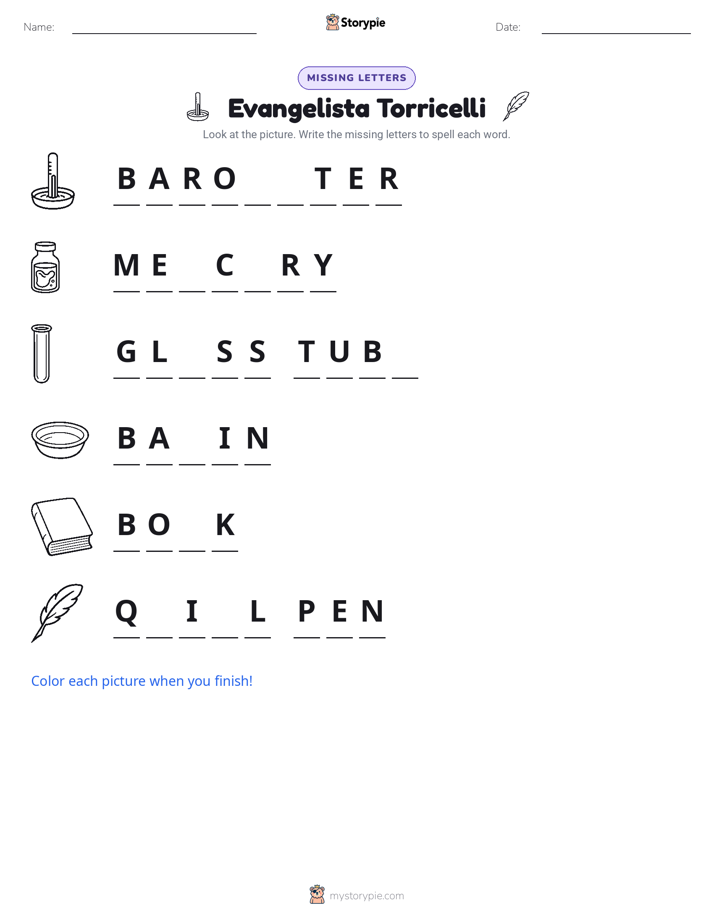
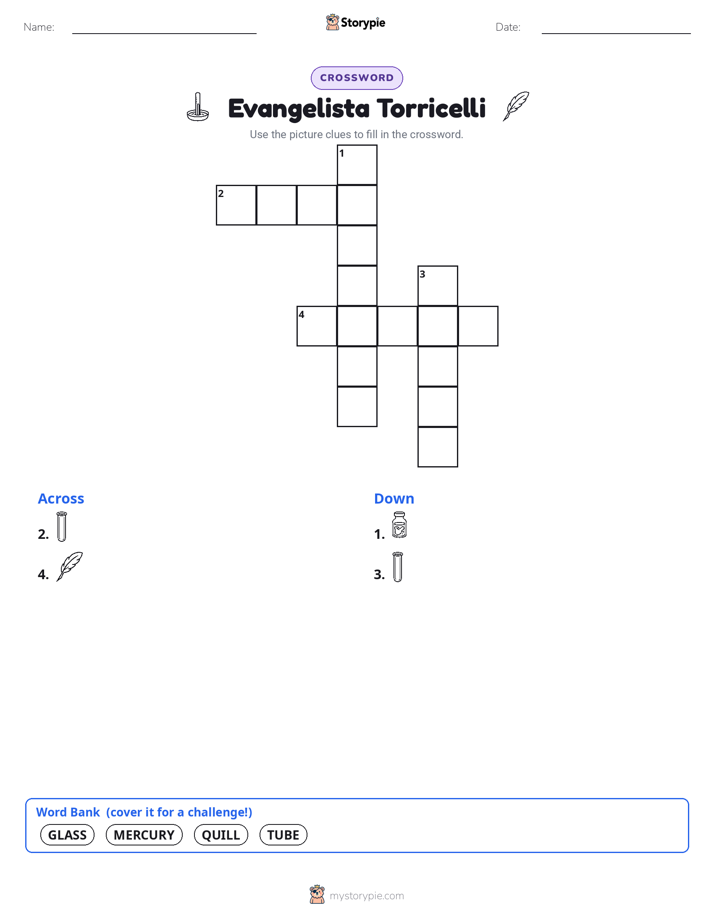
Before he died, Galileo gave me a puzzle to solve. Miners had noticed that their water pumps could only lift water up a pipe to a height of about 10 meters, and no higher. Why? What was stopping it? Most people at the time believed that a vacuum—a space with absolutely nothing in it—was impossible. But I had an idea. What if the air all around us had weight? What if it was the weight of the air pushing down on the water in the well that helped push the water up the pipe? To test this, I decided to use a liquid much heavier than water: mercury. In 1643, I took a long glass tube, sealed at one end, and filled it to the brim with mercury. Then, I carefully flipped it upside down into a bowl of more mercury.
Evangelista Torricelli: The Man Who Measured the Air
Hello there! My name is Evangelista Torricelli. I was born on October 15th, 1608, in a town called Faenza, in what is now Italy. Even as a young boy, I was fascinated by the world around me. I loved numbers and puzzles, and I was always asking questions about how things worked. My father passed away when I was very young, but my wonderful uncle, who was a monk, saw my curiosity and made sure I received a good education. He sent me to a school in Rome in 1627 where I could study mathematics and science to my heart's content.
While I was studying, I learned about the incredible work of a famous scientist named Galileo Galilei. He had new ideas about how the planets moved and how objects fall. I read everything he wrote and was so inspired. I even wrote a paper about his ideas and, in 1641, I gathered the courage to send him a letter. You can imagine my surprise and delight when he wrote back! He was an old man by then and needed an assistant. He invited me to come live and work with him in Florence. It was a dream come true! For the last three months of his life, I helped him with his experiments and wrote down his thoughts. It was an honor to learn from such a great mind before he passed away in 1642.
Before he died, Galileo gave me a puzzle to solve. Miners had noticed that their water pumps could only lift water up a pipe to a height of about 10 meters, and no higher. Why? What was stopping it? Most people at the time believed that a vacuum—a space with absolutely nothing in it—was impossible. But I had an idea. What if the air all around us had weight? What if it was the weight of the air pushing down on the water in the well that helped push the water up the pipe? To test this, I decided to use a liquid much heavier than water: mercury. In 1643, I took a long glass tube, sealed at one end, and filled it to the brim with mercury. Then, I carefully flipped it upside down into a bowl of more mercury.
Something amazing happened! The mercury in the tube slid down, but it didn't all run out. It stopped, leaving a space at the top of the tube. That empty space was a vacuum! I had proven it was possible. The column of mercury was being held up by the pressure of the air pushing down on the mercury in the bowl. I realized that we live at the bottom of a giant ocean of air. I also noticed that the height of the mercury in the tube changed slightly from day to day. This meant the weight, or pressure, of the air was changing. My device could measure that change! This invention, from 1643, became known as the barometer, and it was a wonderful tool for helping to forecast the weather. After Galileo’s passing, I was honored to take his place as the court mathematician to the Grand Duke of Tuscany.
My work didn't stop with the barometer. I loved mathematics, especially geometry, and in 1644 I published a book of my findings called Opera Geometrica. I also studied how liquids flow out of openings, creating a rule now known as Torricelli's Law. I lived to be 39 years old, passing away from an illness in 1647. Though my time was short, I am proud that my work helped change how we see the world. My invention of the barometer is still the basis for how we measure air pressure and understand the weather today. To honor my discovery, a unit of pressure was even named the 'torr' after me.
Wow facts
About
Evangelista Torricelli was an Italian physicist and mathematician who was a student of Benedetto Castelli, a disciple of Galileo, and is best known for his invention of the barometer in 1643, though some sources suggest 1644.
Take a Quiz
Question 1 of 5
In the story, I said I was 'fascinated by the world around me.' What does the word 'fascinated' mean?
Explore next




Want to do even more?
Go beyond exploring. Unlock tools that turn every story into real learning.

Storypie Plus for families
Full stories, quizzes, and printables. Nights and car rides, sorted.
- Unlimited audio stories
- Create Mode: your child stars in the story
- Offline downloads
- Printable worksheets & coloring pages

Why Storypie for Schools
Students engaged. Prep in seconds. Evenings back to you.
- Worksheets & Quizzes
- Classroom Management
- Formative Assessment
- Custom Curriculum & Lesson Plans
- 27 Languages

Why Storypie for Homeschool
Curriculum done. They'll ask for more. Hours back in your day.
- Worksheet Generator
- First-Person Audio Stories
- Built-in Comprehension Quizzes
- Custom Curriculum & Lesson Plans
- Print & Go Activities