English

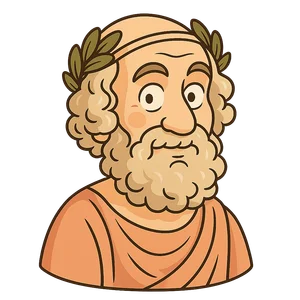
Homer
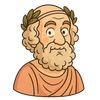
Homer is the legendary ancient Greek epic poet traditionally credited with composing the 'Iliad' and the…
Reads at Grades 6–8 Listens at Grades 4–8
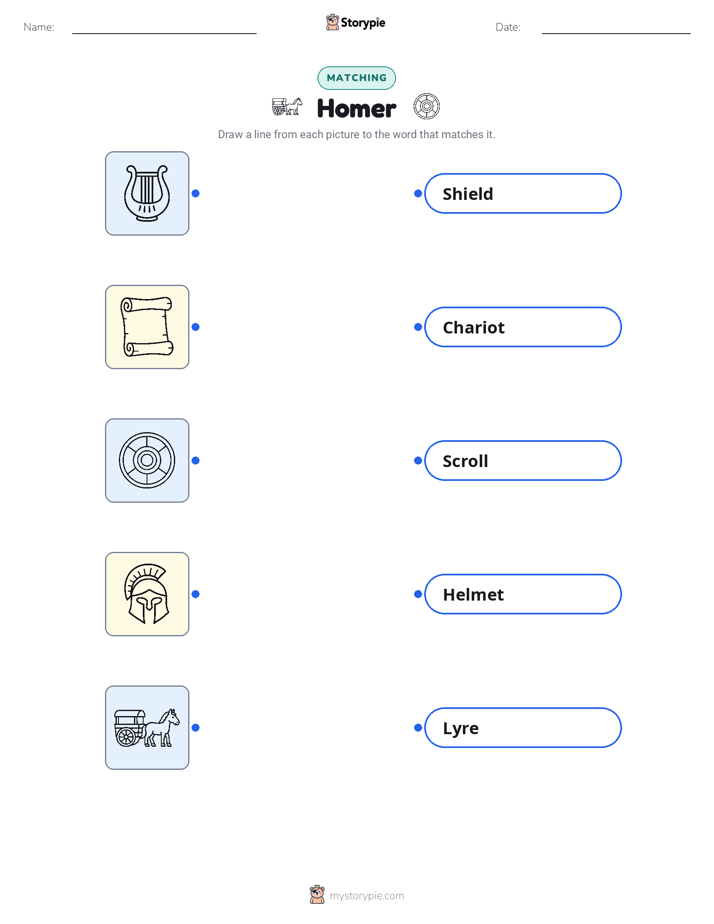
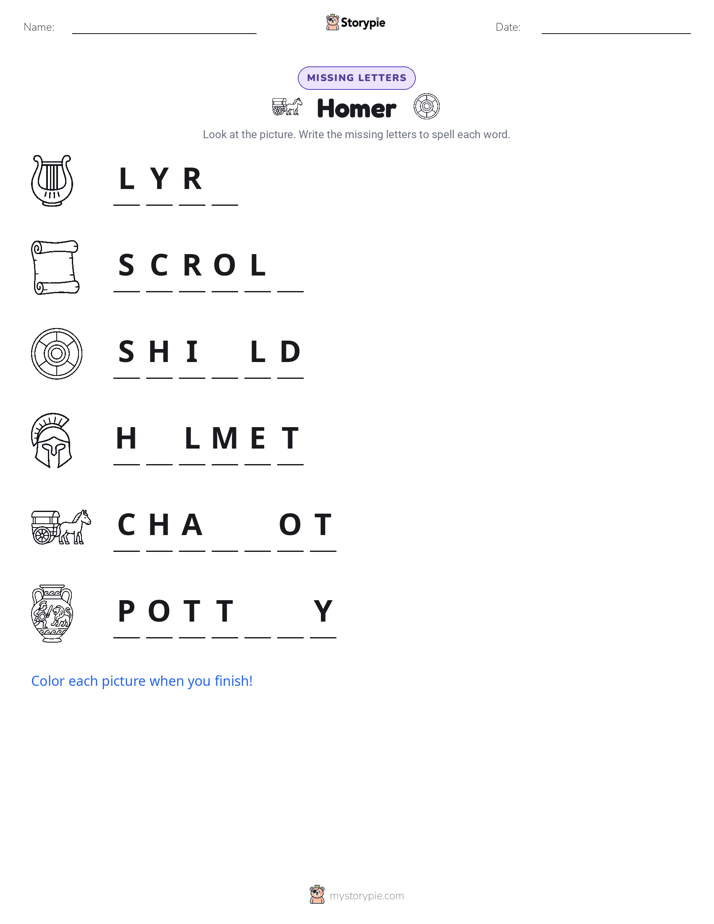
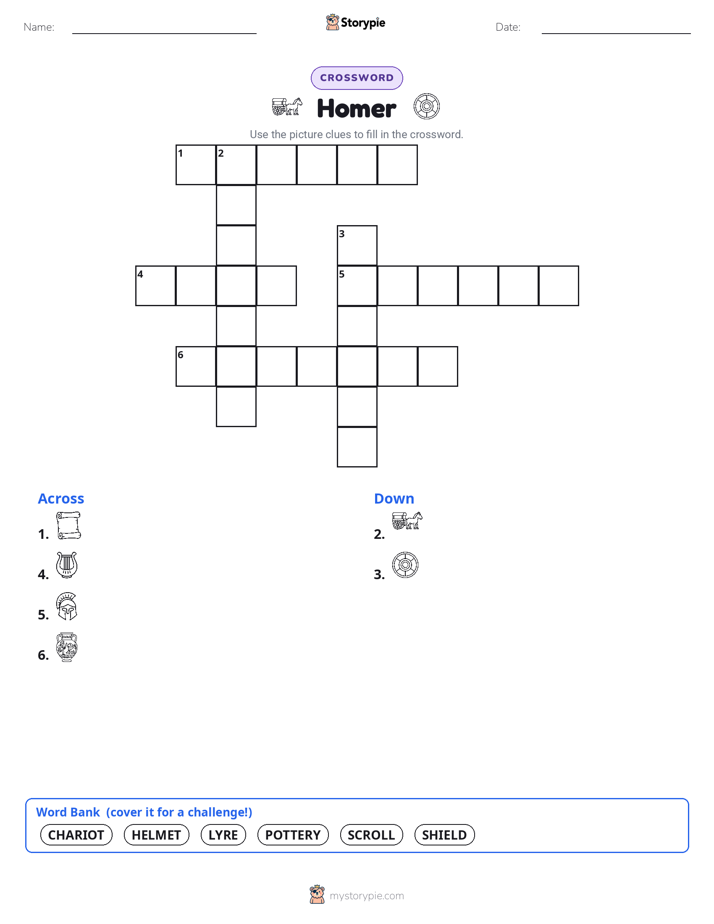
Print & create
Answer keys·No prep·Free with an account
28 worksheets · answer keys · full story · quiz · Ages 10-12 · CEFR B2
Plus adds 164,000+ more stories in 27 languages, audio for every one, and printables for all of them.
Just want Homer?
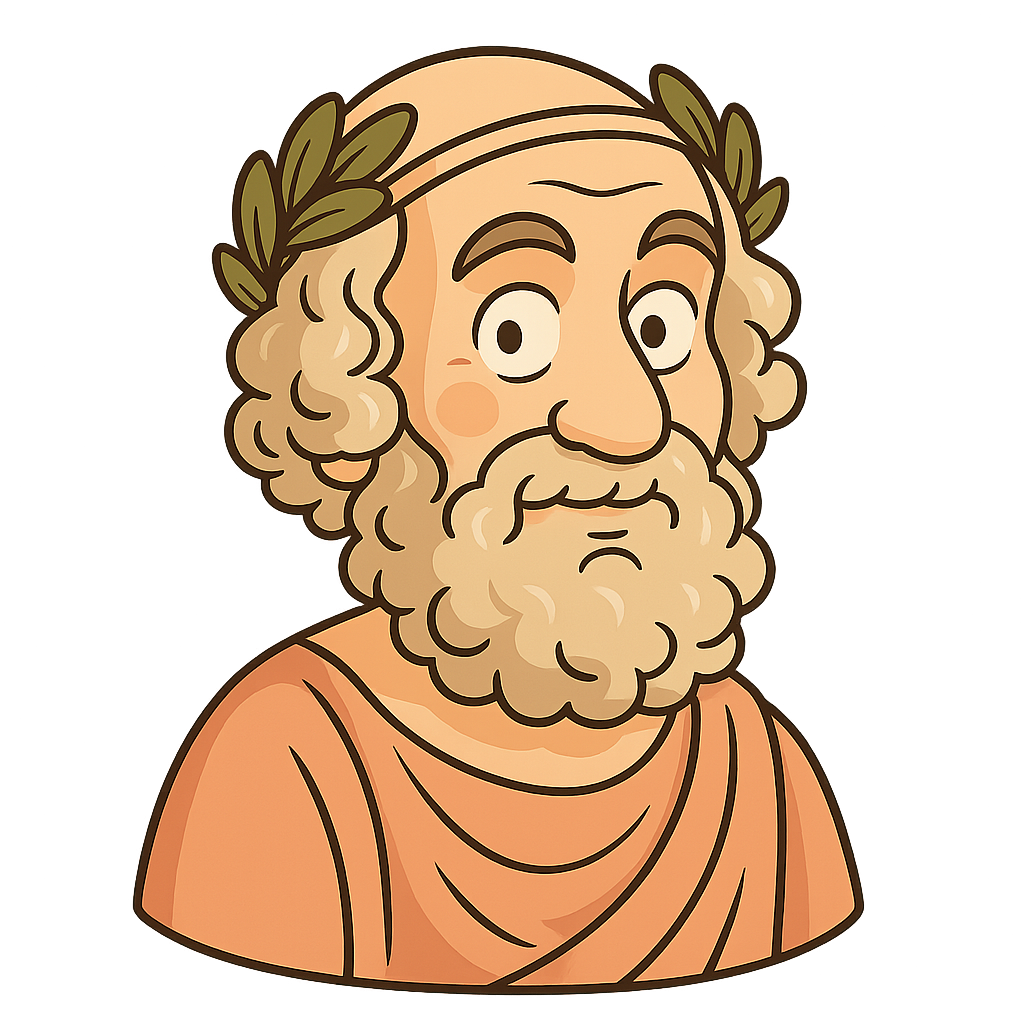
Hello. My name is Homer, and I am a storyteller, or what my people called an aoidos, from ancient Greece. I lived a very, very long time ago, around the 8th century BCE. Because so much time has passed, the world you live in is vastly different from mine, and many details of my life have become a mystery. No one is certain of my exact birthplace, though many cities have claimed me as their own. There is a long-held tradition that I was blind. While this might sound like a great challenge for a storyteller, many believed it sharpened my other senses. Unable to see the world around me, I learned to listen with great intensity and to store vast, complex stories in my memory. This allowed me to paint pictures with words, creating vivid images of mighty heroes, powerful gods, and epic battles for all who gathered to hear my tales.
In my time, there were no books as you know them, and very few people knew how to read or write. My role as a traveling bard was essential. I journeyed from place to place, performing in the grand halls of kings and at public festivals, bringing stories to life for my audiences. These stories were more than just entertainment; they were our history, our culture, and our education all rolled into one. Through them, people learned about courage, honor, and the will of the gods. I would sing these long poems, sometimes for hours or even days, often accompanied by the gentle music of a lyre. This was the oral tradition, a chain of storytelling passed from one generation to the next. During my lifetime, a new and exciting technology emerged: the Greek alphabet. For the first time, the spoken words of my songs could be captured in writing, ensuring they would not be lost to time and could be preserved forever.
Homer: The Voice of Ancient Greece
Hello. My name is Homer, and I am a storyteller, or what my people called an aoidos, from ancient Greece. I lived a very, very long time ago, around the 8th century BCE. Because so much time has passed, the world you live in is vastly different from mine, and many details of my life have become a mystery. No one is certain of my exact birthplace, though many cities have claimed me as their own. There is a long-held tradition that I was blind. While this might sound like a great challenge for a storyteller, many believed it sharpened my other senses. Unable to see the world around me, I learned to listen with great intensity and to store vast, complex stories in my memory. This allowed me to paint pictures with words, creating vivid images of mighty heroes, powerful gods, and epic battles for all who gathered to hear my tales.
In my time, there were no books as you know them, and very few people knew how to read or write. My role as a traveling bard was essential. I journeyed from place to place, performing in the grand halls of kings and at public festivals, bringing stories to life for my audiences. These stories were more than just entertainment; they were our history, our culture, and our education all rolled into one. Through them, people learned about courage, honor, and the will of the gods. I would sing these long poems, sometimes for hours or even days, often accompanied by the gentle music of a lyre. This was the oral tradition, a chain of storytelling passed from one generation to the next. During my lifetime, a new and exciting technology emerged: the Greek alphabet. For the first time, the spoken words of my songs could be captured in writing, ensuring they would not be lost to time and could be preserved forever.
One of the two great epic poems I am known for is the Iliad. Its story unfolds during the tenth and final year of the legendary Trojan War, a massive conflict between the armies of Greece and the walled city of Troy. But the Iliad is not just a tale of war; it is a story about human emotion, pride, and consequence. The central plot focuses on a powerful and bitter argument between the greatest of all Greek warriors, the swift-footed Achilles, and the commander of the Greek forces, King Agamemnon. Achilles’s rage after being dishonored by Agamemnon leads him to withdraw from the battle, a decision that has devastating effects on the course of the war. Within this epic, you meet other unforgettable figures, such as the noble Trojan prince Hector, who fights to protect his city, and the clever Greek hero Odysseus. Even the gods and goddesses of Mount Olympus get involved, often taking sides and interfering in the affairs of mortals.
My other great poem, the Odyssey, picks up where the Trojan War ends. It tells the story of that same hero, Odysseus, and his incredible, ten-year struggle to return to his home on the island of Ithaca. His journey is filled with adventure and peril at every turn. He must use his famous wit and cunning to overcome seemingly impossible challenges. He outsmarts the monstrous, one-eyed Cyclops, Polyphemus, navigates his ship past the enchanting but deadly songs of the Sirens, and contends with the powerful sorceress Circe, who turns his men into pigs. While Odysseus fights to get home, his loyal wife, Penelope, faces her own struggles. For years, she cleverly holds off greedy suitors who have taken over her palace, each one wanting to marry her and claim Odysseus’s throne. It is a tale of perseverance, loyalty, and the deep longing for home.
I lived a full life, dedicated to gathering and shaping the tales of my people. The stories I once sang aloud in crowded halls became the foundation of Greek culture and education for many centuries that followed. They taught lessons about what it means to be a hero, a leader, and a human being. Even though I lived thousands of years ago, my voice continues to be heard through the written words of the Iliad and the Odyssey. My tales of heroes facing monsters, gods meddling in human lives, and the timeless struggles of love, anger, and loss are still read and enjoyed by people all over the world. My hope was to leave behind stories that would last, and it seems that hope came true.
Wow facts
About
Homer is the legendary ancient Greek epic poet traditionally credited with composing the 'Iliad' and the 'Odyssey,' foundational works of Western literature.
Take a Quiz
Question 1 of 5
What is the central conflict that drives the plot of the Iliad?
Explore next





Want to do even more?
Go beyond exploring. Unlock tools that turn every story into real learning.

Storypie Plus for families
Full stories, quizzes, and printables. Nights and car rides, sorted.
- Unlimited audio stories
- Create Mode: your child stars in the story
- Offline downloads
- Printable worksheets & coloring pages

Why Storypie for Schools
Students engaged. Prep in seconds. Evenings back to you.
- Worksheets & Quizzes
- Classroom Management
- Formative Assessment
- Custom Curriculum & Lesson Plans
- 27 Languages

Why Storypie for Homeschool
Curriculum done. They'll ask for more. Hours back in your day.
- Worksheet Generator
- First-Person Audio Stories
- Built-in Comprehension Quizzes
- Custom Curriculum & Lesson Plans
- Print & Go Activities