English

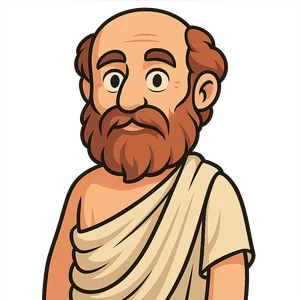
Theophrastus
An ancient Greek philosopher and successor to Aristotle…
Reads at Grades 6–8 Listens at Grades 4–8
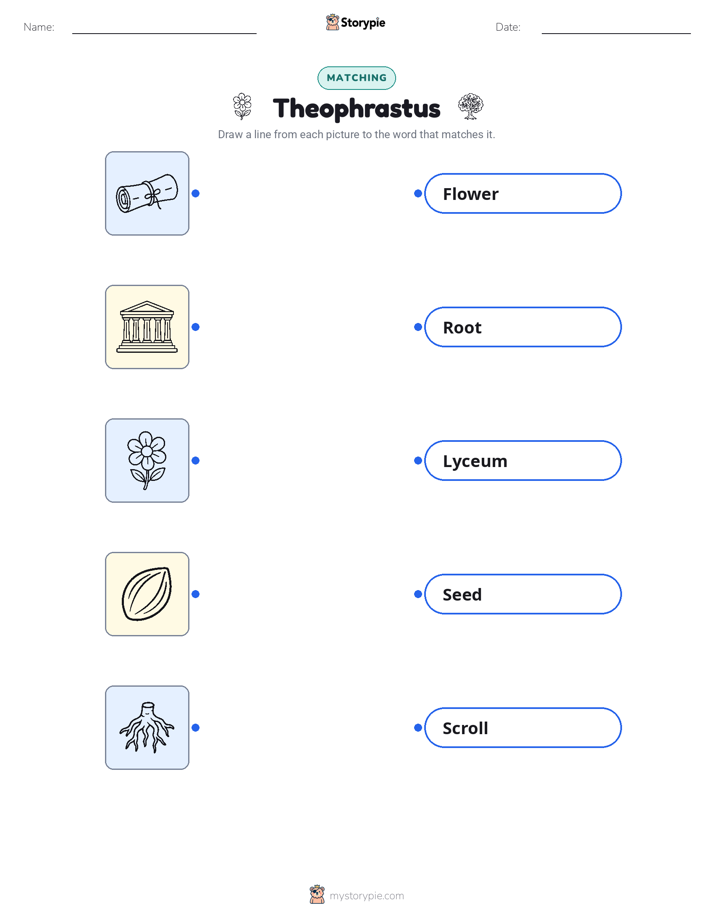
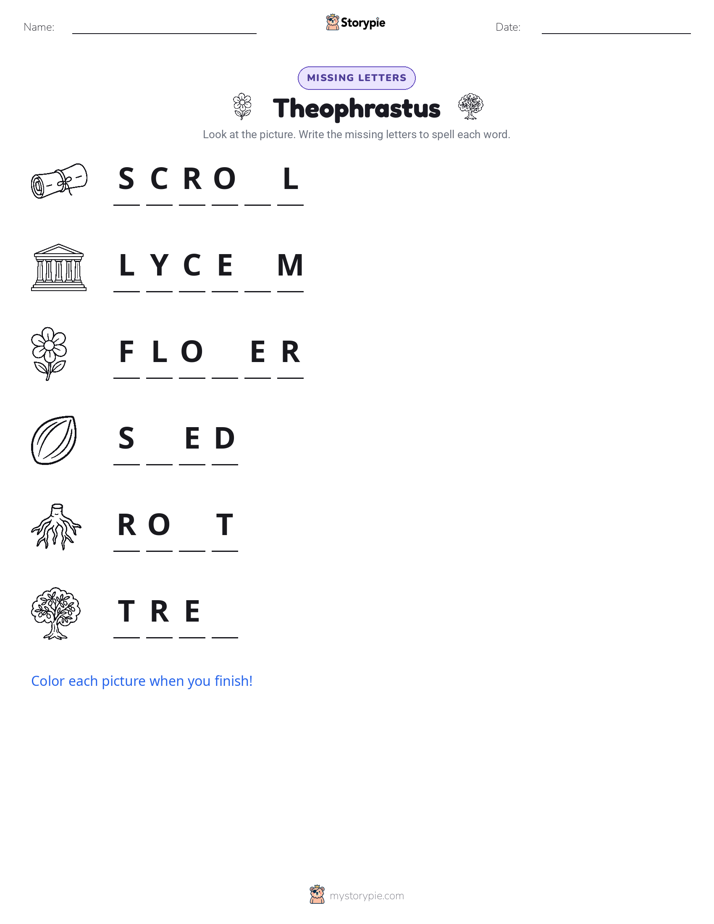
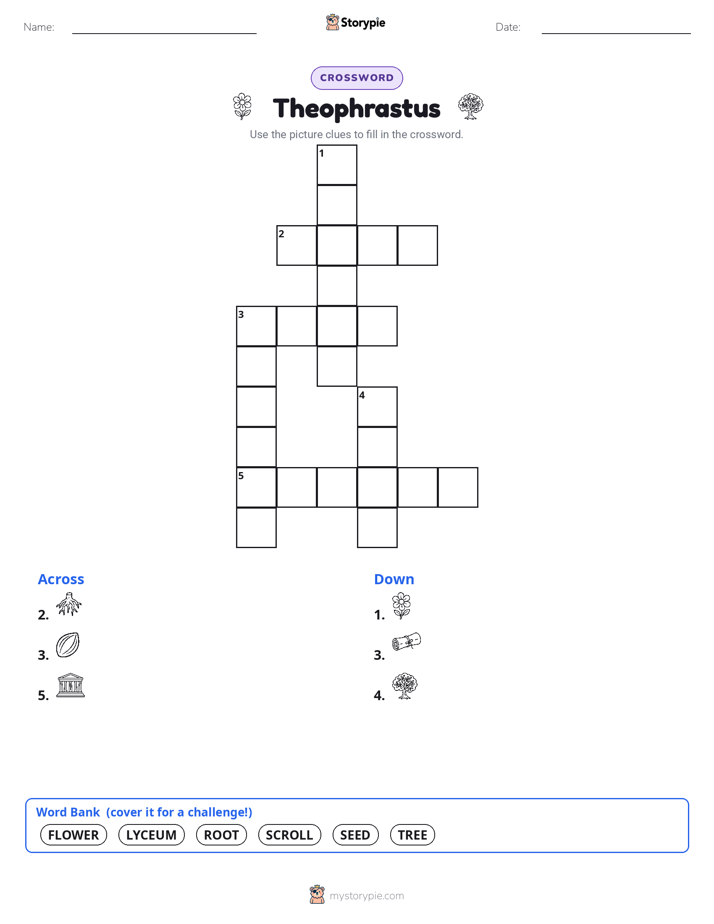
Print & create
Answer keys·No prep·Free with an account
28 worksheets · answer keys · full story · quiz · Ages 10-12 · CEFR B2
Plus adds 244,000+ more stories in 27 languages, audio for every one, and printables for all of them.
Just want Theophrastus?
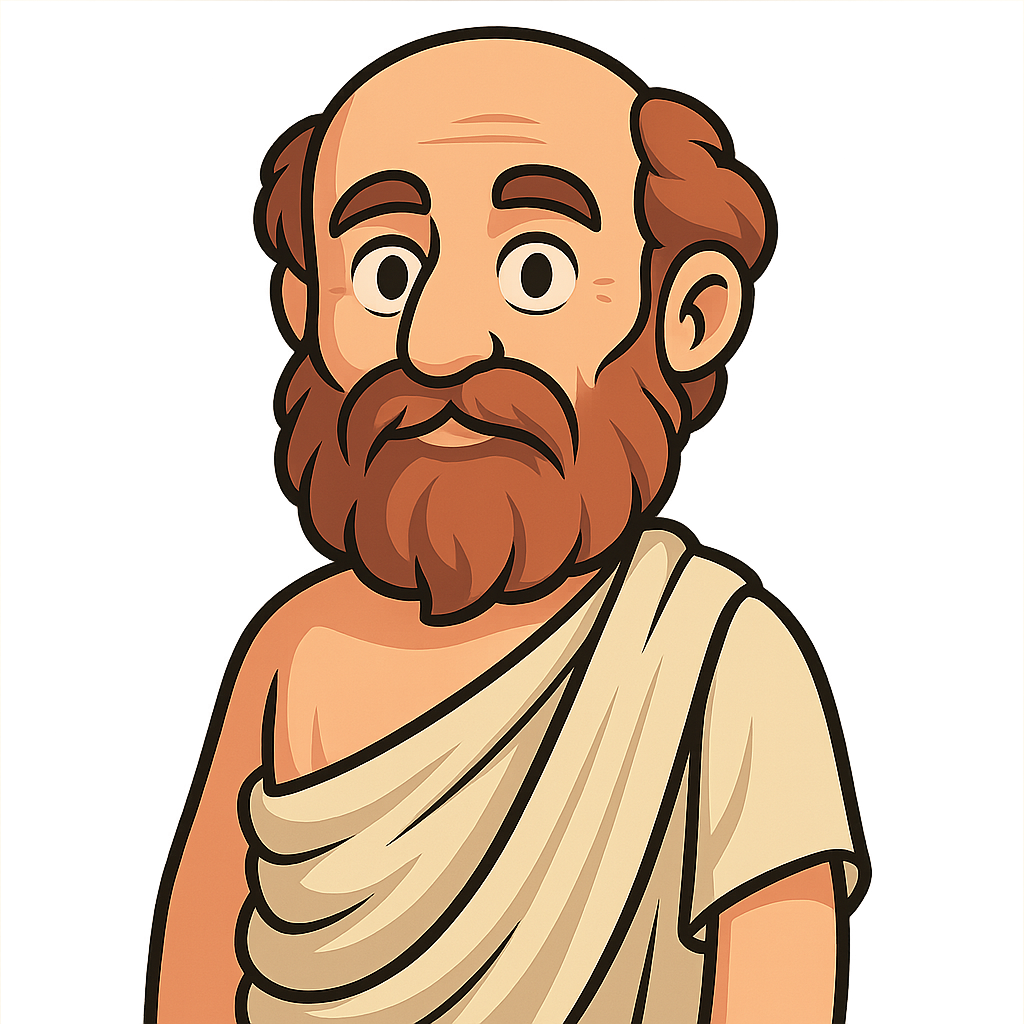
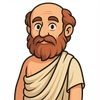
Hello! My name is Theophrastus, and I want to tell you about my life, which was filled with questions and discoveries about the world. I was born with the name Tyrtamus around the year 371 BCE on a beautiful Greek island called Lesbos. The ancient world was a place of great thinkers, and even as a boy, I was fascinated by everything around me, from the smallest flower to the stars in the sky. My powerful curiosity led me to leave my island home and travel to the bustling, important city of Athens. I went there to study at a famous school called the Academy, which was run by the brilliant thinker Plato. It was an exciting time to be in Athens, as it was a center for learning and new ideas.
At the Academy, I met another amazing teacher who would become my dearest friend and colleague, Aristotle. We shared a passion for understanding the world not just through ideas, but through careful observation. Aristotle thought I spoke so clearly and gracefully that he gave me a new name: Theophrastus, which means 'divine expression.' I was honored by this, and that new name stuck with me for the rest of my life. Together, Aristotle and I would go on to explore nearly every subject imaginable.
Aristotle and I were inseparable companions in our quest for knowledge. We studied everything from logic and ethics to animals and the stars. When he decided to start his own school in Athens, called the Lyceum, I worked right alongside him, helping to build it into a great center of learning. We encouraged our students to learn by observing the world directly, a method that was quite new at the time. We believed that to understand something, you had to look at it closely and ask questions. Then, in the year 323 BCE, a major change happened. Aristotle had to leave Athens, and he asked me to take his place as the head of the Lyceum. It was a great honor and a tremendous responsibility. For about the next 35 years, I led the school, teaching hundreds of curious students and continuing my own research into the natural world. Under my leadership, the school grew famous. We built a huge library filled with scrolls, and to help with our studies, we created the very first botanical garden in Greece.
Theophrastus: The Father of Botany
Hello! My name is Theophrastus, and I want to tell you about my life, which was filled with questions and discoveries about the world. I was born with the name Tyrtamus around the year 371 BCE on a beautiful Greek island called Lesbos. The ancient world was a place of great thinkers, and even as a boy, I was fascinated by everything around me, from the smallest flower to the stars in the sky. My powerful curiosity led me to leave my island home and travel to the bustling, important city of Athens. I went there to study at a famous school called the Academy, which was run by the brilliant thinker Plato. It was an exciting time to be in Athens, as it was a center for learning and new ideas.
At the Academy, I met another amazing teacher who would become my dearest friend and colleague, Aristotle. We shared a passion for understanding the world not just through ideas, but through careful observation. Aristotle thought I spoke so clearly and gracefully that he gave me a new name: Theophrastus, which means 'divine expression.' I was honored by this, and that new name stuck with me for the rest of my life. Together, Aristotle and I would go on to explore nearly every subject imaginable.
Aristotle and I were inseparable companions in our quest for knowledge. We studied everything from logic and ethics to animals and the stars. When he decided to start his own school in Athens, called the Lyceum, I worked right alongside him, helping to build it into a great center of learning. We encouraged our students to learn by observing the world directly, a method that was quite new at the time. We believed that to understand something, you had to look at it closely and ask questions. Then, in the year 323 BCE, a major change happened. Aristotle had to leave Athens, and he asked me to take his place as the head of the Lyceum. It was a great honor and a tremendous responsibility. For about the next 35 years, I led the school, teaching hundreds of curious students and continuing my own research into the natural world. Under my leadership, the school grew famous. We built a huge library filled with scrolls, and to help with our studies, we created the very first botanical garden in Greece.
My greatest passion was studying plants. In my time, people knew that some plants were good for medicine and others for food, but no one had ever tried to organize them or understand how they really worked in a scientific way. I wanted to change that. I spent countless hours in our new botanical garden, carefully observing how seeds sprouted, how different roots grew, and what the tiniest parts of flowers looked like up close. I wrote down everything I saw with great detail. My work took me beyond our garden, as I described over 500 different plants from all over the known world, from the shores of Greece to the distant lands of India. I organized them into logical groups like trees, shrubs, and herbs, and I was the first to carefully describe the difference between flowering and non-flowering plants. I compiled all of my findings into two large books, 'Enquiry into Plants' and 'On the Causes of Plants.' These books became the most important and comprehensive works about botany for centuries.
My curiosity wasn't just for plants; I was also fascinated by people and their behaviors. I loved to walk through the markets and public squares of Athens, watching the citizens and noticing their different habits and personalities. I decided to apply my skills of observation to human nature itself. I wrote a small but famous book about it called 'Characters.' In it, I described 30 different personality types you might meet in the city—like 'The Flatterer,' who always says nice things to get what he wants, or 'The Grumbler,' who complains about everything no matter how good things are. It was another way for me to use careful observation to understand the world, whether I was studying a tiny seed or a complex person.
I continued my work of teaching and writing for many years, always driven by a desire to learn more. I lived to be about 85 years old, passing away around 287 BCE. Though most of my many books have been lost to time, my detailed work on plants survived. For more than 1,500 years after my death, my books were the main source of knowledge about botany throughout the world. Today, people remember me as the 'father of botany' because I created the first scientific system for understanding the incredible world of plants. I hope my story reminds you that asking questions and looking closely at the world around you is the start of every great discovery.
Wow facts
About
An ancient Greek philosopher and successor to Aristotle, Theophrastus is considered the 'Father of Botany' for his systematic study and classification of plants.
Take a Quiz
Question 1 of 5
What is the main reason Theophrastus is remembered today as the 'father of botany'?
Explore next




Want to do even more?
Go beyond exploring. Unlock tools that turn every story into real learning.

Storypie Plus for families
Full stories, quizzes, and printables. Nights and car rides, sorted.
- Unlimited audio stories
- Create Mode: your child stars in the story
- Offline downloads
- Printable worksheets & coloring pages

Why Storypie for Schools
Students engaged. Prep in seconds. Evenings back to you.
- Worksheets & Quizzes
- Classroom Management
- Formative Assessment
- Custom Curriculum & Lesson Plans
- 27 Languages

Why Storypie for Homeschool
Curriculum done. They'll ask for more. Hours back in your day.
- Worksheet Generator
- First-Person Audio Stories
- Built-in Comprehension Quizzes
- Custom Curriculum & Lesson Plans
- Print & Go Activities