English

Stock Market Crash of 1929
The sudden and severe collapse of stock market prices in the U.S.
Reads at Grades 6–8 Listens at Grades 4–8
Print & create
Answer keys·No prep·Free with an account
28 worksheets · answer keys · full story · quiz · Ages 10-12 · CEFR B2
Plus adds 102,000+ more stories in 27 languages, audio for every one, and printables for all of them.
Just want Stock Market Crash of 1929?
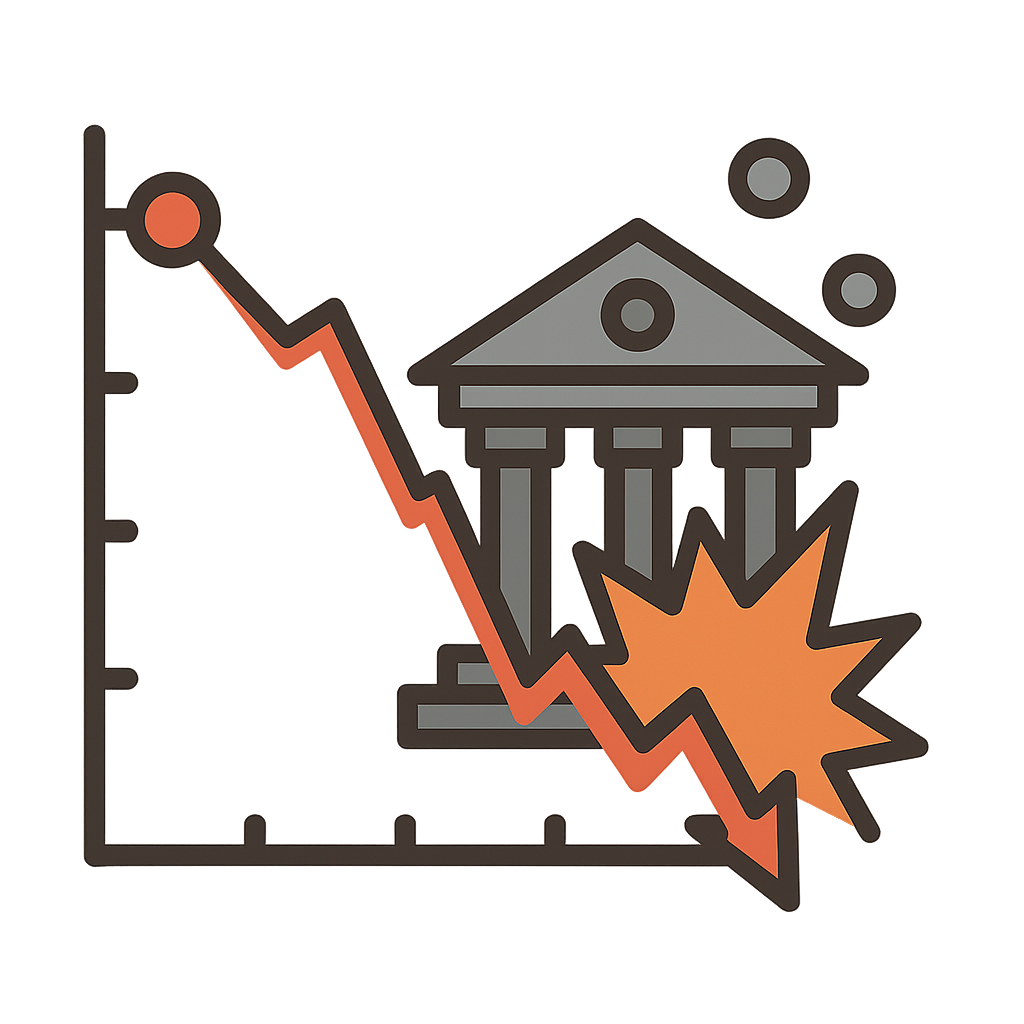
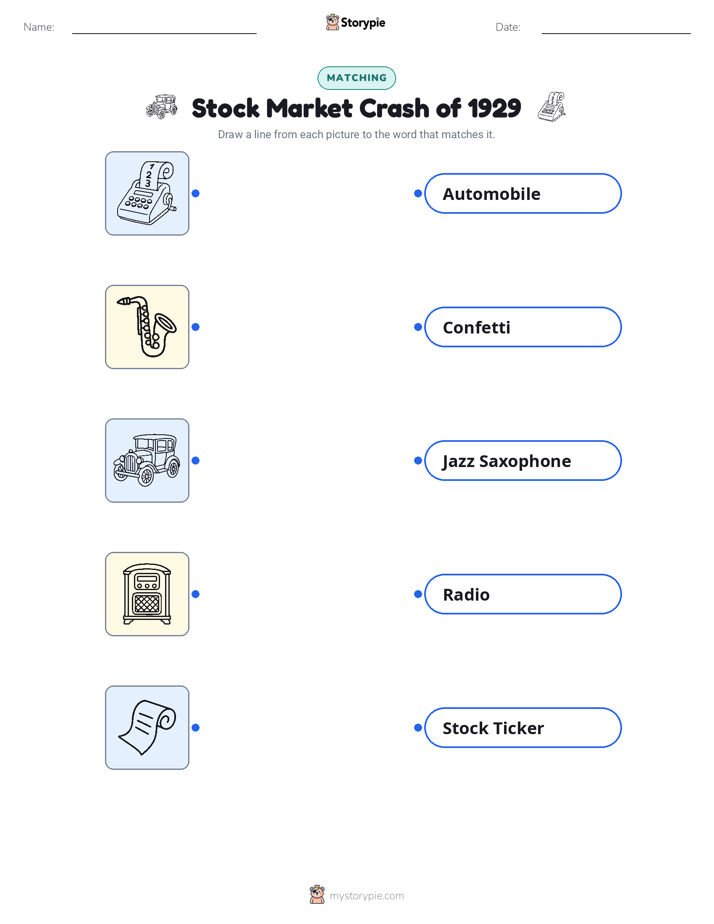
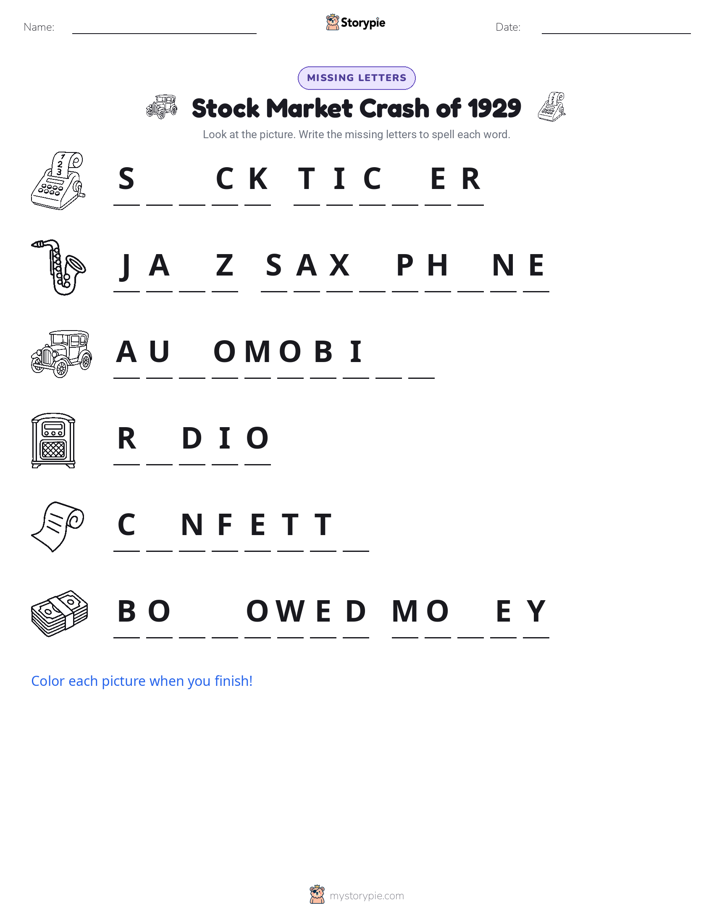
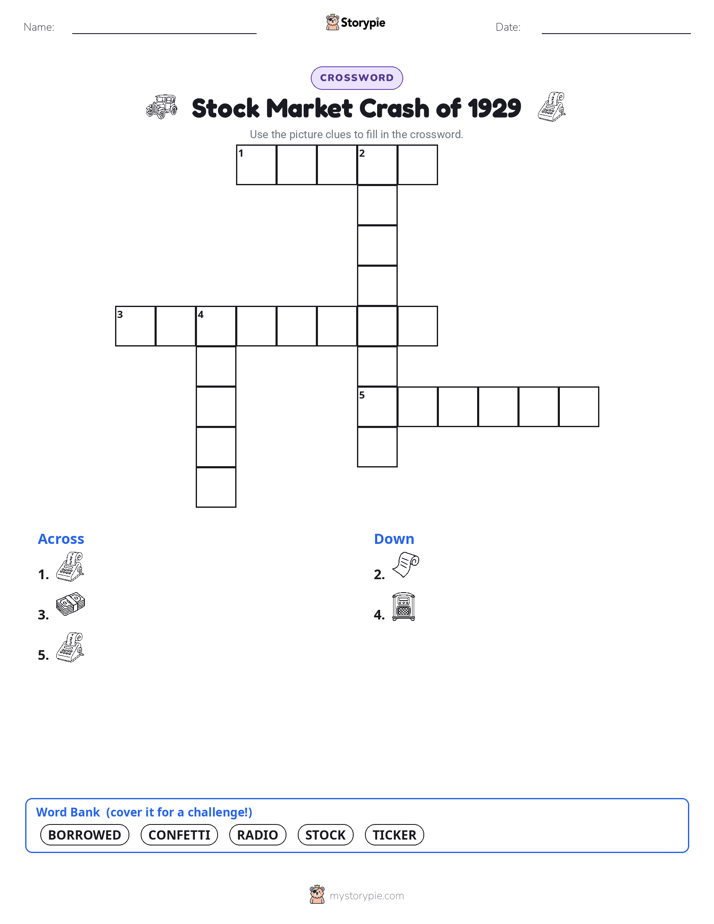
Imagine the biggest, loudest, most exciting party you can. The air thrums with the sound of jazz music, brand-new automobiles line the streets, and radios in every home crackle with news of a future that seems brighter than the sun. This was the 1920s in America, a decade people called the Roaring Twenties. It felt like the party would never end. Everyone believed they could be rich, and the heart of this celebration was a place called the stock market. Think of it as a giant scoreboard where the numbers for America’s biggest companies were written. And for years, those numbers only seemed to go up, up, up. The paper ribbons from the ticker-tape machines that spit out these numbers looked like confetti. The excitement was contagious. People wanted in on the fun so badly that they started doing something risky. They began 'buying on margin,' which was like borrowing money from a friend to buy a ticket to the party, promising to pay them back when you won a prize. Everyone was so sure they would win. But no one noticed that the floor was starting to shake from all the wild dancing. The music was so loud it covered the sound of the foundation cracking. The optimism was a bubble, stretched thinner and thinner until it was ready to pop. That’s when I was born. I am the Stock Market Crash of 1929.
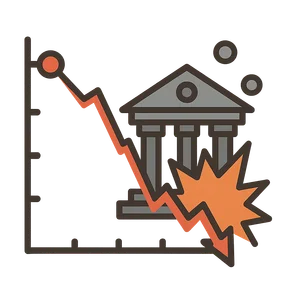
My arrival wasn't a whisper; it was a deafening roar that silenced the music for good. The first real tremor happened on Thursday, October 24th, 1929, a day that would forever be known as 'Black Thursday.' The joyful, rising numbers on the ticker-tape machines suddenly stumbled and began to fall. A nervous quiet fell over the trading floors as people watched the numbers drop. Panic began to spread like a fire. Seeing the danger, a group of the nation's most powerful bankers stepped in. They pooled their money and started buying huge amounts of stock, trying to prop up the market. It was like trying to patch a giant crack in a dam with chewing gum. For a moment, it seemed to work. The numbers stabilized, and President Herbert Hoover assured everyone that the country's business was 'on a sound and prosperous basis.' But over the weekend, the fear grew. People realized the patch wouldn't hold. On Monday, October 28th, the selling started again, fiercely. Then came the next day, Black Tuesday, October 29th. On that day, the dam didn't just leak; it burst completely. I arrived in my full, terrifying force. It was an avalanche. Everyone tried to sell their stocks at once, but there was nobody left to buy them. Prices plummeted. The numbers that had represented fortunes, dreams, and a decade of hope simply vanished into thin air. Sixteen million shares were traded in a single day, a record that stood for decades. The roaring party was officially, and devastatingly, over.
The Day the Party Ended
Imagine the biggest, loudest, most exciting party you can. The air thrums with the sound of jazz music, brand-new automobiles line the streets, and radios in every home crackle with news of a future that seems brighter than the sun. This was the 1920s in America, a decade people called the Roaring Twenties. It felt like the party would never end. Everyone believed they could be rich, and the heart of this celebration was a place called the stock market. Think of it as a giant scoreboard where the numbers for America’s biggest companies were written. And for years, those numbers only seemed to go up, up, up. The paper ribbons from the ticker-tape machines that spit out these numbers looked like confetti. The excitement was contagious. People wanted in on the fun so badly that they started doing something risky. They began 'buying on margin,' which was like borrowing money from a friend to buy a ticket to the party, promising to pay them back when you won a prize. Everyone was so sure they would win. But no one noticed that the floor was starting to shake from all the wild dancing. The music was so loud it covered the sound of the foundation cracking. The optimism was a bubble, stretched thinner and thinner until it was ready to pop. That’s when I was born. I am the Stock Market Crash of 1929.
My arrival wasn't a whisper; it was a deafening roar that silenced the music for good. The first real tremor happened on Thursday, October 24th, 1929, a day that would forever be known as 'Black Thursday.' The joyful, rising numbers on the ticker-tape machines suddenly stumbled and began to fall. A nervous quiet fell over the trading floors as people watched the numbers drop. Panic began to spread like a fire. Seeing the danger, a group of the nation's most powerful bankers stepped in. They pooled their money and started buying huge amounts of stock, trying to prop up the market. It was like trying to patch a giant crack in a dam with chewing gum. For a moment, it seemed to work. The numbers stabilized, and President Herbert Hoover assured everyone that the country's business was 'on a sound and prosperous basis.' But over the weekend, the fear grew. People realized the patch wouldn't hold. On Monday, October 28th, the selling started again, fiercely. Then came the next day, Black Tuesday, October 29th. On that day, the dam didn't just leak; it burst completely. I arrived in my full, terrifying force. It was an avalanche. Everyone tried to sell their stocks at once, but there was nobody left to buy them. Prices plummeted. The numbers that had represented fortunes, dreams, and a decade of hope simply vanished into thin air. Sixteen million shares were traded in a single day, a record that stood for decades. The roaring party was officially, and devastatingly, over.
My impact was felt almost immediately, and it was deep and painful. I didn't just end a party; I was the dramatic trigger for a long, difficult decade known as the Great Depression. The wealth that had seemed so real was gone, and the consequences rippled outward. Banks, which had loaned out so much money for people to buy stocks, began to fail. When they closed their doors, people who had never even owned a stock lost their entire life savings. Businesses couldn't get loans, so they had to lay off workers or shut down entirely. The optimism of the 1920s was replaced by the hardship and uncertainty of the 1930s. But humans are resilient. From the wreckage I caused, they learned critical lessons. They realized that for a party to be safe, it needs rules and a watchful supervisor. Under a new president, Franklin D. Roosevelt, the government created powerful safeguards. In 1933, they established the Federal Deposit Insurance Corporation, or FDIC, which insures the money you put in a bank. Then, in 1934, they created the Securities and Exchange Commission, the SEC, to act as a referee for the stock market, ensuring fairness and preventing the risky behavior that created me. I am a permanent reminder of how quickly things can change, but I am also proof that people can learn from even the most painful mistakes to build a stronger, safer, and more secure future for everyone.
Wow facts
About
The sudden and severe collapse of stock market prices in the U.S. in October 1929 was a significant event that contributed to the onset of the Great Depression, but widespread bank failures beginning in 1930 were the primary cause.
Take a Quiz
Question 1 of 5
What is the main lesson the story suggests we can learn from the Stock Market Crash of 1929?
Explore next





Want to do even more?
Go beyond exploring. Unlock tools that turn every story into real learning.

Storypie Plus for families
Full stories, quizzes, and printables. Nights and car rides, sorted.
- Unlimited audio stories
- Create Mode: your child stars in the story
- Offline downloads
- Printable worksheets & coloring pages

Why Storypie for Schools
Students engaged. Prep in seconds. Evenings back to you.
- Worksheets & Quizzes
- Classroom Management
- Formative Assessment
- Custom Curriculum & Lesson Plans
- 27 Languages

Why Storypie for Homeschool
Curriculum done. They'll ask for more. Hours back in your day.
- Worksheet Generator
- First-Person Audio Stories
- Built-in Comprehension Quizzes
- Custom Curriculum & Lesson Plans
- Print & Go Activities