English

Stock Market Crash of 1929
The sudden and severe collapse of stock market prices in the U.S.
Reads at Grades 3–5 Listens at Grades 1–5
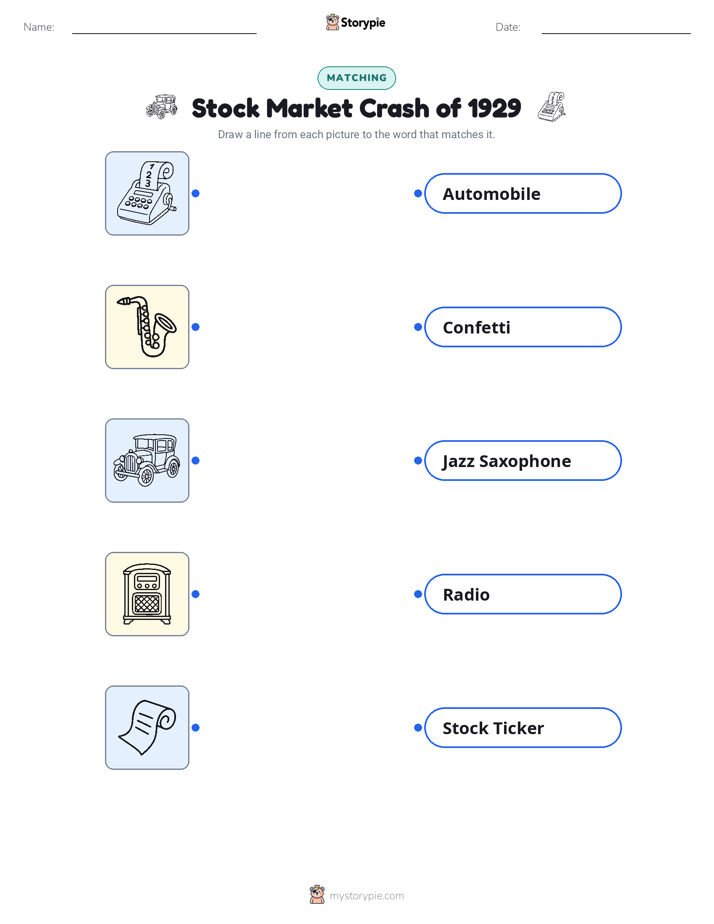
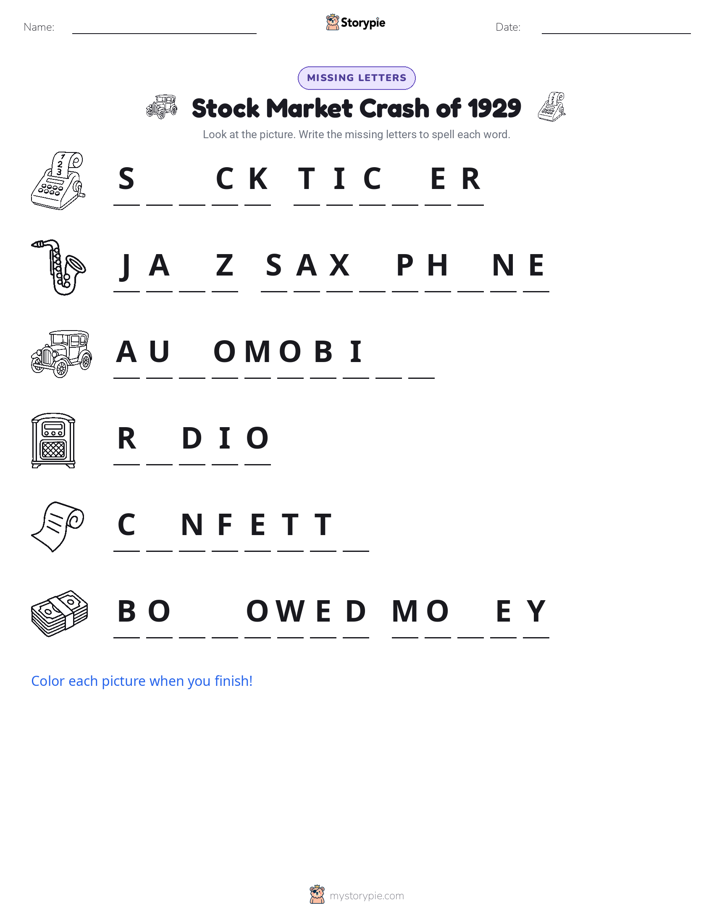
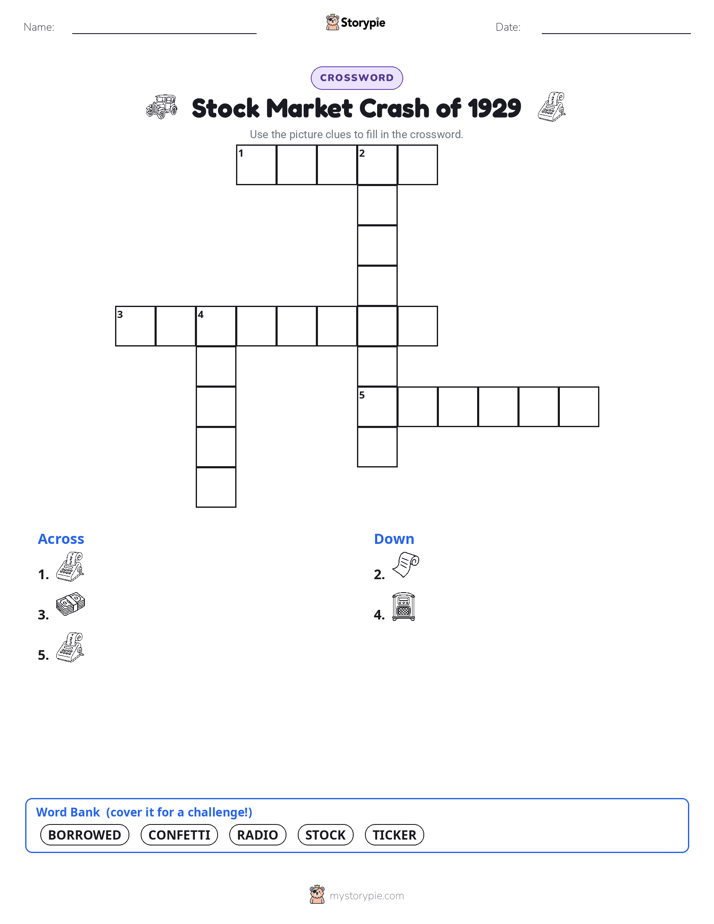
Print & create
Answer keys·No prep·Free with an account
28 worksheets · answer keys · full story · quiz · Ages 8-10 · CEFR B1
Plus adds 102,000+ more stories in 27 languages, audio for every one, and printables for all of them.
Just want Stock Market Crash of 1929?
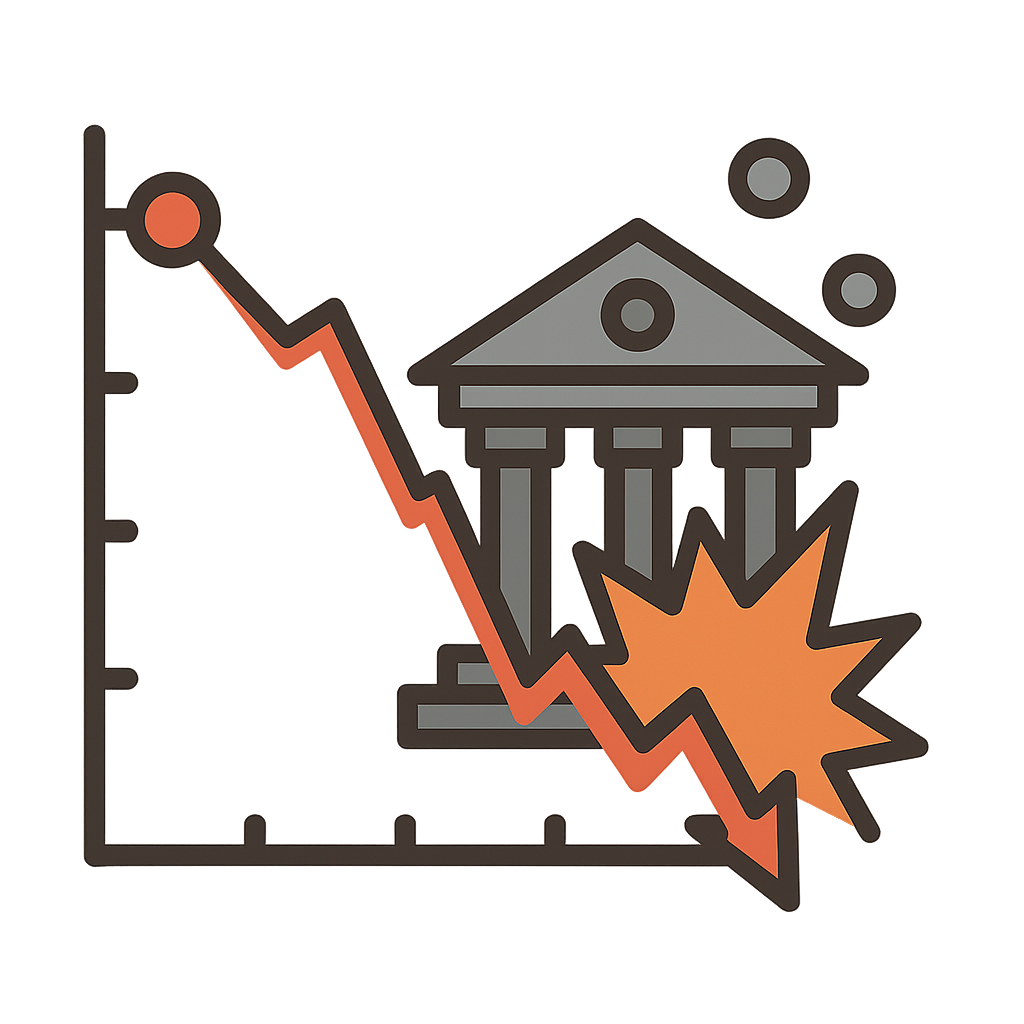
Can you imagine a party that lasted for ten whole years? The music was jazzy, the people were dancing, and everyone felt like they had pockets full of gold. This was a time called the Roaring Twenties. In those days, people discovered a thrilling game. They could buy a tiny piece of a big company, like owning a single sprinkle on a giant birthday cake. This was called the stock market. If the company did well, your little sprinkle became more valuable. It felt like magic. Soon, everyone wanted more and more sprinkles, buying them with money they didn't even have, because they were so sure the party would never, ever stop. But the music was getting a little too loud, and the dancing was getting a little too wild. The happy feelings were about to come to a sudden, shocking halt. The music didn't just fade out. It crashed. I am that crash. I am the Stock Market Crash of 1929.
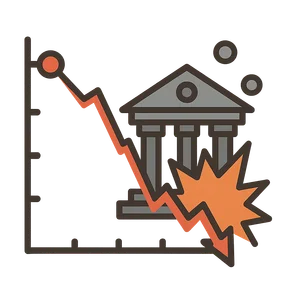
Imagine everyone at that giant party suddenly trying to squeeze through one tiny door at the exact same moment. That’s what it felt like when I arrived. The panic started on a Thursday, October 24th, 1929. History now calls that day Black Thursday. All at once, people tried to sell their stock market sprinkles, but nobody wanted to buy them. When everyone is selling, the value of things starts to fall, like a tower of blocks that’s starting to wobble. The next week was even worse. On Monday, October 28th, the tower shook violently. Then came Tuesday, October 29th, a day forever known as Black Tuesday. On that day, the whole tower of magic money came tumbling down completely. The prices fell so fast it made people’s heads spin. The fortunes that people had cheered about, the wealth they thought would last forever, simply vanished. It was like waking up from a beautiful dream to find it had all disappeared into thin air.
The Day the Music Stopped
Can you imagine a party that lasted for ten whole years? The music was jazzy, the people were dancing, and everyone felt like they had pockets full of gold. This was a time called the Roaring Twenties. In those days, people discovered a thrilling game. They could buy a tiny piece of a big company, like owning a single sprinkle on a giant birthday cake. This was called the stock market. If the company did well, your little sprinkle became more valuable. It felt like magic. Soon, everyone wanted more and more sprinkles, buying them with money they didn't even have, because they were so sure the party would never, ever stop. But the music was getting a little too loud, and the dancing was getting a little too wild. The happy feelings were about to come to a sudden, shocking halt. The music didn't just fade out. It crashed. I am that crash. I am the Stock Market Crash of 1929.
Imagine everyone at that giant party suddenly trying to squeeze through one tiny door at the exact same moment. That’s what it felt like when I arrived. The panic started on a Thursday, October 24th, 1929. History now calls that day Black Thursday. All at once, people tried to sell their stock market sprinkles, but nobody wanted to buy them. When everyone is selling, the value of things starts to fall, like a tower of blocks that’s starting to wobble. The next week was even worse. On Monday, October 28th, the tower shook violently. Then came Tuesday, October 29th, a day forever known as Black Tuesday. On that day, the whole tower of magic money came tumbling down completely. The prices fell so fast it made people’s heads spin. The fortunes that people had cheered about, the wealth they thought would last forever, simply vanished. It was like waking up from a beautiful dream to find it had all disappeared into thin air.
After I happened, the world became a much quieter and harder place. The happy music was gone, and a worried silence took its place. My effects spread like ripples in a pond. It wasn't just the investors who were hurt. People who had carefully saved their money in banks lost everything because some banks had used that money to play the stock market game. When people lost their savings, they stopped buying things like cars, clothes, and even extra food. Because people stopped buying, factories had to close their doors, and stores went out of business. This meant millions of people lost their jobs. Can you picture a time when it was hard to find work and many families struggled just to have enough to eat? That was the beginning of a very long and difficult period called the Great Depression, and it affected people not just in America, but all over the world. I became a somber memory, a lesson about how quickly things can change.
But even the most difficult memories can teach the most important lessons. And I taught a very big one. People learned that they needed to be more careful. Leaders, like President Franklin D. Roosevelt, knew they had to create new rules to prevent a crash like me from happening in the same way again. They decided the stock market needed a referee to make sure the game was played fairly and to protect people’s money. In 1934, the government created a group called the Securities and Exchange Commission, or the SEC. The SEC’s job is to watch over the market, make sure companies are honest, and keep things stable. I am a powerful reminder from the past. I teach people to be thoughtful, to build things on a strong foundation, and to remember that even after the hardest times, we can learn, rebuild, and create a stronger and safer future together.
Wow facts
About
The sudden and severe collapse of stock market prices in the U.S. in October 1929 was a significant event that contributed to the onset of the Great Depression, but widespread bank failures beginning in 1930 were the primary cause.
Take a Quiz
Question 1 of 5
What does the word 'panic' mean in the sentence, 'The panic started on a Thursday'?
Explore next





Want to do even more?
Go beyond exploring. Unlock tools that turn every story into real learning.

Storypie Plus for families
Full stories, quizzes, and printables. Nights and car rides, sorted.
- Unlimited audio stories
- Create Mode: your child stars in the story
- Offline downloads
- Printable worksheets & coloring pages

Why Storypie for Schools
Students engaged. Prep in seconds. Evenings back to you.
- Worksheets & Quizzes
- Classroom Management
- Formative Assessment
- Custom Curriculum & Lesson Plans
- 27 Languages

Why Storypie for Homeschool
Curriculum done. They'll ask for more. Hours back in your day.
- Worksheet Generator
- First-Person Audio Stories
- Built-in Comprehension Quizzes
- Custom Curriculum & Lesson Plans
- Print & Go Activities