English

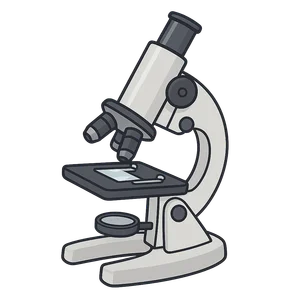
Microscope
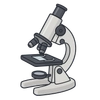
An instrument that uses lenses to make very small objects appear larger…
Reads at Grades 6–8 Listens at Grades 4–8
Print & create
Answer keys·No prep·Free with an account
28 worksheets · answer keys · full story · quiz · Ages 10-12 · CEFR B2
Plus adds 102,000+ more stories in 27 languages, audio for every one, and printables for all of them.
Just want Microscope?
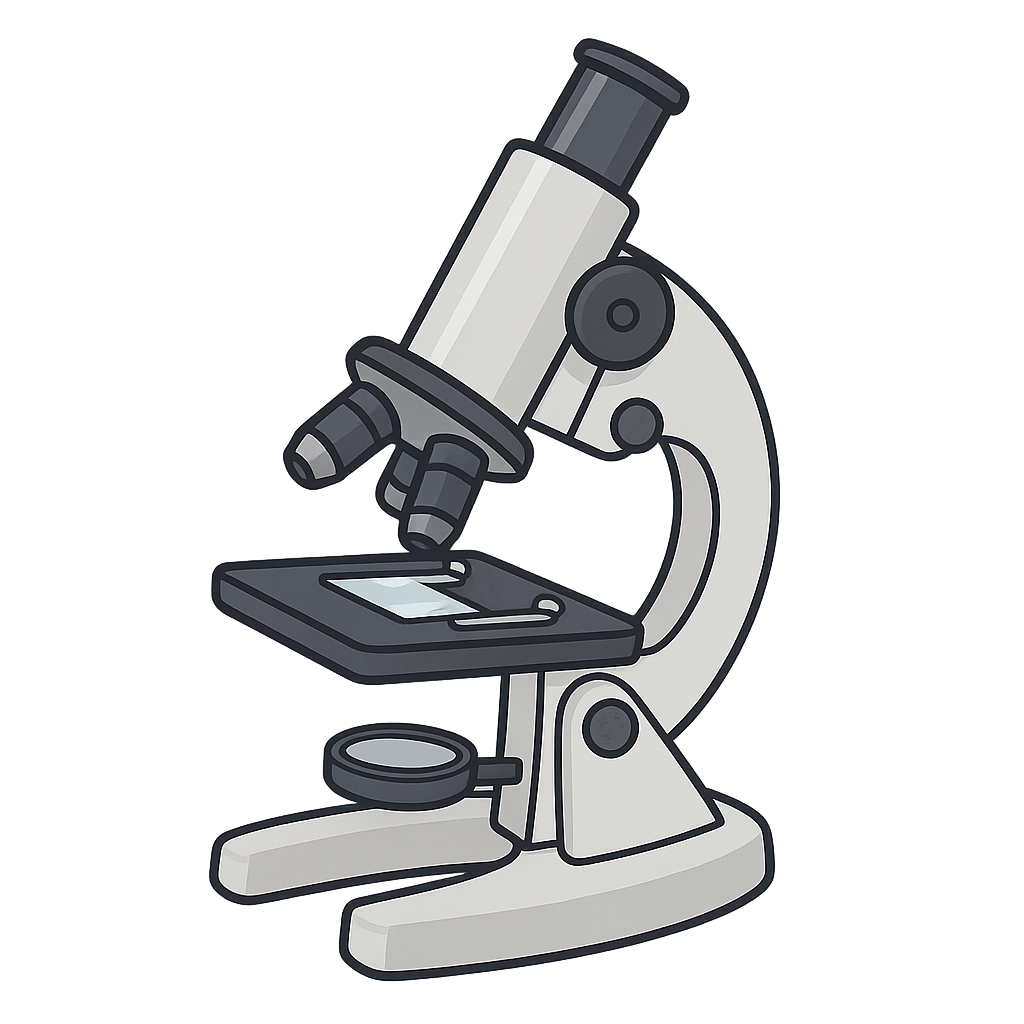
I am a microscope, and my story is about revealing secrets hidden in plain sight. Before I existed, the world seemed so simple. People saw a flower, a fly, or a drop of water and thought they understood it completely. They had no idea that a single drop of pond water was a bustling city of microscopic life or that their own bodies were made of trillions of tiny living units. My journey began in a dusty workshop in the Netherlands around the year 1590. Two spectacle makers, a father and son named Hans and Zacharias Janssen, were masters of their craft, skillfully grinding glass into lenses that helped people with blurry vision see the world clearly. They spent their days surrounded by the tools of their trade, experimenting with how light bent through curved glass. One day, a spark of curiosity led them to place several lenses in a row inside a hollow tube. When they peered through one end, a nearby object on their workbench suddenly appeared enormous. It was shaky and the edges were fuzzy with color, but in that moment, I was born. I was nothing more than a simple tube with a few pieces of glass, but I held within me a revolutionary promise: the power to see the invisible world.
For many years, I was seen as little more than a novelty, a curious toy for wealthy individuals to entertain themselves by looking at magnified fleas, which they called 'flea glasses.' But my true potential was waiting to be unlocked by minds driven by relentless curiosity. In the 1600s, two remarkable men showed the world what I was truly capable of. In England, a brilliant and creative scientist named Robert Hooke began using an improved version of me. In 1665, he published a groundbreaking book titled 'Micrographia,' which was filled with incredibly detailed drawings of the hidden worlds he observed. He sketched the razor-sharp point of a needle, the complex, honeycomb pattern of a fly's eye, and, most famously, a thin slice of cork. Through my lens, he saw that the cork was composed of thousands of tiny, empty boxes. These structures reminded him of the small rooms, or 'cells,' where monks lived in a monastery, so that is what he called them. He was the very first person to use the word 'cell' to describe the fundamental building block of life. At the same time, across the sea in the Netherlands, a determined cloth merchant named Antonie van Leeuwenhoek was perfecting his own unique versions of me. His microscopes were small, handheld devices with a single, incredibly powerful lens that he ground himself. Beginning in the 1670s, he turned his powerful eye on everything he could find. He scraped plaque from his teeth, examined drops of rain, and peered into murky pond water. To his astonishment, he discovered a teeming, vibrant world of what he called 'animalcules'—tiny creatures darting and spinning in the water. He was the first human to ever witness bacteria and protozoa. Thanks to Hooke and van Leeuwenhoek, humanity’s understanding of the world was forever changed; a secret universe had been revealed.
I Am the Microscope: A Story of Seeing the Unseen
I am a microscope, and my story is about revealing secrets hidden in plain sight. Before I existed, the world seemed so simple. People saw a flower, a fly, or a drop of water and thought they understood it completely. They had no idea that a single drop of pond water was a bustling city of microscopic life or that their own bodies were made of trillions of tiny living units. My journey began in a dusty workshop in the Netherlands around the year 1590. Two spectacle makers, a father and son named Hans and Zacharias Janssen, were masters of their craft, skillfully grinding glass into lenses that helped people with blurry vision see the world clearly. They spent their days surrounded by the tools of their trade, experimenting with how light bent through curved glass. One day, a spark of curiosity led them to place several lenses in a row inside a hollow tube. When they peered through one end, a nearby object on their workbench suddenly appeared enormous. It was shaky and the edges were fuzzy with color, but in that moment, I was born. I was nothing more than a simple tube with a few pieces of glass, but I held within me a revolutionary promise: the power to see the invisible world.
For many years, I was seen as little more than a novelty, a curious toy for wealthy individuals to entertain themselves by looking at magnified fleas, which they called 'flea glasses.' But my true potential was waiting to be unlocked by minds driven by relentless curiosity. In the 1600s, two remarkable men showed the world what I was truly capable of. In England, a brilliant and creative scientist named Robert Hooke began using an improved version of me. In 1665, he published a groundbreaking book titled 'Micrographia,' which was filled with incredibly detailed drawings of the hidden worlds he observed. He sketched the razor-sharp point of a needle, the complex, honeycomb pattern of a fly's eye, and, most famously, a thin slice of cork. Through my lens, he saw that the cork was composed of thousands of tiny, empty boxes. These structures reminded him of the small rooms, or 'cells,' where monks lived in a monastery, so that is what he called them. He was the very first person to use the word 'cell' to describe the fundamental building block of life. At the same time, across the sea in the Netherlands, a determined cloth merchant named Antonie van Leeuwenhoek was perfecting his own unique versions of me. His microscopes were small, handheld devices with a single, incredibly powerful lens that he ground himself. Beginning in the 1670s, he turned his powerful eye on everything he could find. He scraped plaque from his teeth, examined drops of rain, and peered into murky pond water. To his astonishment, he discovered a teeming, vibrant world of what he called 'animalcules'—tiny creatures darting and spinning in the water. He was the first human to ever witness bacteria and protozoa. Thanks to Hooke and van Leeuwenhoek, humanity’s understanding of the world was forever changed; a secret universe had been revealed.
My journey of improvement was just beginning. As the centuries passed, brilliant minds continued to refine and perfect me. A significant challenge during the 1700s and early 1800s was something called chromatic aberration, where my lenses would create annoying, rainbow-colored fringes around objects, making it hard to see fine details. But by the mid-1800s, inventors had figured out how to combine different types of glass to create achromatic lenses, which produced much clearer and sharper images. This breakthrough was revolutionary for science and medicine. It allowed scientists like Louis Pasteur in France to use me to clearly see the microorganisms responsible for spoiling food and causing diseases. His work with me helped him develop the germ theory of disease, proving that these invisible microbes were the culprits, a discovery that saved countless lives. But even with these improvements, I had a limit. Light itself could only reveal so much. Scientists knew there were things even smaller than bacteria, like viruses, but they remained invisible. To see them, a completely new approach was needed. That leap came in 1931, when two German scientists, Ernst Ruska and Max Knoll, built the first prototype of a completely new me: the electron microscope. Instead of using a beam of light, this powerful new form of me used a beam of subatomic particles called electrons. The difference was astounding. It was like going from being able to see a house from a distance to suddenly being able to see every single nail holding it together. The invisible world became even more visible.
Today, I am an essential tool in almost every field of science and technology. I exist in countless forms, from the familiar compound microscopes you might use in your school's science lab to enormous, room-sized electron microscopes in advanced research facilities. I am the trusted partner of doctors diagnosing illnesses by examining tissue samples, of forensic scientists analyzing microscopic evidence to solve crimes, and of biologists unlocking the secrets of DNA, the very blueprint of life. My journey has been a long one, from a simple tube in a 16th-century workshop to a sophisticated machine that can visualize individual atoms. But through it all, my purpose has remained the same: to serve human curiosity. I am a testament to the power of looking closer, of asking questions, and of persevering to find the answers. I hope my story inspires you to keep looking, keep questioning, and keep discovering, because there are always more wonders in our world waiting to be seen.
Wow facts
About
An instrument that uses lenses to make very small objects appear larger, revealing a world invisible to the naked eye.
Take a Quiz
Question 1 of 5
In your own words, describe the microscope's journey from its creation by the Janssens to the invention of the electron microscope by Ruska and Knoll.
Explore next



Want to do even more?
Go beyond exploring. Unlock tools that turn every story into real learning.

Storypie Plus for families
Full stories, quizzes, and printables. Nights and car rides, sorted.
- Unlimited audio stories
- Create Mode: your child stars in the story
- Offline downloads
- Printable worksheets & coloring pages

Why Storypie for Schools
Students engaged. Prep in seconds. Evenings back to you.
- Worksheets & Quizzes
- Classroom Management
- Formative Assessment
- Custom Curriculum & Lesson Plans
- 27 Languages

Why Storypie for Homeschool
Curriculum done. They'll ask for more. Hours back in your day.
- Worksheet Generator
- First-Person Audio Stories
- Built-in Comprehension Quizzes
- Custom Curriculum & Lesson Plans
- Print & Go Activities