English

Microscope
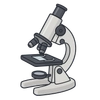
An instrument that uses lenses to make very small objects appear larger…
Reads at Grades 3–5 Listens at Grades 1–5
Print & create
Answer keys·No prep·Free with an account
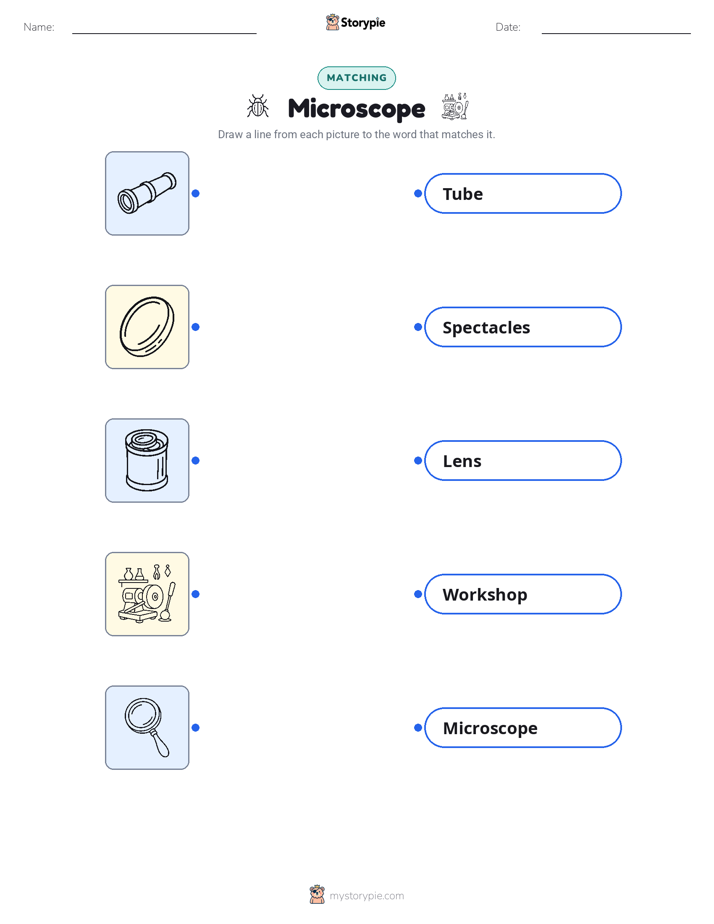
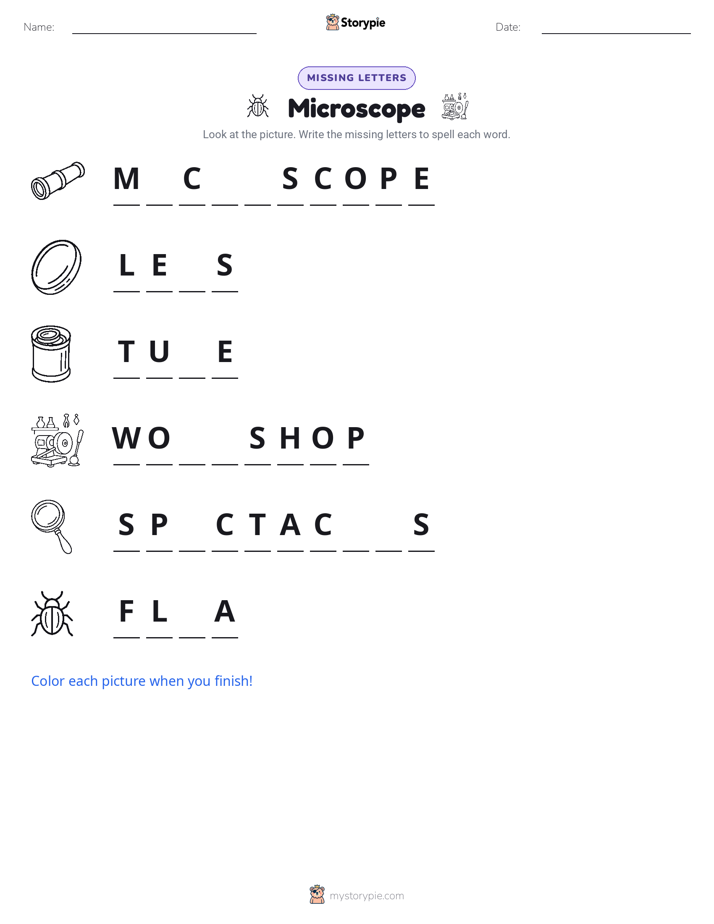
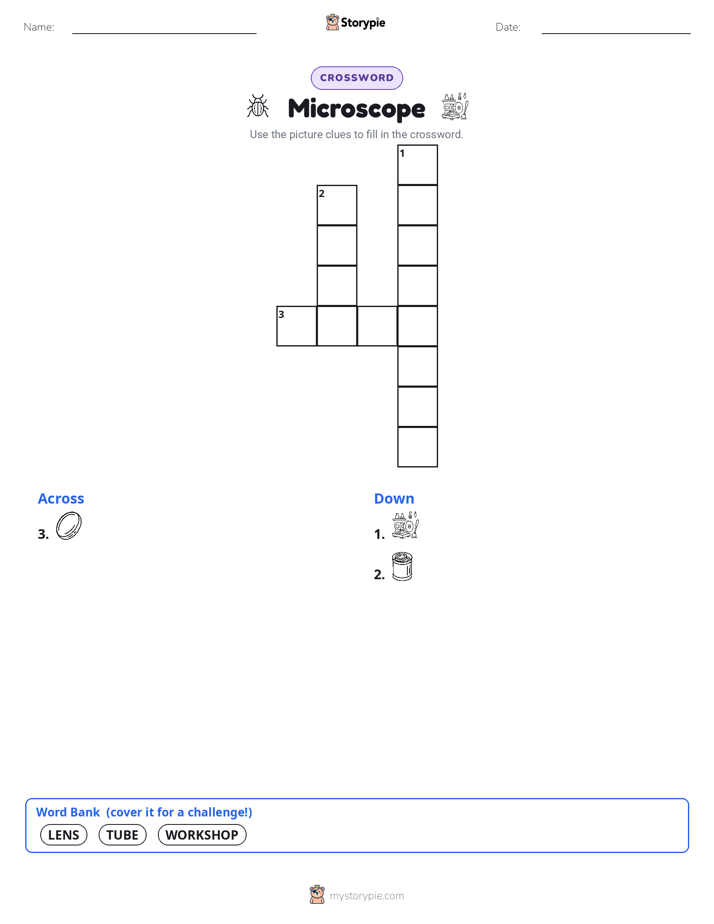
28 worksheets · answer keys · full story · quiz · Ages 8-10 · CEFR B1
Plus adds 102,000+ more stories in 27 languages, audio for every one, and printables for all of them.
Just want Microscope?
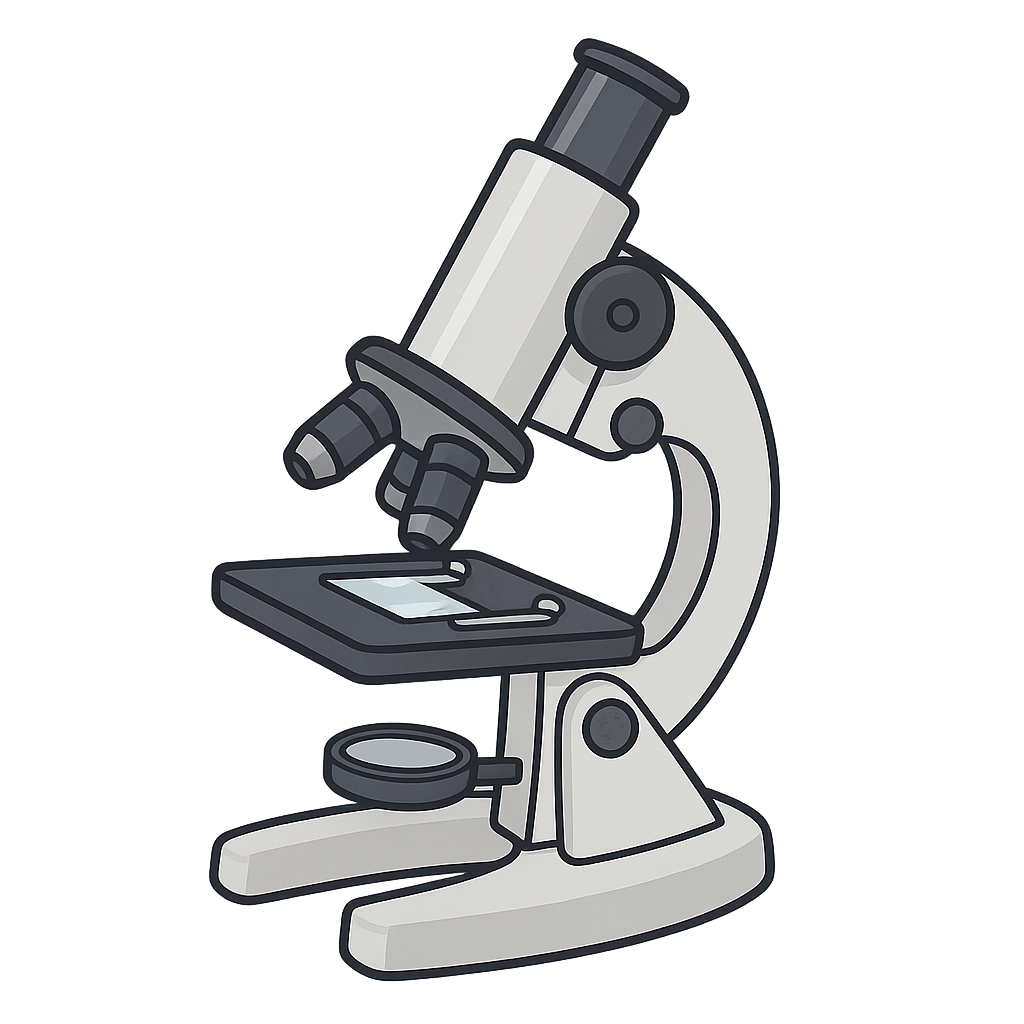
Hello there. I am a microscope. Before I came along, you could only see the big, wonderful world around you—the tall trees, the fluffy clouds, and the buzzing bees. But what about the things that are too tiny to see? I was created to solve that exact puzzle. I am a window into a secret, invisible world, a world teeming with life so small it could dance on the head of a pin. My purpose is to make the smallest things look large enough for the human eye to explore. My story is about how a little bit of glass and a lot of curiosity helped humans discover the tiny building blocks of everything, changing science forever. I was born from a simple idea, but I opened up universes no one ever knew existed.
My story begins a long, long time ago, around the year 1590, in a busy little town called Middelburg in the Netherlands. A clever father and son, Hans and Zacharias Janssen, were spectacle-makers. They were experts with lenses—the curved pieces of glass that could make words in a book look bigger for people who had trouble seeing. One day, they decided to experiment. They put one lens at the top of a hollow tube and another lens at the bottom. When Zacharias peeked through, he looked at a tiny dust speck on the table. It didn't just look a little bigger; it looked gigantic. That was the moment I, the first compound microscope, was born. I was very simple back then, just a tube with some glass, but I held a huge secret. A few years later, around 1609, a famous man in Italy named Galileo Galilei, who was busy looking at the stars with his telescope, heard about my design. He tinkered with his own lenses and made a version of me he called the 'occhiolino,' which means 'little eye' in Italian. People were starting to realize that there was so much more to the world than what they could see on their own.
The Microscope's Story: A Look into the Invisible World
Hello there. I am a microscope. Before I came along, you could only see the big, wonderful world around you—the tall trees, the fluffy clouds, and the buzzing bees. But what about the things that are too tiny to see? I was created to solve that exact puzzle. I am a window into a secret, invisible world, a world teeming with life so small it could dance on the head of a pin. My purpose is to make the smallest things look large enough for the human eye to explore. My story is about how a little bit of glass and a lot of curiosity helped humans discover the tiny building blocks of everything, changing science forever. I was born from a simple idea, but I opened up universes no one ever knew existed.
My story begins a long, long time ago, around the year 1590, in a busy little town called Middelburg in the Netherlands. A clever father and son, Hans and Zacharias Janssen, were spectacle-makers. They were experts with lenses—the curved pieces of glass that could make words in a book look bigger for people who had trouble seeing. One day, they decided to experiment. They put one lens at the top of a hollow tube and another lens at the bottom. When Zacharias peeked through, he looked at a tiny dust speck on the table. It didn't just look a little bigger; it looked gigantic. That was the moment I, the first compound microscope, was born. I was very simple back then, just a tube with some glass, but I held a huge secret. A few years later, around 1609, a famous man in Italy named Galileo Galilei, who was busy looking at the stars with his telescope, heard about my design. He tinkered with his own lenses and made a version of me he called the 'occhiolino,' which means 'little eye' in Italian. People were starting to realize that there was so much more to the world than what they could see on their own.
My big break came in the late 1600s, thanks to two amazing people who used me to see things no one had ever dreamed of. In England, a brilliant scientist named Robert Hooke pointed me at a very thin slice of cork. What he saw on that day in 1665 amazed him completely. The cork wasn't solid; it was made of thousands of tiny, empty boxes, arranged neatly like a honeycomb. These little boxes reminded him of the small rooms, or 'cells,' where monks lived in a monastery, so that's what he decided to call them. He was the very first person to see a cell. Hooke was so excited that he drew everything he saw in a beautiful book called Micrographia, which showed people a flea as big as a cat and the delicate, complex eye of a fly. Meanwhile, in the Netherlands, a man named Antonie van Leeuwenhoek, who sold cloth for a living, became obsessed with making the best lenses in the world. He ground tiny, powerful pieces of glass and built a special version of me, a simple microscope with just one incredibly strong lens. In 1674, he scooped up a single drop of pond water and put it under his lens. He couldn't believe his eyes. The water was alive with thousands of tiny swimming, wiggling creatures. He called them 'animalcules,' or little animals. He had discovered bacteria and protozoa, a whole new kingdom of life that no one knew existed. Thanks to me, the invisible world was finally visible for all to see.
From that moment on, I changed everything. My ability to reveal the unseen world transformed science and medicine. I helped scientists understand that tiny germs, those 'animalcules' Leeuwenhoek saw, could make people sick. This amazing discovery, known as germ theory, led to new medicines, vaccines, and ways to stay healthy, saving countless lives. I also showed them that all living things, from the tallest giraffe to the smallest flower, are made of cells, the building blocks Robert Hooke first named. Today, I am more powerful than ever. I work in hospitals to help doctors diagnose illnesses, in laboratories to help scientists invent new things, and in classrooms to help students like you explore the wonders of the tiny universe. Every time someone looks through me, they are continuing a journey of discovery that started with a couple of lenses in a tube so many years ago. And who knows what amazing new secrets about our world you might be the one to find?
Wow facts
About
An instrument that uses lenses to make very small objects appear larger, revealing a world invisible to the naked eye.
Take a Quiz
Question 1 of 5
Who were the first people to create me, the compound microscope, around the year 1590?
Explore next




Want to do even more?
Go beyond exploring. Unlock tools that turn every story into real learning.

Storypie Plus for families
Full stories, quizzes, and printables. Nights and car rides, sorted.
- Unlimited audio stories
- Create Mode: your child stars in the story
- Offline downloads
- Printable worksheets & coloring pages

Why Storypie for Schools
Students engaged. Prep in seconds. Evenings back to you.
- Worksheets & Quizzes
- Classroom Management
- Formative Assessment
- Custom Curriculum & Lesson Plans
- 27 Languages

Why Storypie for Homeschool
Curriculum done. They'll ask for more. Hours back in your day.
- Worksheet Generator
- First-Person Audio Stories
- Built-in Comprehension Quizzes
- Custom Curriculum & Lesson Plans
- Print & Go Activities