English

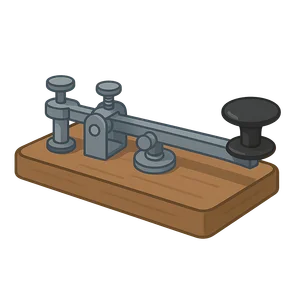
Telegraph
The telegraph is an invention that revolutionized long-distance communication by using electrical signals…
Reads at Grades 6–8 Listens at Grades 4–8
Print & create
Answer keys·No prep·Free with an account
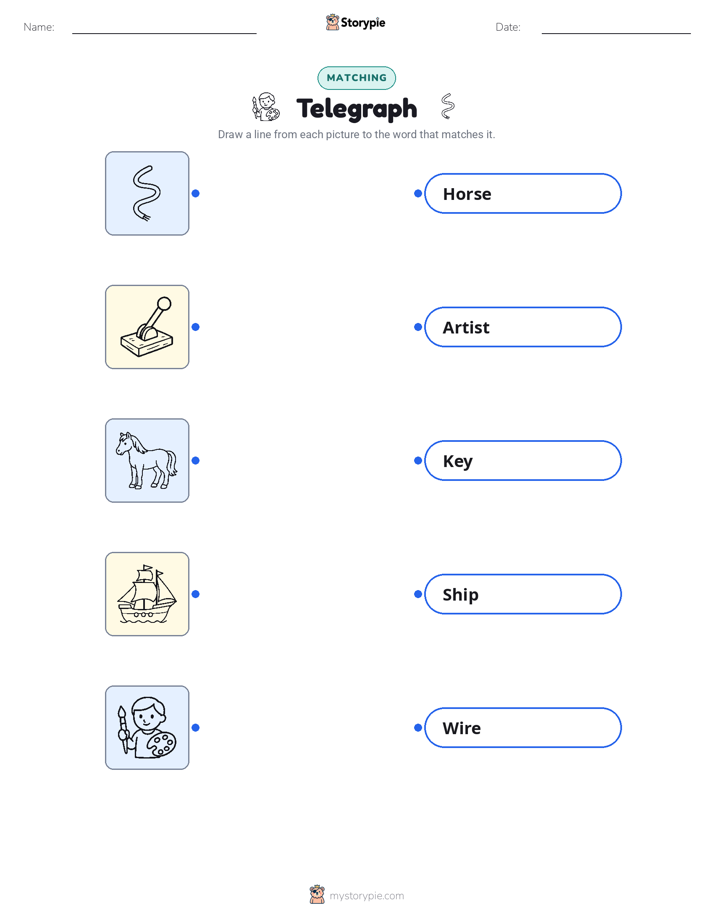
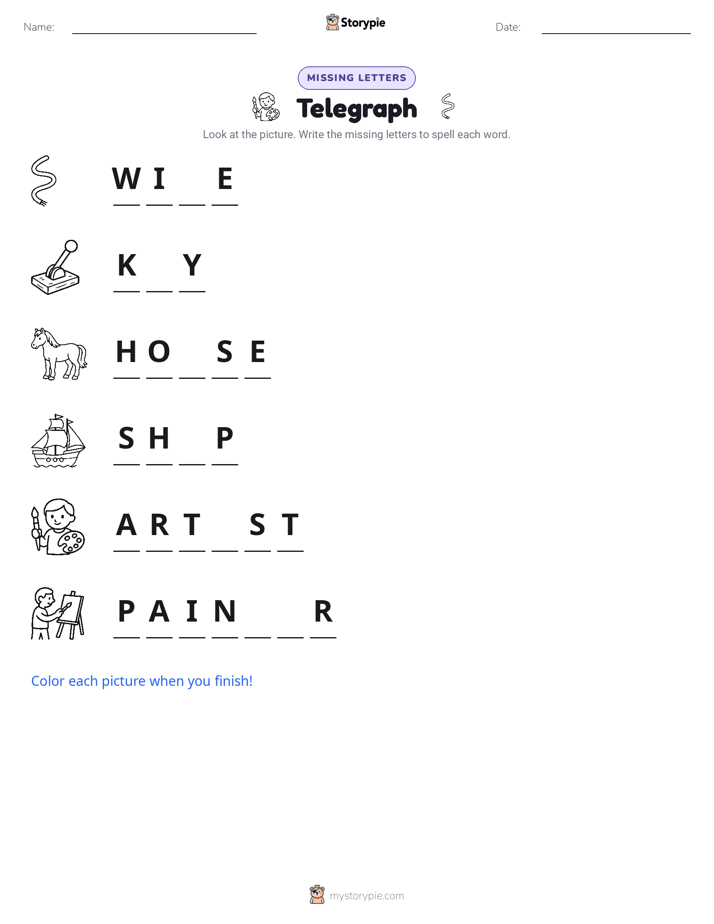
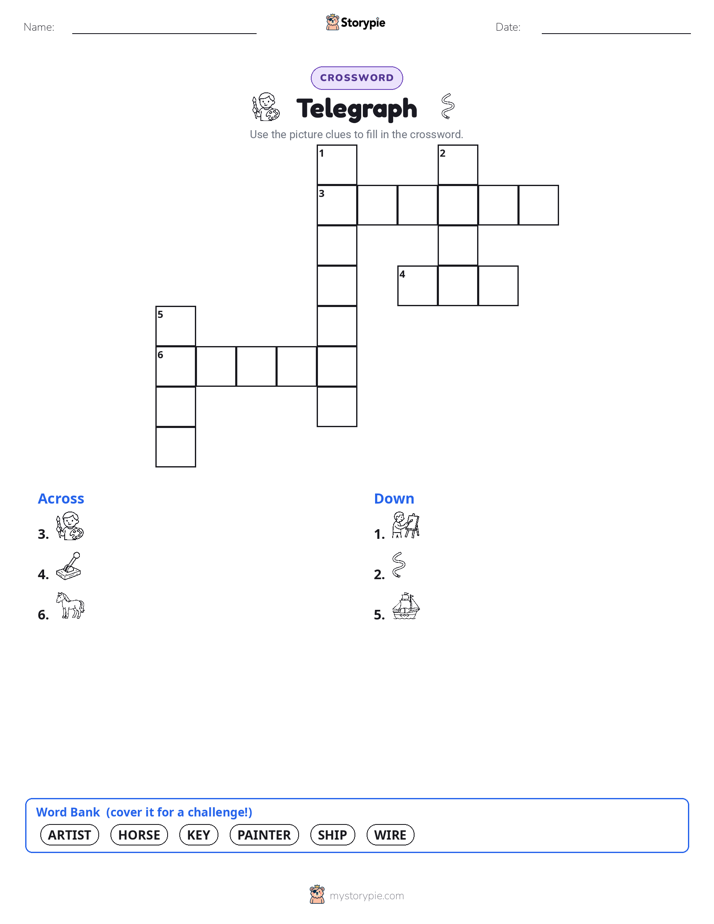
28 worksheets · answer keys · full story · quiz · Ages 10-12 · CEFR B2
Plus adds 102,000+ more stories in 27 languages, audio for every one, and printables for all of them.
Just want Telegraph?
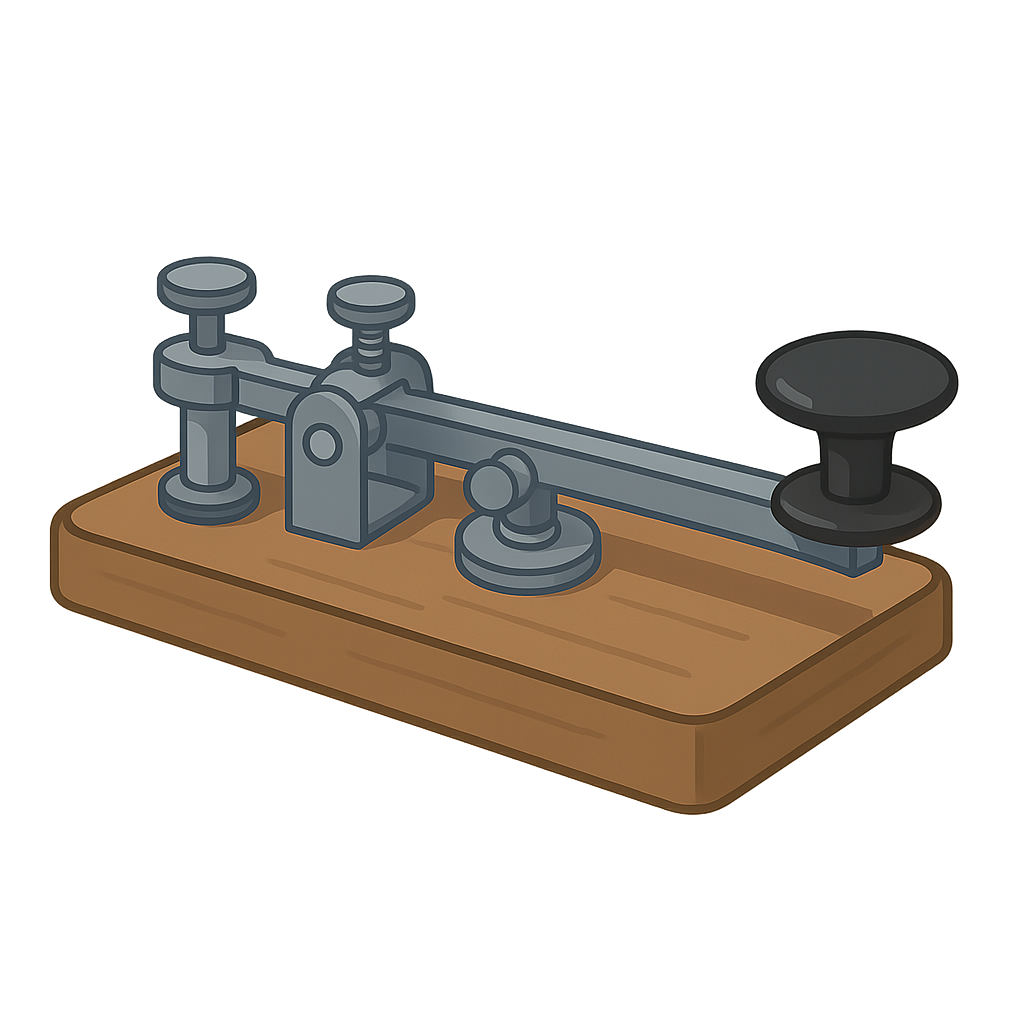
Before I was born, the world was a very different place. It was vast and quiet, and news traveled only as fast as the swiftest horse or the speediest ship. A letter from a loved one across the country could take weeks to arrive; news from another continent might take months. People lived with a constant sense of distance, a slowness that we can hardly imagine today. In this world of waiting, a deep human need for connection simmered, a desire to shrink the world and bring people closer. It was into this world that the idea of me was born. I am the Telegraph, and my story begins not in a laboratory, but in the mind of an artist. His name was Samuel F. B. Morse. He was a painter, a man who saw the world in colors and shapes. In 1832, while sailing home from Europe, he overheard a conversation about the strange new power of electromagnetism. A spark ignited in his mind. What if this invisible force, this electricity, could be used to carry messages? What if a signal could be sent through a wire, instantly, across miles of land? The idea consumed him, partly because he knew the pain of slow news all too well. Years earlier, a message about his wife’s illness had taken so long to reach him that by the time he rushed home, she had already been buried. He was determined that no one else should feel that kind of helplessness.
An idea is one thing, but making it real is another journey entirely. How could I, a silent current of electricity flowing through a copper wire, learn to speak a human language? That was the great puzzle Samuel Morse had to solve. He was a brilliant thinker, but he wasn't an expert in electricity, so he sought help. He found it in partners like Leonard Gale, a science professor who helped improve the power of my electrical signal, and Alfred Vail, a clever mechanic who made crucial improvements to my physical form. It was Alfred who is often credited with refining my special alphabet. Together, over long years of trial and error throughout the 1830s, they taught me to speak. My language wasn't made of sounds, but of silence and signals. A short electrical pulse became a 'dot,' and a long one became a 'dash.' Every letter of the alphabet, every number, was given its own unique combination of these dots and dashes. This system was called Morse Code, and it was the key that unlocked my voice. For years, my creators tinkered in workshops, building clumsy prototypes and trying to convince people that their clicking contraption was more than just a toy. Many people scoffed at the idea. Sending messages through a wire? It sounded like science fiction. They struggled for money and support, but they never gave up. Finally, after years of perseverance, they got their chance. In 1843, the United States Congress, intrigued by the possibility, granted them the funds to build a real, experimental line. I was finally going to get to stretch my legs, to run for miles and prove what I could do.
The Telegraph's Tale
Before I was born, the world was a very different place. It was vast and quiet, and news traveled only as fast as the swiftest horse or the speediest ship. A letter from a loved one across the country could take weeks to arrive; news from another continent might take months. People lived with a constant sense of distance, a slowness that we can hardly imagine today. In this world of waiting, a deep human need for connection simmered, a desire to shrink the world and bring people closer. It was into this world that the idea of me was born. I am the Telegraph, and my story begins not in a laboratory, but in the mind of an artist. His name was Samuel F. B. Morse. He was a painter, a man who saw the world in colors and shapes. In 1832, while sailing home from Europe, he overheard a conversation about the strange new power of electromagnetism. A spark ignited in his mind. What if this invisible force, this electricity, could be used to carry messages? What if a signal could be sent through a wire, instantly, across miles of land? The idea consumed him, partly because he knew the pain of slow news all too well. Years earlier, a message about his wife’s illness had taken so long to reach him that by the time he rushed home, she had already been buried. He was determined that no one else should feel that kind of helplessness.
An idea is one thing, but making it real is another journey entirely. How could I, a silent current of electricity flowing through a copper wire, learn to speak a human language? That was the great puzzle Samuel Morse had to solve. He was a brilliant thinker, but he wasn't an expert in electricity, so he sought help. He found it in partners like Leonard Gale, a science professor who helped improve the power of my electrical signal, and Alfred Vail, a clever mechanic who made crucial improvements to my physical form. It was Alfred who is often credited with refining my special alphabet. Together, over long years of trial and error throughout the 1830s, they taught me to speak. My language wasn't made of sounds, but of silence and signals. A short electrical pulse became a 'dot,' and a long one became a 'dash.' Every letter of the alphabet, every number, was given its own unique combination of these dots and dashes. This system was called Morse Code, and it was the key that unlocked my voice. For years, my creators tinkered in workshops, building clumsy prototypes and trying to convince people that their clicking contraption was more than just a toy. Many people scoffed at the idea. Sending messages through a wire? It sounded like science fiction. They struggled for money and support, but they never gave up. Finally, after years of perseverance, they got their chance. In 1843, the United States Congress, intrigued by the possibility, granted them the funds to build a real, experimental line. I was finally going to get to stretch my legs, to run for miles and prove what I could do.
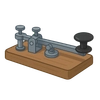
My great test took place on May 24th, 1844. The air itself felt charged with anticipation, a mix of excitement and deep skepticism. My wire, my metallic nerve, stretched 40 miles from the U.S. Capitol building in Washington, D.C., to a railroad station in Baltimore, Maryland. In Washington, Samuel Morse sat before my sending key in the grand chamber of the Supreme Court. A crowd of important politicians, journalists, and curious citizens gathered around him, their eyes fixed on the simple wooden and metal device. In Baltimore, Alfred Vail waited by my receiver, ready to hear my first official words. The moment came. A hush fell over the room in Washington. Morse, with a steady hand, began to tap the key. Click. Click-clack-click. Click. Each tap sent a pulse of electricity racing down the wire faster than any horse could ever run. He wasn't just tapping; he was spelling out a message chosen for the occasion, a phrase full of awe and wonder from the Bible: 'What hath God wrought.' Forty miles away, in what felt like the exact same instant, my receiver in Baltimore began to click, perfectly echoing Morse's taps. Alfred Vail decoded my message and sent it back. When the confirmation arrived in Washington, the crowd erupted. The skeptics were silenced. In that moment, I had done the impossible. I had collapsed distance. For the first time in human history, a complex thought had traveled miles in a mere second. It wasn't just a message; it was a miracle. It was the birth of a new era, and I was its voice.
That first message was just my opening line. Soon, I was speaking across the entire nation. My wires began to follow the newly laid railroad tracks, weaving a web of copper that connected cities and towns that had once been days or weeks apart. I carried news of business deals, government decisions, and personal family matters. Newspapers could report on events from the other side of the country on the very same day they happened. The United States began to feel like a more unified, connected place, all because of the dots and dashes I carried. But my ambition didn't stop at the edge of the continent. My greatest adventure was yet to come: crossing the vast, deep Atlantic Ocean. It was a monumental challenge. Laying a cable on the ocean floor was a task filled with failure and heartbreak. The first cables laid in the 1850s broke or went silent. But my creators and their successors were relentless. Finally, in 1866, a durable cable was successfully laid, and I spoke my first words between North America and Europe. The world shrank once more. I look back on my life with pride. I was the foundation, the original spark. I taught the world that distance was no longer an unconquerable barrier. My direct descendants, the telephone, the radio, and the internet, all carry a piece of my spirit. They speak in different ways, with voices and images, but they all began with my simple, revolutionary click. I was the first to prove that a wire could carry not just electricity, but the hopes, dreams, and thoughts of humanity.
Wow facts
About
The telegraph is an invention that revolutionized long-distance communication by using electrical signals transmitted over wires to send coded messages, typically in Morse Code.
Take a Quiz
Question 1 of 5
Which of the following best summarizes the main events of the Telegraph's creation?
Explore next



Want to do even more?
Go beyond exploring. Unlock tools that turn every story into real learning.

Storypie Plus for families
Full stories, quizzes, and printables. Nights and car rides, sorted.
- Unlimited audio stories
- Create Mode: your child stars in the story
- Offline downloads
- Printable worksheets & coloring pages

Why Storypie for Schools
Students engaged. Prep in seconds. Evenings back to you.
- Worksheets & Quizzes
- Classroom Management
- Formative Assessment
- Custom Curriculum & Lesson Plans
- 27 Languages

Why Storypie for Homeschool
Curriculum done. They'll ask for more. Hours back in your day.
- Worksheet Generator
- First-Person Audio Stories
- Built-in Comprehension Quizzes
- Custom Curriculum & Lesson Plans
- Print & Go Activities