English

Telegraph
The telegraph is an invention that revolutionized long-distance communication by using electrical signals…
Reads at Grades 3–5 Listens at Grades 1–5
Print & create
Answer keys·No prep·Free with an account
28 worksheets · answer keys · full story · quiz · Ages 8-10 · CEFR B1
Plus adds 102,000+ more stories in 27 languages, audio for every one, and printables for all of them.
Just want Telegraph?
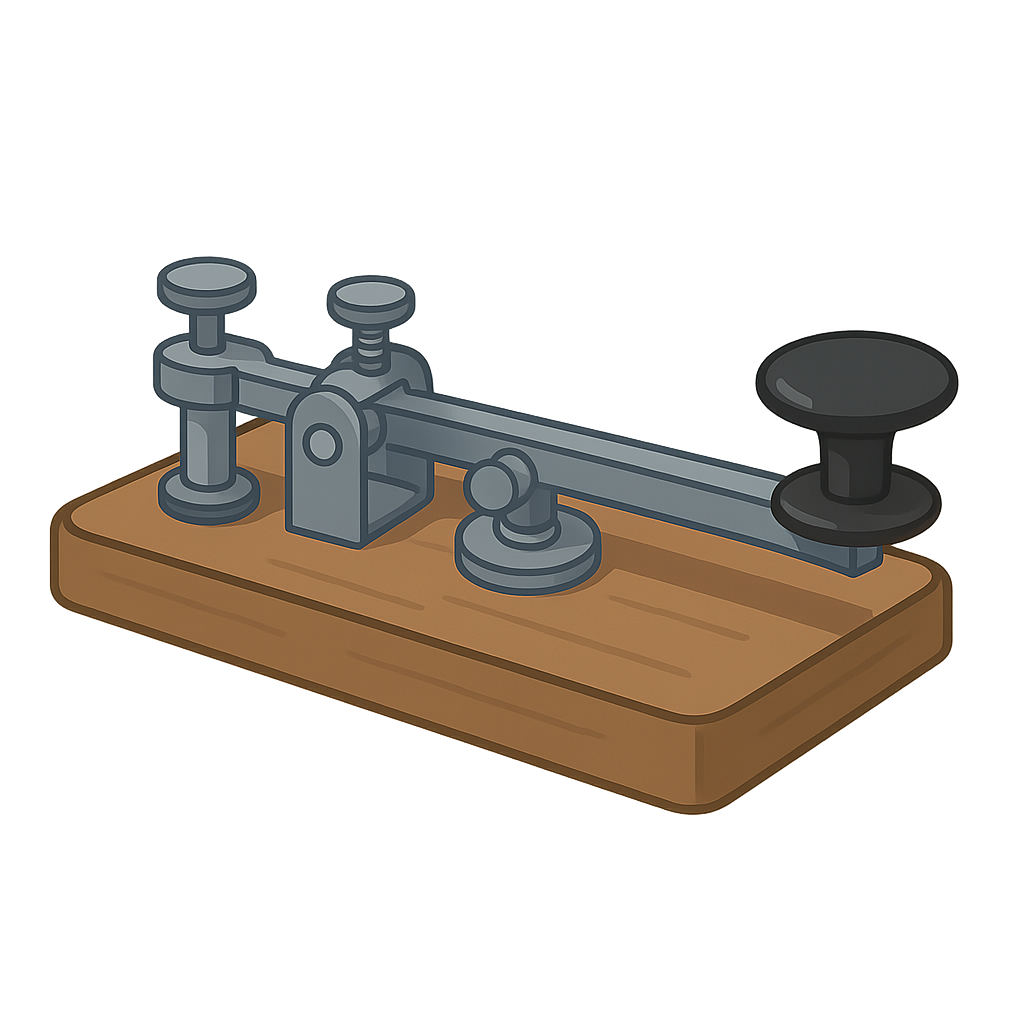
Before I existed, the world was a very quiet and slow place. Messages could only travel as fast as a galloping horse or a sailing ship. That meant news could take days, weeks, or even months to arrive. Hello, my name is the Telegraph, and I am a web of wires that taught the world how to speak with lightning. My story begins with a moment of great sadness for my inventor, an artist named Samuel Morse. In 1825, he was away from home painting a picture when his wife became terribly sick. A messenger on horseback was sent with a letter, but by the time it reached him, it was too late. He rushed home, but she was already gone. That heartbreak planted a seed in his mind: there had to be a way for people to talk to each other instantly, no matter how far apart they were. That sad day sparked a determination that would change everything.
My real 'aha!' moment came years later, in 1832. Samuel Morse was on a long ship voyage back to America from Europe. During the trip, he watched a demonstration of an electromagnet, a piece of metal that became magnetic when electricity passed through it. A thought flashed in his mind like a bolt of lightning. If electricity could travel through a wire in an instant, couldn't it carry a message? The idea was brilliant, but it came with a huge puzzle. How could you make electricity 'talk'? It didn't have a voice or hands to write. This is where my special language was born. For several years, Mr. Morse worked tirelessly. Around 1838, with the help of his clever assistant, Alfred Vail, he developed a system of clicks. It wasn't a language of words, but of patterns. A short click was called a 'dot' and a long one was a 'dash.' Together, they created a unique pattern of dots and dashes for every single letter of the alphabet and every number. They called it Morse Code, and it became my voice.
My Life as a Series of Clicks
Before I existed, the world was a very quiet and slow place. Messages could only travel as fast as a galloping horse or a sailing ship. That meant news could take days, weeks, or even months to arrive. Hello, my name is the Telegraph, and I am a web of wires that taught the world how to speak with lightning. My story begins with a moment of great sadness for my inventor, an artist named Samuel Morse. In 1825, he was away from home painting a picture when his wife became terribly sick. A messenger on horseback was sent with a letter, but by the time it reached him, it was too late. He rushed home, but she was already gone. That heartbreak planted a seed in his mind: there had to be a way for people to talk to each other instantly, no matter how far apart they were. That sad day sparked a determination that would change everything.
My real 'aha!' moment came years later, in 1832. Samuel Morse was on a long ship voyage back to America from Europe. During the trip, he watched a demonstration of an electromagnet, a piece of metal that became magnetic when electricity passed through it. A thought flashed in his mind like a bolt of lightning. If electricity could travel through a wire in an instant, couldn't it carry a message? The idea was brilliant, but it came with a huge puzzle. How could you make electricity 'talk'? It didn't have a voice or hands to write. This is where my special language was born. For several years, Mr. Morse worked tirelessly. Around 1838, with the help of his clever assistant, Alfred Vail, he developed a system of clicks. It wasn't a language of words, but of patterns. A short click was called a 'dot' and a long one was a 'dash.' Together, they created a unique pattern of dots and dashes for every single letter of the alphabet and every number. They called it Morse Code, and it became my voice.
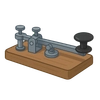
After years of hard work, testing, and asking for help, it was finally time to show the world what I could do. The air was buzzing with excitement on May 24th, 1844. Samuel Morse sat in a room in the U.S. Capitol building in Washington, D.C. His partners were waiting nearly 40 miles away in a railroad station in Baltimore. A wire, my wire, connected the two cities. Everyone held their breath as Mr. Morse began to tap a handle on a small machine. With each tap, he sent a pulse of electricity zipping through me. Click-click-clack. Dot-dot-dash. The electrical pulses raced along the wire faster than any horse could ever run. In Baltimore, my clicks were received and written down. A few moments later, a message was sent back to Washington, D.C., confirming that my first words had been understood. I had spoken across the miles. And what were my first famous words? 'What hath God wrought.' People were speechless. A message had traveled miles in mere seconds. It felt like magic.
My first message was just the beginning. Suddenly, everyone wanted me to connect their city. Brave workers climbed tall wooden poles, stringing my copper wires from town to town. I stretched across vast, empty plains, over tall mountains, and through dense forests, weaving a web of connection across America. My biggest challenge, however, was the water. How could I cross the enormous Atlantic Ocean to connect America with Europe? It seemed impossible. My wires couldn't get wet. Special cables had to be made, coated in waterproof rubber. The first few attempts to lay a cable on the ocean floor failed. But finally, in 1866, a permanent cable was laid, and I could carry messages between the two continents. For the first time in history, news from London could reach New York in minutes, not weeks. I helped businesses arrange deals, newspapers report on world events as they happened, and families send urgent news to loved ones across the sea.
As time went on, other, newer inventions came along. The telephone learned to carry voices, the radio learned to send sounds through the air, and eventually, the internet connected the whole world with pictures and videos. I know that my time of clicks and dashes has mostly passed. But I am incredibly proud of what I accomplished. I was the very first. I am the grandparent of all instant communication. I was the one who proved that electricity could be used to shrink the vast distances between people. Every time you send a text message to a friend, watch a live video from another country, or get an instant news alert on a phone, you can think of me. It all started with my simple, electric clicks, which first made our big, wide world feel a little bit smaller and a whole lot more connected.
Wow facts
About
The telegraph is an invention that revolutionized long-distance communication by using electrical signals transmitted over wires to send coded messages, typically in Morse Code.
Take a Quiz
Question 1 of 5
Why was Samuel Morse so determined to invent a faster way to send messages?
Explore next



Want to do even more?
Go beyond exploring. Unlock tools that turn every story into real learning.

Storypie Plus for families
Full stories, quizzes, and printables. Nights and car rides, sorted.
- Unlimited audio stories
- Create Mode: your child stars in the story
- Offline downloads
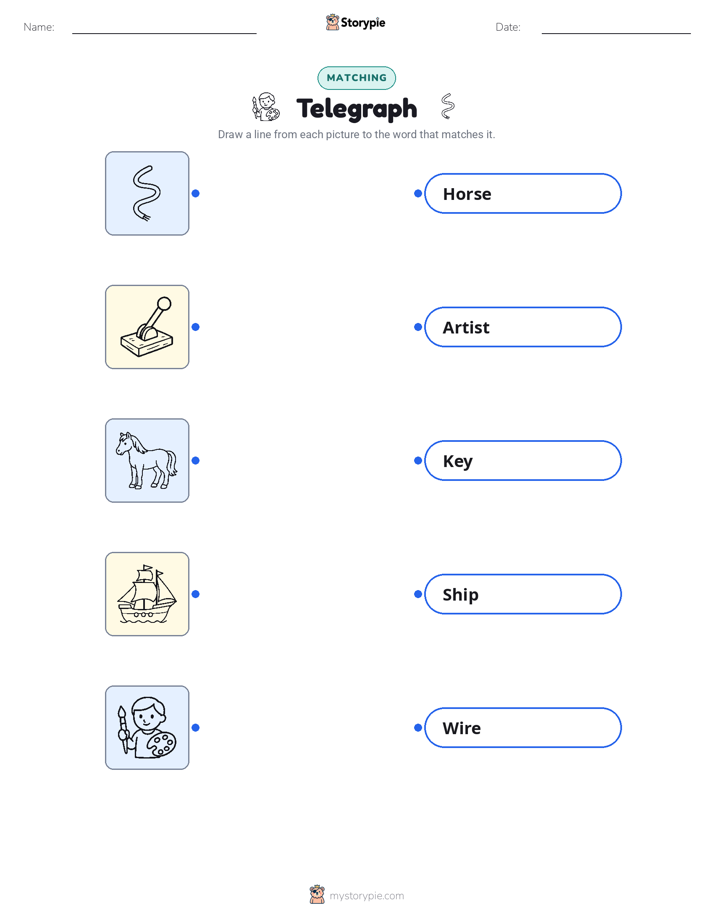
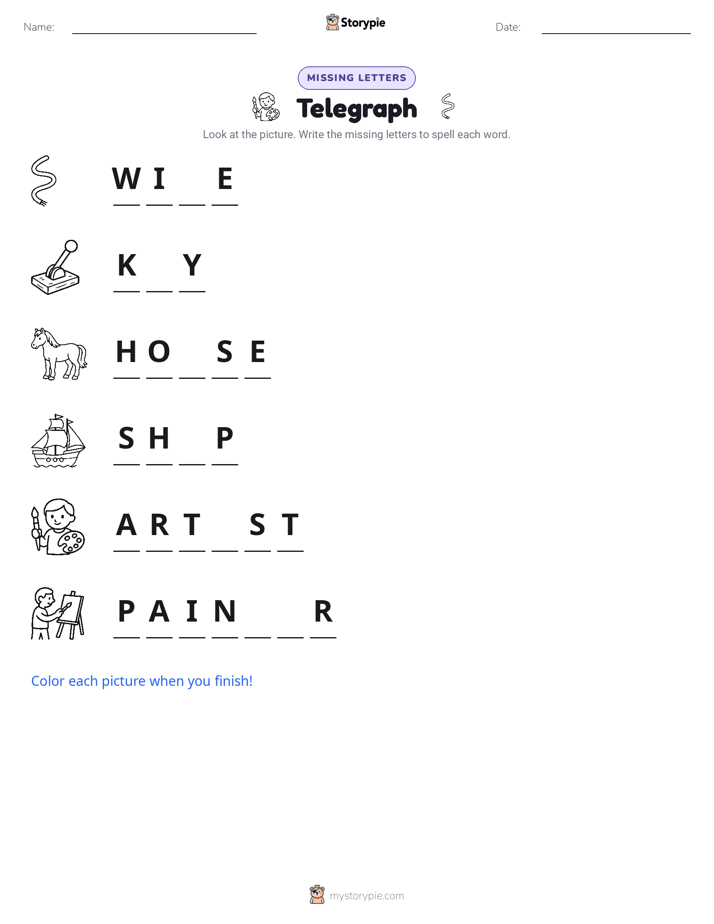
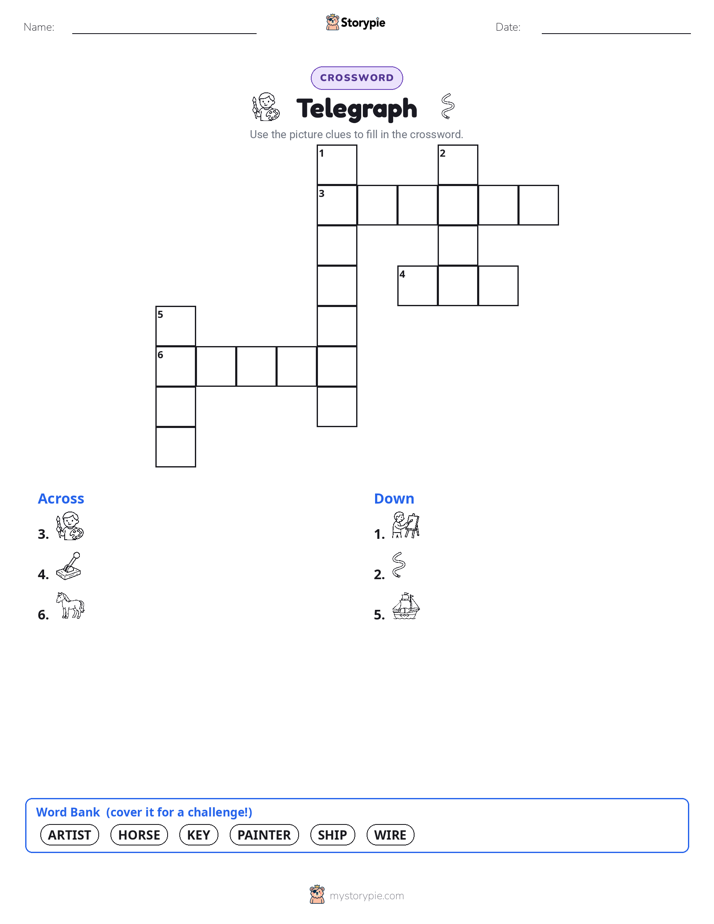
- Printable worksheets & coloring pages

Why Storypie for Schools
Students engaged. Prep in seconds. Evenings back to you.
- Worksheets & Quizzes
- Classroom Management
- Formative Assessment
- Custom Curriculum & Lesson Plans
- 27 Languages

Why Storypie for Homeschool
Curriculum done. They'll ask for more. Hours back in your day.
- Worksheet Generator
- First-Person Audio Stories
- Built-in Comprehension Quizzes
- Custom Curriculum & Lesson Plans
- Print & Go Activities