English

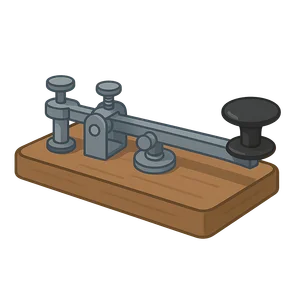
Telegraph
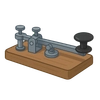
The telegraph is an invention that revolutionized long-distance communication by using electrical signals…
Reads at Grades K-2 Listens at K–3
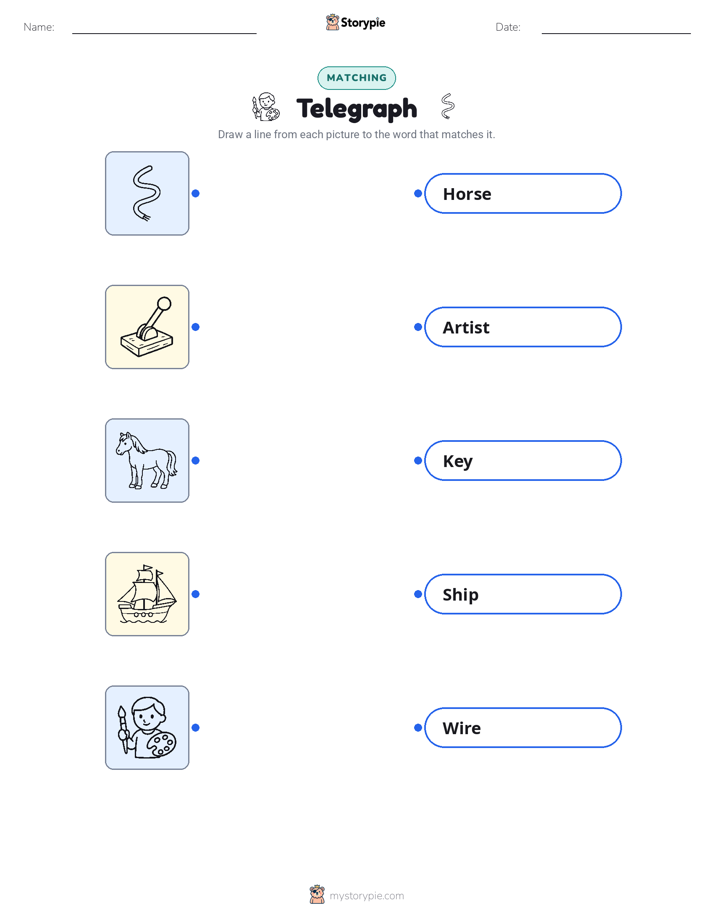
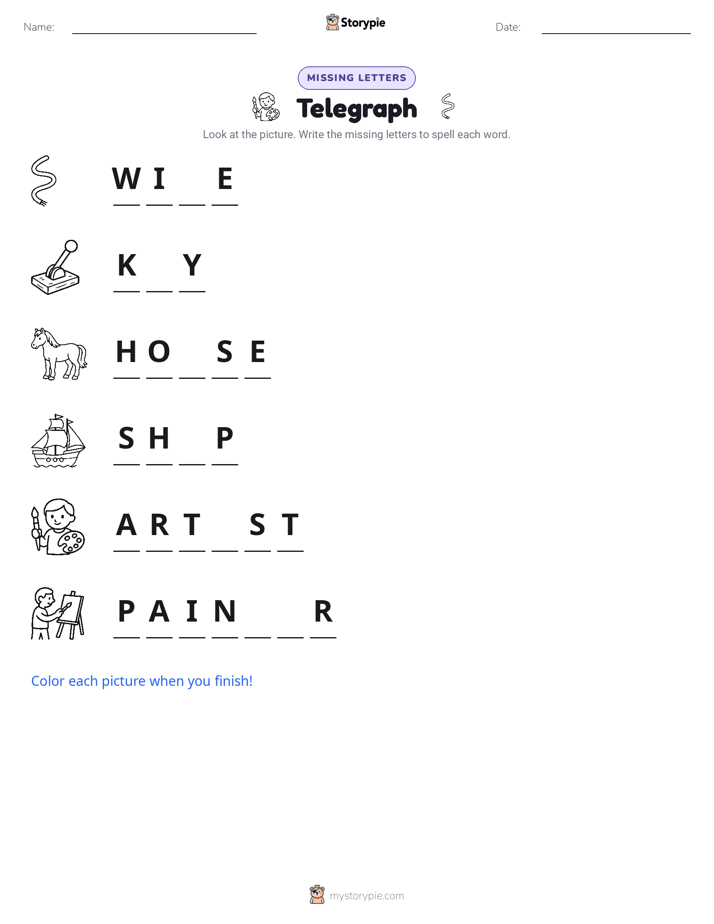
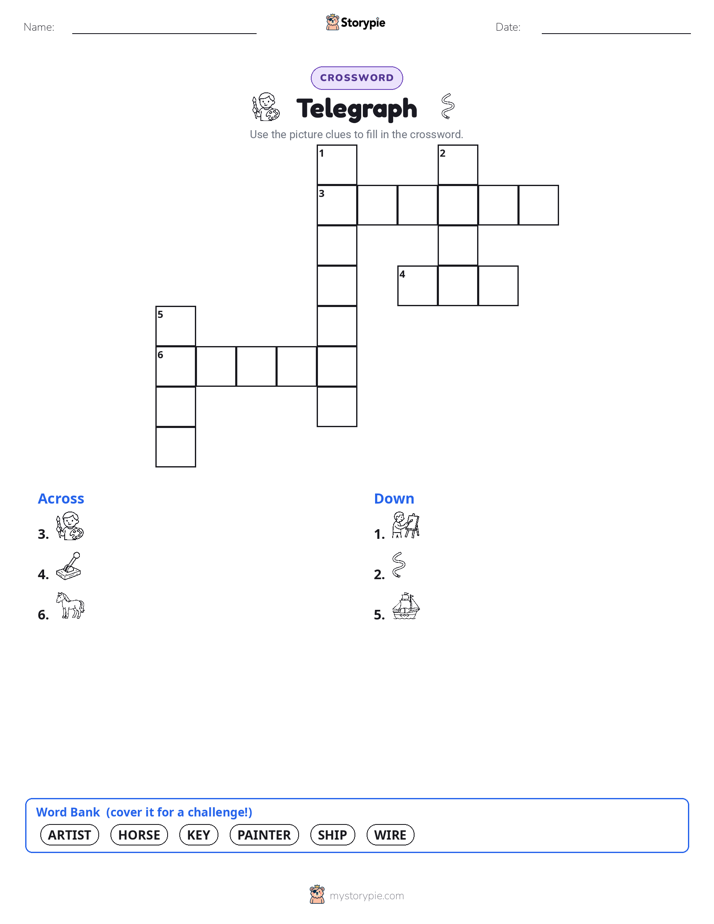
Print & create
Answer keys·No prep·Free with an account
28 worksheets · answer keys · full story · quiz · Ages 6-8 · CEFR A2
Plus adds 102,000+ more stories in 27 languages, audio for every one, and printables for all of them.
Just want Telegraph?
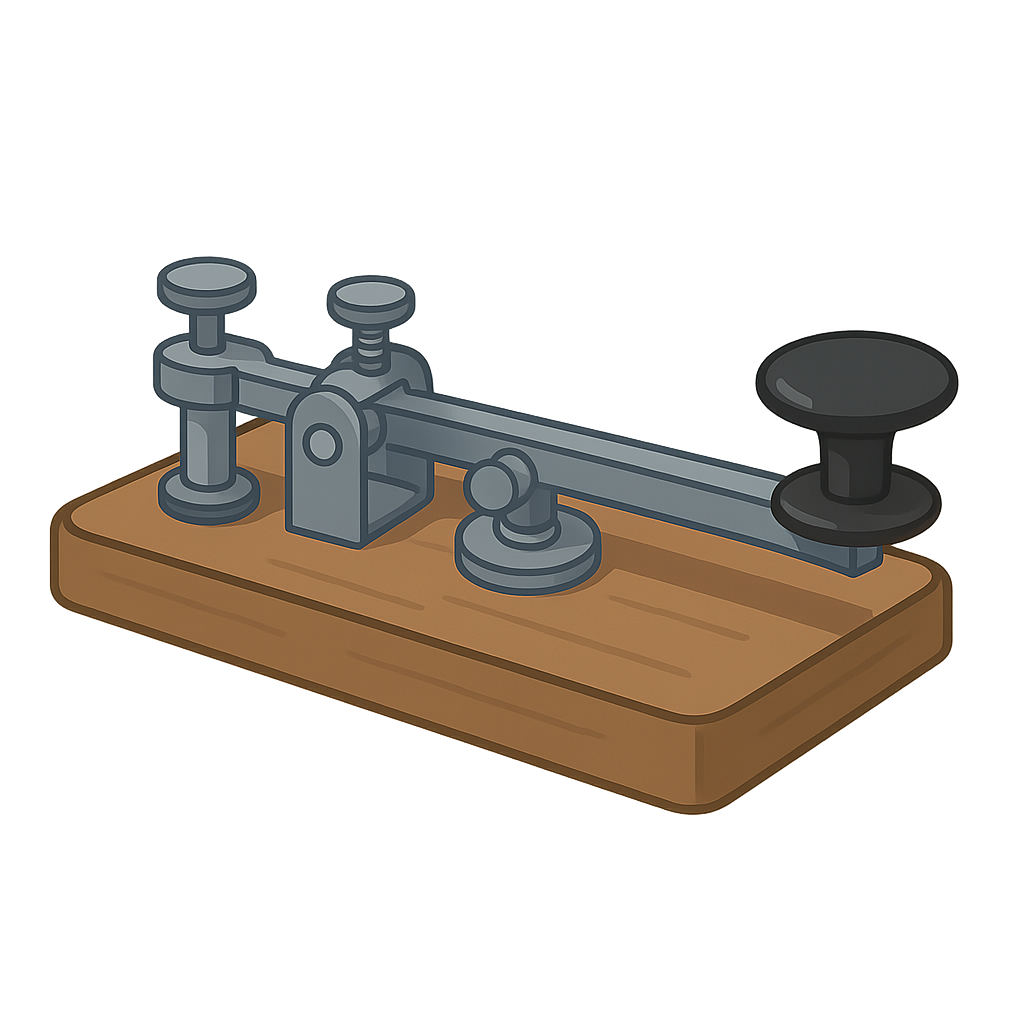
Hello there. My name is the Telegraph. Before I was born, the world was a very quiet and slow place. If you wanted to send a message to someone far away, you had to write a letter. Then, that letter would travel on a horse or a big sailing ship. It could take weeks or even months for your friend or family member to get your news. My creator, a kind man and an artist named Samuel Morse, learned this in a very sad way. In the year 1825, his wife became very sick. A messenger on a horse brought him the news, but by the time Samuel rushed home, it was too late. He was heartbroken and thought, "There has to be a faster way. People need to be able to talk to each other right away, no matter how far apart they are." That sad day gave him a very big idea, and that big idea was me.
Samuel Morse was a wonderful painter, but he wasn't a scientist, so he asked for help from his smart friends, Alfred Vail and Leonard Gale. Together, they worked and worked to bring me to life. It was a bit like magic, but it was really science. They figured out how to send little zaps of electricity, called pulses, through a very, very long wire. I said, "I can carry messages with these zaps." But how could zaps be words. Alfred Vail had a brilliant idea. He helped create a special secret language just for me. We called it Morse Code. It used short zaps, which we called 'dots,' and long zaps, which we called 'dashes.' Each letter of the alphabet had its own special pattern of dots and dashes. After lots of practice, I was finally ready for my big day. On May 24th, 1844, Samuel sat in Washington, D.C., and tapped out my very first official message. My zaps traveled super fast along a wire to Baltimore, where his friends were waiting. In just a few seconds, they received the message: "What hath God wrought.". It worked. I had spoken my first words.
The Story of the Telegraph
Hello there. My name is the Telegraph. Before I was born, the world was a very quiet and slow place. If you wanted to send a message to someone far away, you had to write a letter. Then, that letter would travel on a horse or a big sailing ship. It could take weeks or even months for your friend or family member to get your news. My creator, a kind man and an artist named Samuel Morse, learned this in a very sad way. In the year 1825, his wife became very sick. A messenger on a horse brought him the news, but by the time Samuel rushed home, it was too late. He was heartbroken and thought, "There has to be a faster way. People need to be able to talk to each other right away, no matter how far apart they are." That sad day gave him a very big idea, and that big idea was me.
Samuel Morse was a wonderful painter, but he wasn't a scientist, so he asked for help from his smart friends, Alfred Vail and Leonard Gale. Together, they worked and worked to bring me to life. It was a bit like magic, but it was really science. They figured out how to send little zaps of electricity, called pulses, through a very, very long wire. I said, "I can carry messages with these zaps." But how could zaps be words. Alfred Vail had a brilliant idea. He helped create a special secret language just for me. We called it Morse Code. It used short zaps, which we called 'dots,' and long zaps, which we called 'dashes.' Each letter of the alphabet had its own special pattern of dots and dashes. After lots of practice, I was finally ready for my big day. On May 24th, 1844, Samuel sat in Washington, D.C., and tapped out my very first official message. My zaps traveled super fast along a wire to Baltimore, where his friends were waiting. In just a few seconds, they received the message: "What hath God wrought.". It worked. I had spoken my first words.
After that first message, everything changed. I was a superstar. People started stretching my wires all across America. Suddenly, news about a new law or a big storm could travel from one side of the country to the other in just a few minutes, not months. I helped families separated by long distances share happy news and sad news right away. Doctors in small towns could send a message to a big city to ask for help with a sick patient. Soon, my wires weren't just on land. In 1866, a special, strong wire was laid all the way under the great big Atlantic Ocean to connect America and Europe. For the first time, people on different continents could talk to each other in minutes. I made the world feel smaller and brought everyone closer. You have amazing things like phones and the internet now, but I was the very first. You could say I am the great-grandparent of texting, and I am very proud of that.
Wow facts
About
The telegraph is an invention that revolutionized long-distance communication by using electrical signals transmitted over wires to send coded messages, typically in Morse Code.
Take a Quiz
Question 1 of 4
Why did Samuel Morse want to invent a faster way to communicate?
Explore next



Want to do even more?
Go beyond exploring. Unlock tools that turn every story into real learning.

Storypie Plus for families
Full stories, quizzes, and printables. Nights and car rides, sorted.
- Unlimited audio stories
- Create Mode: your child stars in the story
- Offline downloads
- Printable worksheets & coloring pages

Why Storypie for Schools
Students engaged. Prep in seconds. Evenings back to you.
- Worksheets & Quizzes
- Classroom Management
- Formative Assessment
- Custom Curriculum & Lesson Plans
- 27 Languages

Why Storypie for Homeschool
Curriculum done. They'll ask for more. Hours back in your day.
- Worksheet Generator
- First-Person Audio Stories
- Built-in Comprehension Quizzes
- Custom Curriculum & Lesson Plans
- Print & Go Activities