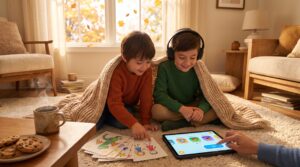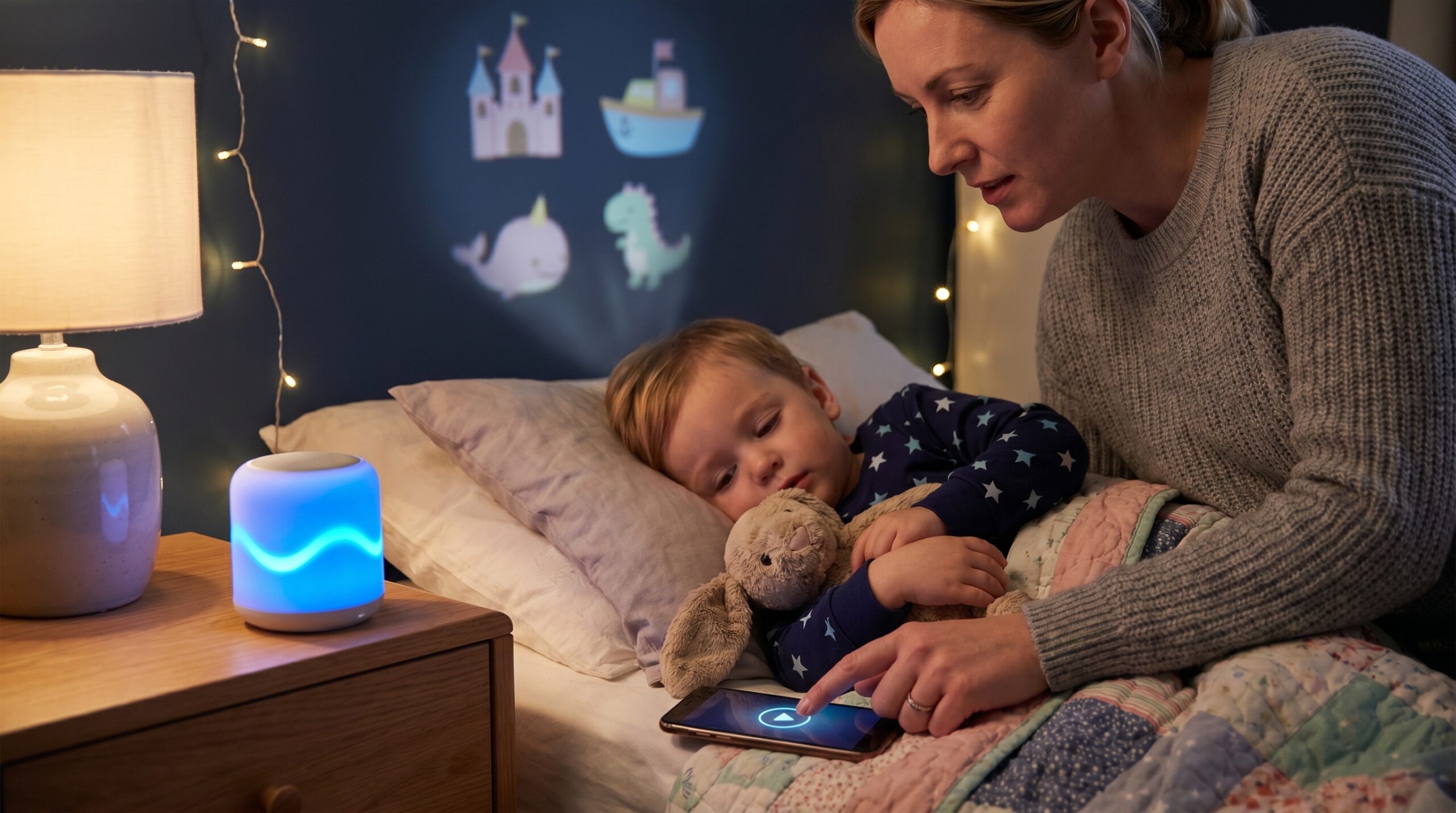
audio-first bedtime stories calm the room and quiet the mind. Try a ten to fifteen minute Storypie audio at bedtime. Dim the lights, set volume moderate, and start a timer. This small ritual asks very little and returns deep calm.
Why audio-first bedtime stories reduce cognitive load
Children have small working memory, so busy screens can overwhelm them. Screens demand sight, movement, and new images. That extra input steals attention and raises arousal. A 2024 study found that cognitive load was significantly higher when watching subtitled videos without sound compared to with sound, with mean Difficulty scores of 3.70 (sound-off) vs. 2.34 (sound-on) on a 1–7 scale. By contrast, simple narration removes most visual noise. The brain stops juggling and starts listening. This frees resources for understanding, remembering, and drifting toward sleep. A 2024 study demonstrated that cognitive load can impair brain functioning during auditory and linguistic stimuli processing, further emphasizing the importance of managing cognitive load to enhance engagement with audio content.
Audio builds an inner movie and grows imagination
Audio asks the mind to build. When a narrator says “moonlit clearing,” a child paints that clearing inside. Listening activates language centers, auditory cortex, and visual association areas. In short, audio makes an inner movie. Research indicates that listening to narratives engages a wide, bilateral set of cortical regions, providing evidence that audio narratives support active meaning construction. Because spoken words are scaffolding, children practice creating images from language. That practice strengthens imagination and creative thinking. Over time, repeated listening boosts vivid mental imagery and storytelling skill.
Language benefits for early readers
Audio delivers well-formed sentences, varied vocabulary, and gentle rhythm. For pre-readers and early readers, audio bypasses the heavy lift of decoding. Kids can focus on story shape, new words, and narrative flow. Repeated listening builds listening stamina and grammar in a natural way.
Bedtime tips, safety, and small rituals
Screens before sleep can delay sleep onset and scramble melatonin. Quiet narration lowers physiological arousal. A calm voice and steady cadence can reduce heart rate and cue co-regulation with a caregiver.
Keep sessions short, about ten to fifteen minutes. Use a timer and place the device away from small ears. Keep volume moderate. These simple rules protect hearing and sleep.
- Timing: same bedtime, same short length.
- Setting: low light, one soft cushion, one lamp.
- Tools: a single favorite story, a small lovey or bookmark.
Audio-first is inclusive. It opens stories to pre-readers, to kids with visual impairment, and to children who find print hard. Long before ink and screens, people shared tales by voice. Choosing audio today feels modern and wonderfully old fashioned. In fact, 75% of Americans age 12+ reported listening to online audio in the past month, highlighting the growing popularity of audio content.
Make it tiny and joyful. Curate a few calm stories and rotate them. The test is simple. When your child wanders to the cushion on their own, the habit is working.
Try it tonight. A short Storypie audio at nine can lower cognitive load, open imagination, and make bedtime feel like a gentle hand on the shoulder. Find calming collections and practical tips inside the Storypie app.
Storypie calming collections and Storypie bedtime tips offer ready-made stories and safe listening advice.