
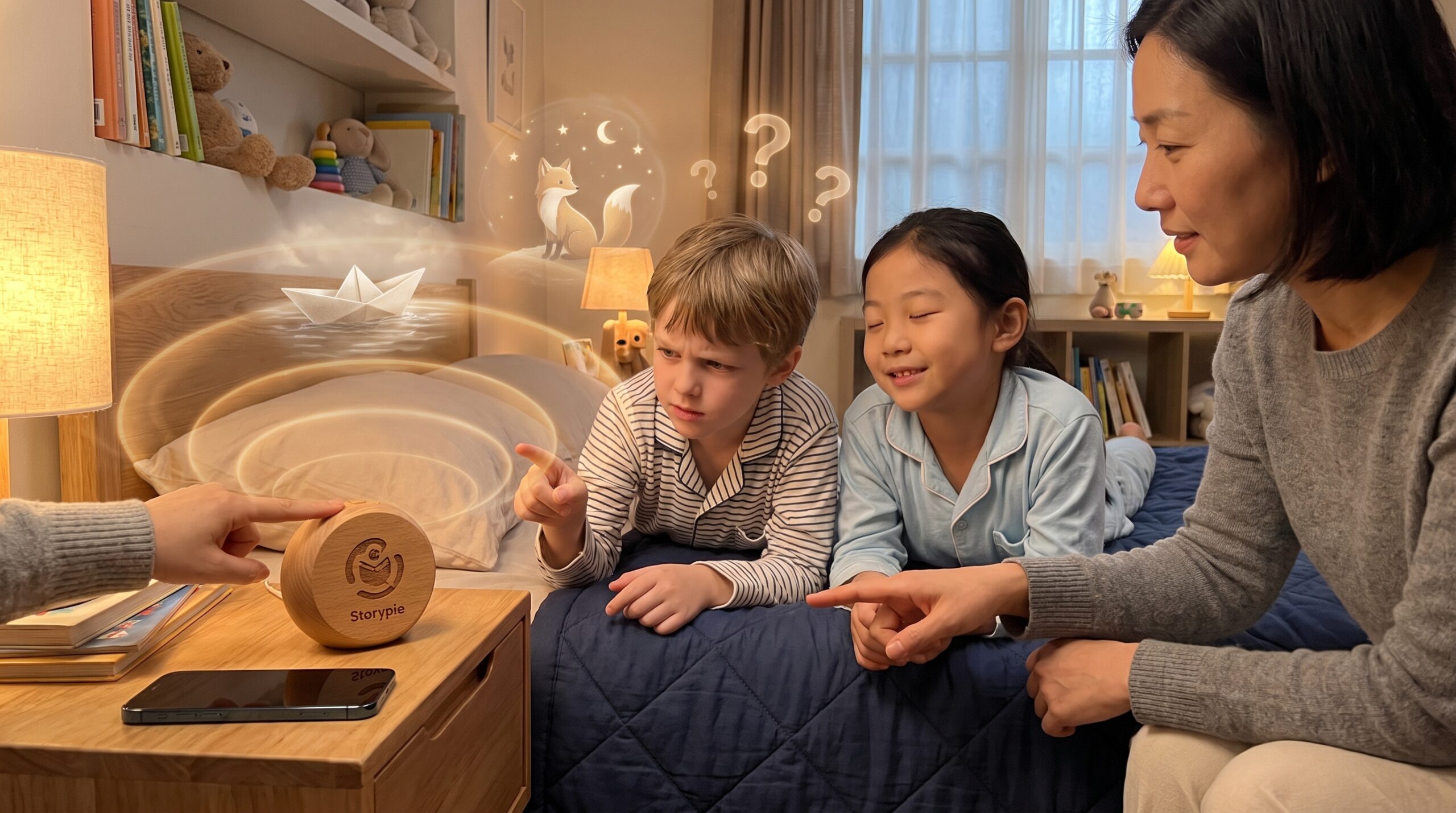
Audio-first bedtime stories put listening before screens in moments that matter. For parents and teachers, audio-first bedtime stories lower visual cognitive load. They clear the clutter so kids rest and imagine more.
Why audio-first bedtime stories help cognitive load
Listening reduces visual demands. Screens show bright colors, motion, and quick cuts. Those elements raise arousal and crowd working memory. Research from the International Journal of Human‑Computer Studies found that cognitive workload is minimized when listeners engage with a monologue, suggesting that a calm audio environment can significantly ease cognitive load. Therefore, audio removes that visual noise. A calm voice gives the brain room to breathe. Therefore children can follow plot and picture scenes with less effort.
Practical benefits for calm and focus
- No blue light. That supports melatonin and sleep onset.
- Fewer surprises. That lowers pre-sleep arousal.
- Portable and low power. Audio travels to the car or a blanket fort.
How listening feeds imagination and language
Also, audio invites active mental pictures. Without onscreen images, children build scenes and cast characters in their heads. Neuroscience shows listening lights areas tied to visual imagery. In short, audio trains the imagination. A 2022 experiment published in Frontiers in Neuroscience used EEG to assess cognitive load and found that audio environments can be effectively structured to enhance learning by minimizing cognitive overload.
For language, audio exposes kids to richer words and fluent pronunciation. That boosts listening comprehension and phonological awareness. A meta-analysis discussed in Learning and Instruction highlighted that students exposed to spoken-written presentations learned better than those receiving spoken-only or written-only presentations. Later, pairing audio with follow-along text helps decoding and sight words.
Design tips for an audio-first routine
- Keep it short. Ten to twenty minutes fits most bedtimes.
- Create a ritual. One lamp, a cuddle, a tuck, then play.
- Curate tightly. Pick three to eight favorites and rotate weekly.
- Pace thoughtfully. Choose clear narration and use gentle repetition.
Some children need visual anchors. However, audio-first works best when rest and imagination matter most. Try audio-first bedtime stories a few nights and watch the change. For a simple start, try a Storypie audio.
Caveats, a vignette, and a gentle suggestion
Audio is transient. Words disappear if missed. Therefore good pacing and short episodes prevent overload. Research indicates that poorly structured audio environments can lead to memory impairments, especially in children. A study published in Memory & Cognition found that irrelevant background speech worsened recall accuracy. This underscores the importance of focused audio in storytelling.
One summer night a child settled while a narrator described a sleepy forest. Minutes later breathing slowed. The room felt softer. The story lived inside the child’s head.
Finally, if you want a quick swap, replace a short screen slot with Storypie audio. Explore the Storypie app to begin: Get the Storypie app. For more Storypie ideas, visit our homepage: Storypie.
Choose listening when lower cognitive load and imagination are the goal. Try audio-first bedtime stories and notice calmer minds and richer play.