
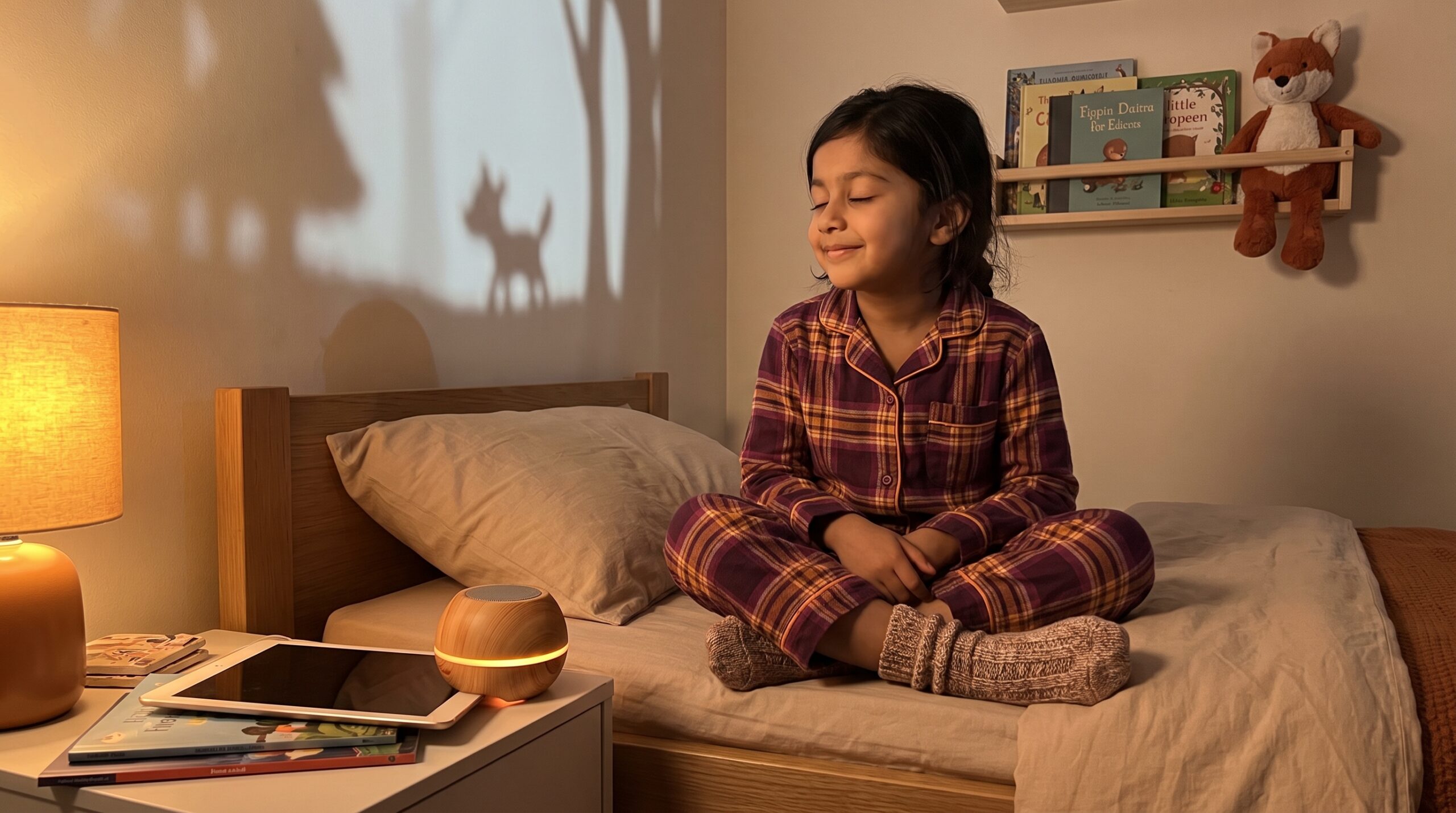
What “audio first for children’s imagination” means
Audio first for children’s imagination means presenting stories as sound. Narration, dialogue, music, and effects come before picture-first pages. For kids, sound matters. It reduces visual clutter and frees working memory to build images and follow plot. In plain terms, audio-first invites children to create their own inner pictures.
Cognitive load made simple
Working memory is small. Cognitive load theory names three kinds of load: intrinsic, extraneous, and germane. Intrinsic load comes from a story’s raw difficulty. Extraneous load comes from distractions like busy images or competing screens. Germane load supports learning and understanding. Audio first for children’s imagination lowers extraneous load. A 2024 study found that viewers reported significantly higher cognitive load when watching subtitled videos without sound, highlighting the cognitive load differences between audio and visual content. As a result, more memory supports comprehension and imaginative work.
How the brain responds
Neuroscience finds spoken narratives activate language, visual, and motor regions. Hearing a line like “a red kite skimmed the gray pond” can trigger vivid inner scenes. Children may picture the kite, sense the wind, and imagine the splash. In short, audio prompts active construction. That mental work exercises creativity in bright, playful ways. A 2024 study published in *Scientific Reports* investigated the effects of cognitive load on the brain’s response to auditory and linguistic stimuli in educational multimedia, providing insight into how audio stimuli influence learning.
Benefits beyond pictures
Listening builds vocabulary, sentence processing, and phonological awareness. It trains sustained attention and listening skills that classrooms use. Audio works in low light and often fits bedtime moments without strong screens. Calm, well-paced audio helps lower arousal. Loud or frantic tracks do the opposite, so pacing and clarity matter. Research from a 2023 meta-analysis covering 20 studies revealed that using imagination strategies in multimedia learning led to positive learning outcomes, enhancing retention and comprehension without increasing cognitive load.
History and modern role of audio-first stories
Audio storytelling is ancient. Oral tradition kept culture and memory alive. Later came radio drama and audiobooks. Today, apps and story podcasts continue the line. Audio remains portable, affordable, and widely available. It also reaches children with limited sight and supports multilingual households. In fact, a 2024 report from Edison Research revealed that 47% of the U.S. population aged 12 and older had listened to a podcast in the past month, highlighting the growing popularity of audio formats.
Limits, diversity, and access
Audio first is not always best. Children with hearing loss or auditory processing difficulty need alternatives. Some children prefer visual supports for complex plots. Content quality and pacing remain essential. Short sentences and clear narration often help a broad audience. Inclusion and choice are important. Notably, a 2026 study found that digital storytelling, which includes audio alongside other media, substantially reduced cognitive load compared to oral-only storytelling, while significantly enhancing knowledge construction.
A small, gentle invitation
Audio first for children’s imagination is simple and powerful. It reduces clutter, grows attention, and gives children the delicious work of imagining their own worlds. For examples and audio-first tales, visit Storypie to explore curated stories and apps. Try Storypie for a quick listen and notice the vivid images children build inside.










