Audio-first cognitive load and imagination matter for parents and teachers. When we remove bright images, listening becomes easier. Kids use working memory to build scenes, not decode flashing screens. The result is calmer attention and richer play inside the head.
Audio-first cognitive load and imagination: why listening helps
Listening without visuals cuts extraneous cognitive load. Moreover, Cognitive Load Theory shows that less distraction leaves mental space for story details. Neuroscience agrees. Hearing a vivid tale activates sensory and imagery parts of the brain. As a result, children simulate places and people in their minds. Magic and science, together. In fact, a 2024 EEG-based study demonstrated that audio characteristics can reliably estimate cognitive load, achieving a peak F1-score of 0.98 when assessing psychoacoustic parameters, highlighting just how influential audio can be on our cognitive processes.
Imagination gets a useful workout
Without ready-made pictures, kids create their own worlds. They imagine colors, sounds, textures, and tiny details. This active image building strengthens creativity and narrative skills. Studies show audio often yields personal, emotionally rich imagery. Each child paints a slightly different scene. Wonderful and unique. Moreover, research from PLOS ONE found that watching subtitled videos without sound significantly increased self-reported cognitive load, emphasizing the importance of audio in reducing mental strain and enhancing comprehension.
Language, memory, and attention
Audio supports vocabulary growth and listening comprehension. Also, it helps with sequencing and story structure. Repeating episodes builds auditory working memory. Focused listening to one audio stream trains sustained attention. For kids with dyslexia, low vision, or attention differences, audio-first stories feel especially inclusive. Accessibility wins here. Additionally, a 2024 mixed-method eye-tracking study found that when sound was turned off during subtitled video viewing, comprehension dropped from 81.3% (sound on) to 77.7% (sound off), illustrating how essential audio is for effective learning.
Bedtime example and a gentle ritual
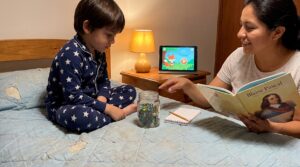
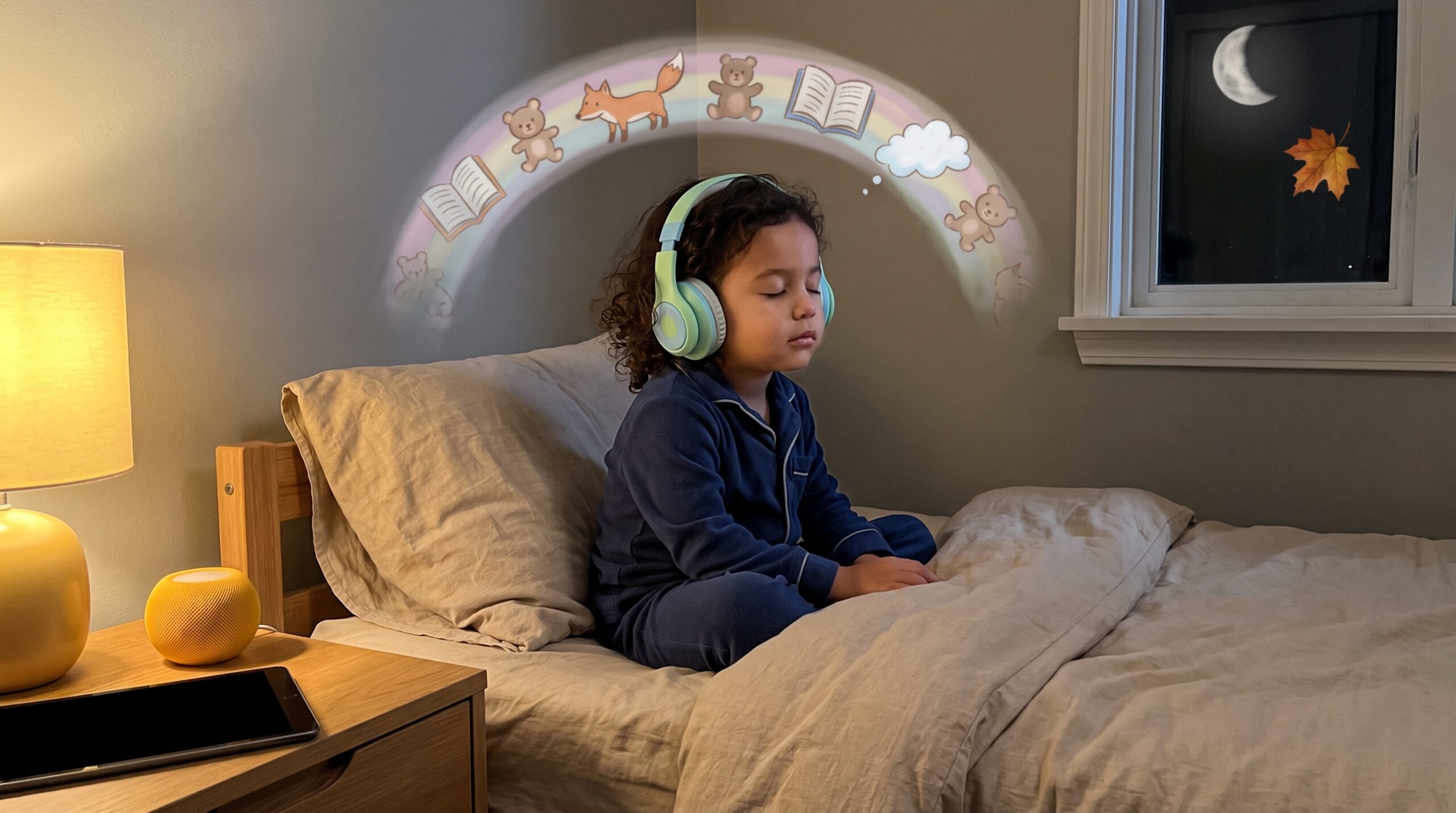
Try this simple scene. A parent plays a 10-minute Storypie episode at 9pm. The room stays dim. The child listens with headphones. No bright screens, no swiping. After the episode, the child describes a dragon wearing a sweater. Then they drift to sleep calm and content. Rituals like this make bedtime smoother.
Quick, practical tips
- Choose calm pacing and gentle soundscapes.
- Keep episodes short for sleep. Aim for 5 to 15 minutes.
- Listen in low light and invite the child to describe what they imagined.
- Co-listen when you can to scaffold vocabulary and ask a few gentle questions after.
- Use timers or offline playback to avoid surprises at night.
Origins and practical caveats
Oral storytelling is ancient. From fireside tales to radio and modern audiobooks, spoken stories build memory and social bonding. At the same time, audio is not a full replacement for print. Include shared reading and letter work for decoding skills. Also, vet content for age-appropriate tone and avoid frantic audio. Use volume limits and parental controls. Notably, a 2024 study published in Scientific Reports found that certain types of multimedia lack proper design, which could impose a cognitive load on the user, reinforcing the need for simpler audio formats to maximize comprehension.
When families listen together
Conversation often follows listening. Questions, funny impressions, and new words flow naturally. These small moments build social and emotional skills. They also help stories stick around much longer. A 2024 report by Edison Research revealed that 47% of the U.S. population aged 12 and older had listened to a podcast in the past month, highlighting the growing popularity of audio formats and their relevance in fostering family connections.
Final thought and gentle next step
Audio-first cognitive load gives kids room to paint worlds in their heads. It feels simple, inclusive, and deeply imaginative. For cozy nights and practice in listening and language, try Storypie episodes and make a small ritual of shared listening. Learn more on the Storypie episodes page.
Browse Storypie episodes or get the app for offline listening and bedtime-friendly playback.