Fall of the Berlin Wall for kids begins with a single memory. Anna described an October afternoon in East Berlin. Her voice made history feel close and human.
What the Berlin Wall was
The Wall stood from 1961 to 1989. After World War II, Germany split into East and West. Leaders in East Germany built the barrier on August 13, 1961. The Berlin Wall, constructed on this date, was approximately 155 kilometers (96 miles) long, with about 43.1 kilometers (27 miles) running directly through the city of Berlin. They wanted to stop people leaving for the West.
How the Wall changed daily life
Life felt different on each side. Families could not visit neighbors who lived just blocks away. Travel required permission. Checkpoints handled few crossings for foreigners and allied military. Ordinary East Germans rarely traveled to West Berlin.
Why this matters
Anna remembered damp school coats and a granny who could not visit. Her detail turns a large event into a day a child can picture. In this way, the fall of the Berlin Wall for kids becomes real and relatable.
What the Wall looked like and why it was dangerous
The barrier was not just one wall. It circled West Berlin for nearly 155 kilometers. Concrete walls stood with barbed wire, watchtowers, floodlights, and anti vehicle barriers. Guards patrolled a cleared area called the death strip. From 1961 to 1989, at least 5,075 people successfully escaped across the Berlin Wall and its ‘death strip’, while border patrol officers fired 1,709 shots and injured at least 119 people attempting to flee, underscoring the dangers faced by those attempting to escape and the violent measures taken by East German authorities.
People tried brave escapes. Some dug tunnels. Others used balloons, ladders, or hid in cars. Sadly, many were caught. Some were hurt or killed. These stories are sad, and we tell them gently to children.
The peaceful changes of 1989
By 1989 things shifted. Reforms in the Soviet Union and Hungary eased travel. Large, peaceful demonstrations grew across East Germany. Between 500,000 and one million people took part in the largest unorganized demonstration in GDR history at Alexanderplatz in Berlin on November 4, 1989, just days before the Wall fell. People chanted Wir sind das Volk to demand change.
Then on November 9, 1989, an estimated 1 million people demonstrated in East Berlin, leading to the opening of the Berlin Wall. Guards, unsure of orders, began to let people through. That night East and West Berliners celebrated together. People climbed the Wall and chipped out pieces as keepsakes. It felt joyful and chaotic.
Aftermath and what remains
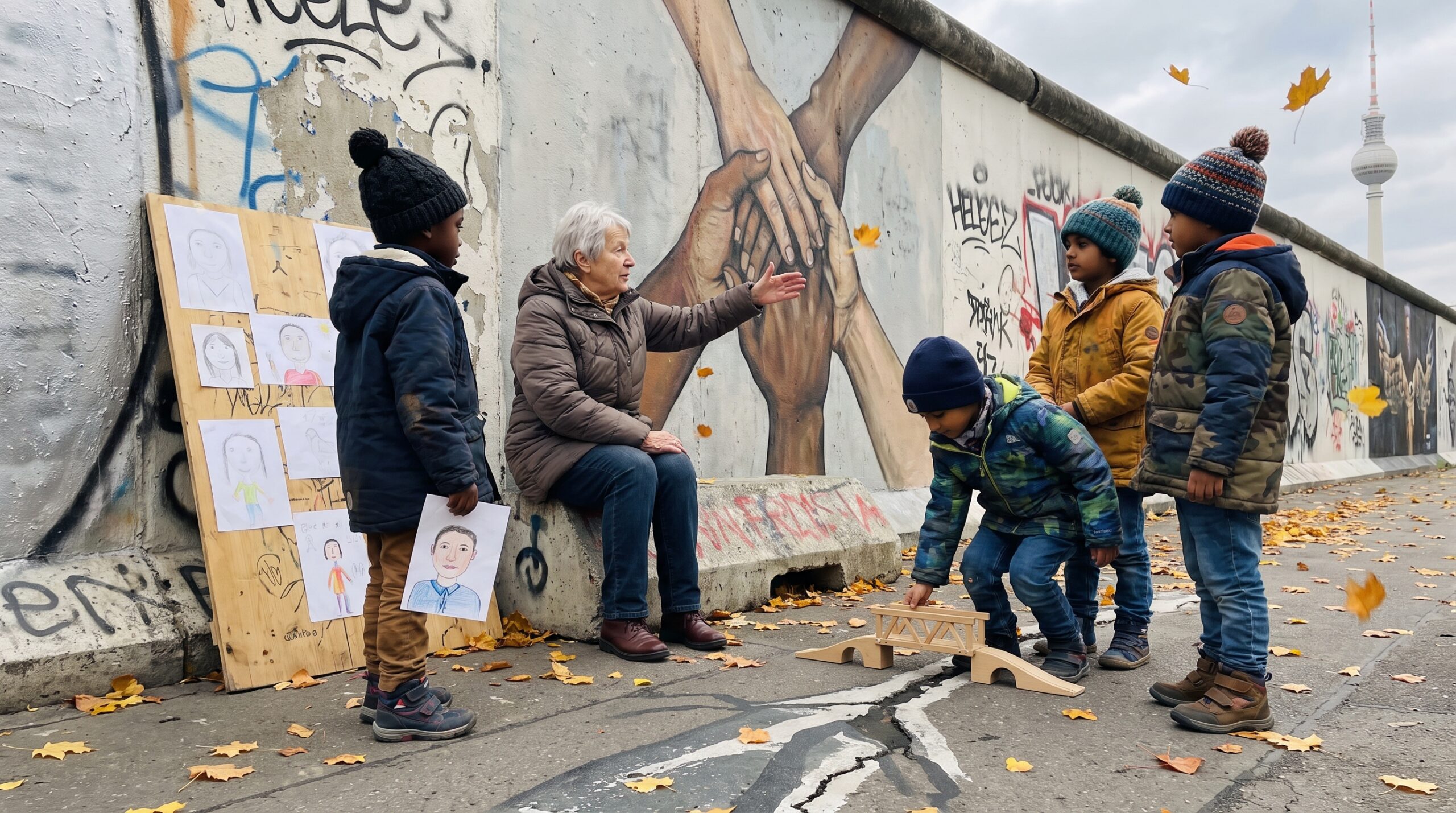
Germany reunited on October 3, 1990. In the first year after the Berlin Wall fell (1989–1990), approximately 400,000 people migrated from East to West Germany, illustrating the immediate impact of the Wall’s fall on migration patterns in Germany. Today parts of the Wall stand as memorials. The East Side Gallery displays art on a long surviving section. Museums and the Berlin Wall Memorial keep personal stories alive. The fall became a global symbol of the end of Cold War division. It also reminds us that ordinary people can drive peaceful change.
How to share this story at home
Start with Anna’s simple day. Ask kind questions that build empathy. Try a drawing: draw a wall, then draw a bridge. Small activities spark big curiosity.
Read or listen to a story about Fall of the Berlin Wall now: Read or listen to a story about Fall of the Berlin Wall now: For 3-5 year olds, For 6-8 year olds, For 8-10 year olds, and For 10-12 year olds.
If you want a simple tool to save these family memories, try Storypie for family story time. It keeps moments safe and easy to share.