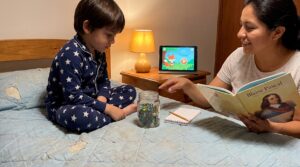
Computational thinking small steps helps children turn giant tasks into tiny, doable actions. At Storypie, we shared a cheerful story this morning that shows Seymour Papert’s four simple steps. First, the approach reduces overwhelm. Next, tiny wins spark curiosity and confidence.
Why computational thinking small steps matters
Computational thinking small steps is a thinking habit from computer science. It asks children to break a problem into parts, spot patterns, choose what matters, and write clear steps. In short, decomposition makes big tasks manageable and even fun. In fact, a 2023 study of elementary science teachers found that decomposition received the most instructional time, averaging 89.75 minutes per week, highlighting its importance in teaching computational thinking.
How breaking tasks into steps helps
When a child splits a chore into two or three clear actions, stress fades. For example, making a sandwich becomes step one, step two, step three. Also, this habit helps with writing, math, science, and daily routines. Decomposition is not only crucial in elementary settings; it also appears frequently in high school curricula, as a 2023 study of high school biology teachers integrating computational thinking revealed that decomposition was the most frequently integrated practice, appearing 34 times across lessons.
Simple, playful ways to try at home
Start small and keep it playful. Before an activity, ask your child to name the first tiny step. Model steps out loud and celebrate each small success. These tiny wins build confidence and curiosity. Research shows that emotional engagement in learning environments significantly predicts computational thinking skills, with emotional factors having a stronger impact than behavioral engagement, which can inform how parents approach teaching these skills at home.
- Make a sandwich by naming steps aloud, one at a time.
- Tidy a room by sorting into clothes, books, and toys.
- Draw in numbered stages: sketch, add color, then add details.
Age graded activities
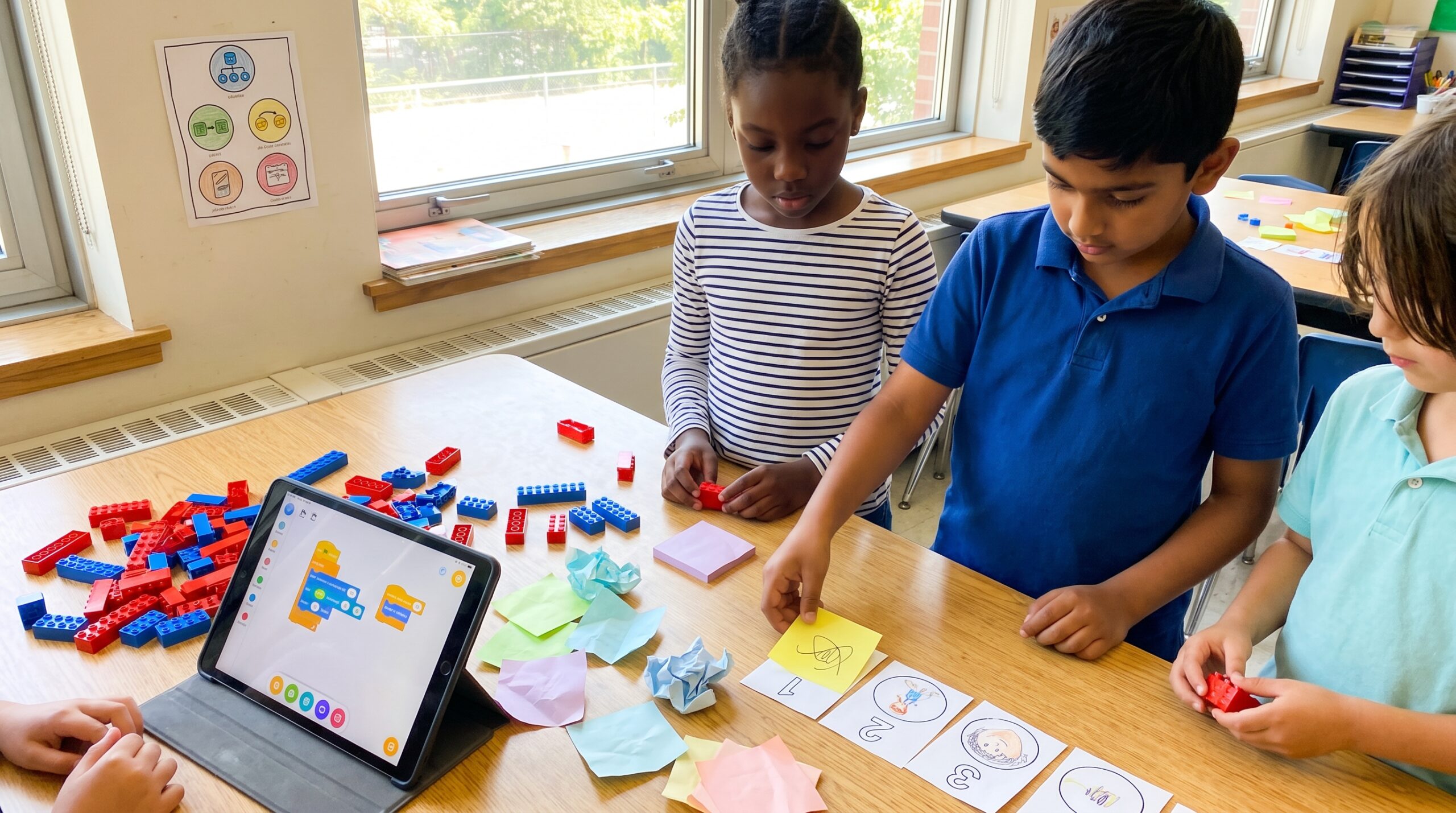
Young children can practice sequencing with a short recipe or a Simon Says game. Primary kids can plan a treasure hunt or build a LEGO model in stages. Older children can write simple algorithms and test them with block coding tools or small robots. Engaging methods, like game-based learning, have shown to improve students’ computational thinking skills significantly; a 2023 meta-analysis of 27 studies revealed a moderate to large positive impact from such approaches.
Vocabulary and routines to use
Use clear words like step, test, fix, pattern, and chunk. Read steps aloud before starting. Make checklists. Also, try top down decomposition when a task feels too big. Then divide and conquer when parts can happen at the same time.
Research shows explicit practice of computational thinking often supports planning, persistence, math, and literacy. Papert and Wing remind us this is about thinking, not just coding. In 2023, the United States’ computational thinking score was reported to be 22 points lower than the international average in the International Computer and Information Literacy Study (ICILS), emphasizing the need for improvement in educational strategies. Practice helps children explain steps, test ideas, and revise plans.
Read or listen to a story about Computational Thinking (Breaking Big Problems into Small Ones) now: For 3-5 year olds, For 3-5 year olds, For 6-8 year olds, For 8-10 year olds, and For 10-12 year olds.
For a gentle next step, explore related stories and activities on Storypie. Also, you can get the app to listen offline and share moments with your child. Enjoy the small steps and watch confidence grow.