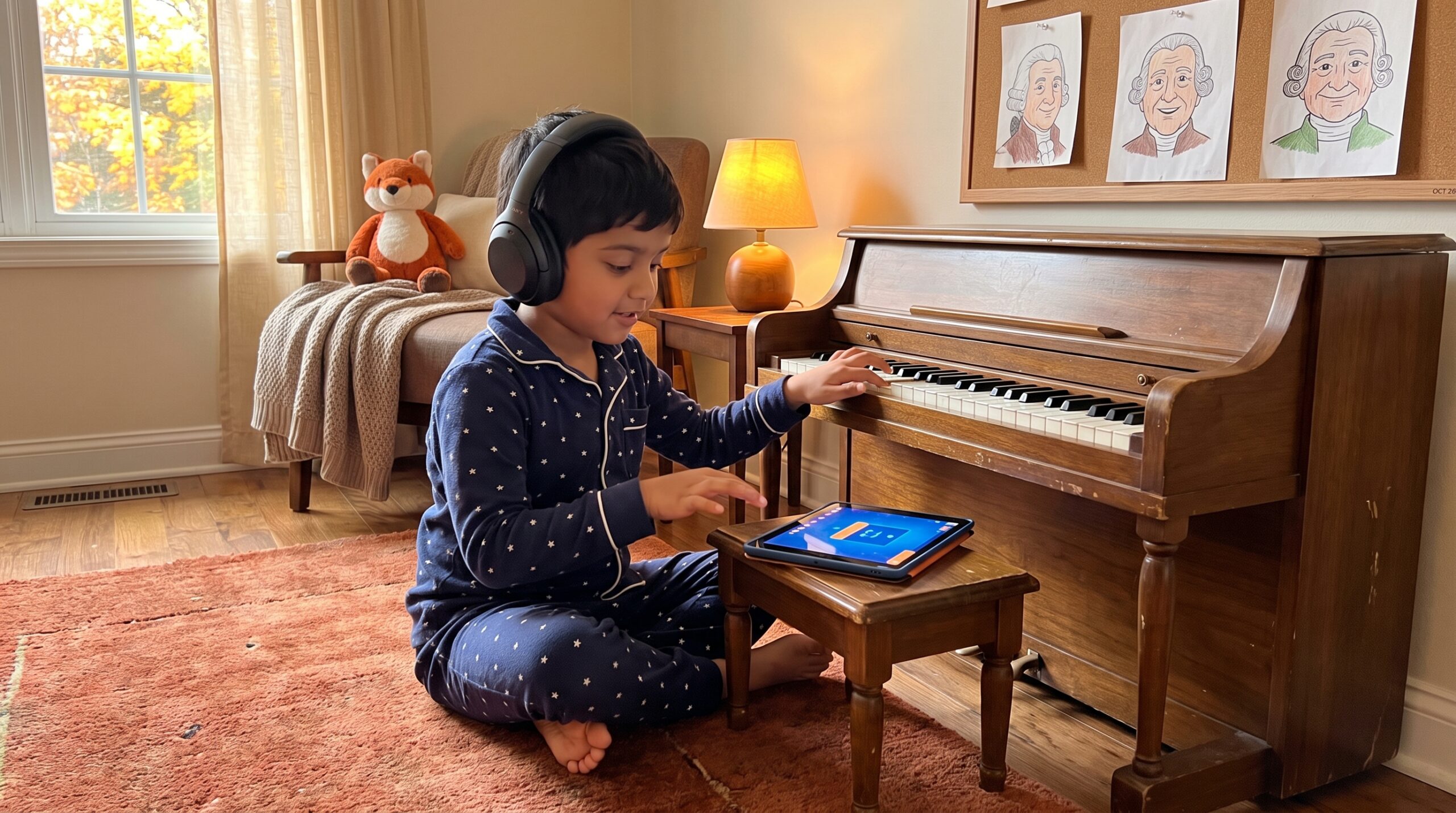
Piano for children is a friendly way to invite music into the home. Press one key softly, then another firmly. That small change in touch makes a huge change in sound. This soft-loud trick is the piano’s superpower and a lovely way to show kids how music moves the body and the breath.
Read or listen to a story about Piano now: Read or listen to a story about Piano now: For 3-5 year olds, For 6-8 year olds, For 8-10 year olds, and For 10-12 year olds.
Piano for children: A short timeline
Around 1700, Cristofori in Italy added small hammers under keys. As a result players could play both soft and loud. People called the new instrument pianoforte, literally soft-loud. Later the name shortened to piano. Over the 18th and 19th centuries builders such as Broadwood, Erard, and Steinway improved frames, action, and string plans. These changes shaped the modern piano we know today.
How a piano makes sound
A key acts like a friendly door. When you press it, an action sends a felt-covered hammer to strike one or more strings. The strings vibrate and pass energy to the bridge. Then the bridge sends the energy into the wooden soundboard. The soundboard is the piano’s tummy that makes the strings bloom into room-sized tone. A strong cast-iron frame holds the string tension so the instrument stays steady.
Main parts, in kid-friendly words
- Keys: the little doors you press
- Hammers: soft mallets covered in felt
- Strings: the singers inside
- Soundboard: the piano tummy that makes sound big
- Frame: the strong skeleton
- Pedals: secret helpers on the floor
Types, range, and quick facts
Pianos come in grands and uprights. Also you will find digital and hybrid models. Grands range from baby grands to concert grands. A standard modern piano has 88 keys from A0 up to C8. Good pianos often use spruce soundboards for a clear tone. Hammers wear over time and need voicing. Strings and tuning settle, so new or moved pianos should be tuned several times in the first year. Interestingly, in 2024, acoustic grand piano shipments in the U.S. dropped by 22.2% to just 7,445 units, while vertical (upright) piano shipments fell 26.0% to 15,445 units. Digital piano shipments also declined by 13.2% to 177,000 units, which highlights shifting trends in piano ownership and education according to a NAMM Global Report.
Pedals and what they do
- Right pedal: sustain or damper pedal. Notes ring longer.
- Left pedal: soft or una corda. It gives a gentler voice.
- Middle pedal: sostenuto on many grands or a practice mute on some uprights.
Quick calming activity
Try this two minute game to settle wiggles. Press a key softly, then loudly. Next, hold the sustain pedal and listen for the ringing. Then play a short piano story or track to help calm breathing. Storypie has short piano stories that pair delightfully with this quiet listening exercise.
Getting started and care
Begin lessons around four to seven years, though informal play can start earlier. Short daily practice beats long, rare sessions. For young beginners try ten to twenty minutes a day. For homes, pick an upright or a compact digital piano with weighted keys and a headphone output if space or volume is a concern. Tune twice a year and control humidity. Always move pianos with professionals.
A few tiny delights
Mozart and Beethoven showed what the piano could say. Chopin taught singing with the pedal. For a child, the piano is pure, friendly magic for tiny hands. Small playful interactions build curiosity and a habit that can last a lifetime. In 2023, women made up 52% of new piano purchasers globally, and U.S. households with incomes over $100,000 accounted for 65% of U.S. piano sales according to Gitnux. For more playful reading and listening, try Storypie’s piano stories for families.
Finally, if you want a gentle next step, read or listen to a story about Piano now: Read or listen to a story about Piano now: For 3-5 year olds, For 6-8 year olds, For 8-10 year olds, and For 10-12 year olds.