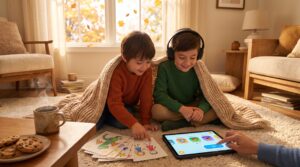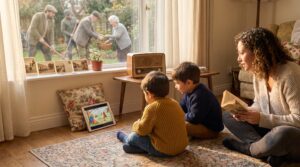
Audio-first stories cognitive load is a simple idea with big results. Parents and teachers notice calmer attention and richer play. Listening lowers visual clutter and frees the mind to imagine. In fact, a 2024 study demonstrated that EEG-based cognitive load estimation achieved a peak F1-score of 0.98 when assessing psychoacoustic parameters, indicating a strong correlation between audio characteristics and cognitive load.
Why audio-first stories reduce cognitive load
Audio removes competing images and visual noise. Screens show details that demand attention, so they add extraneous load. In contrast, audio gives language and steady pacing. Good narration focuses the ear on rhythm, prosody, and sentence flow. As a result, vocabulary and narrative understanding get stronger. Research from a 2024 mixed-methods study found that viewers reported significantly higher cognitive load when sound was turned off while watching subtitled videos, reinforcing the benefits of audio-first storytelling.
Accessibility and classic roots
Audio suits many learners, including children with dyslexia or low vision. Oral storytelling is a long tradition, from fireside tales to radio plays. It trains attention and invites imagination. For these reasons, audio-first stories cognitive load benefits are both practical and timeless.
How to try audio-first stories gently
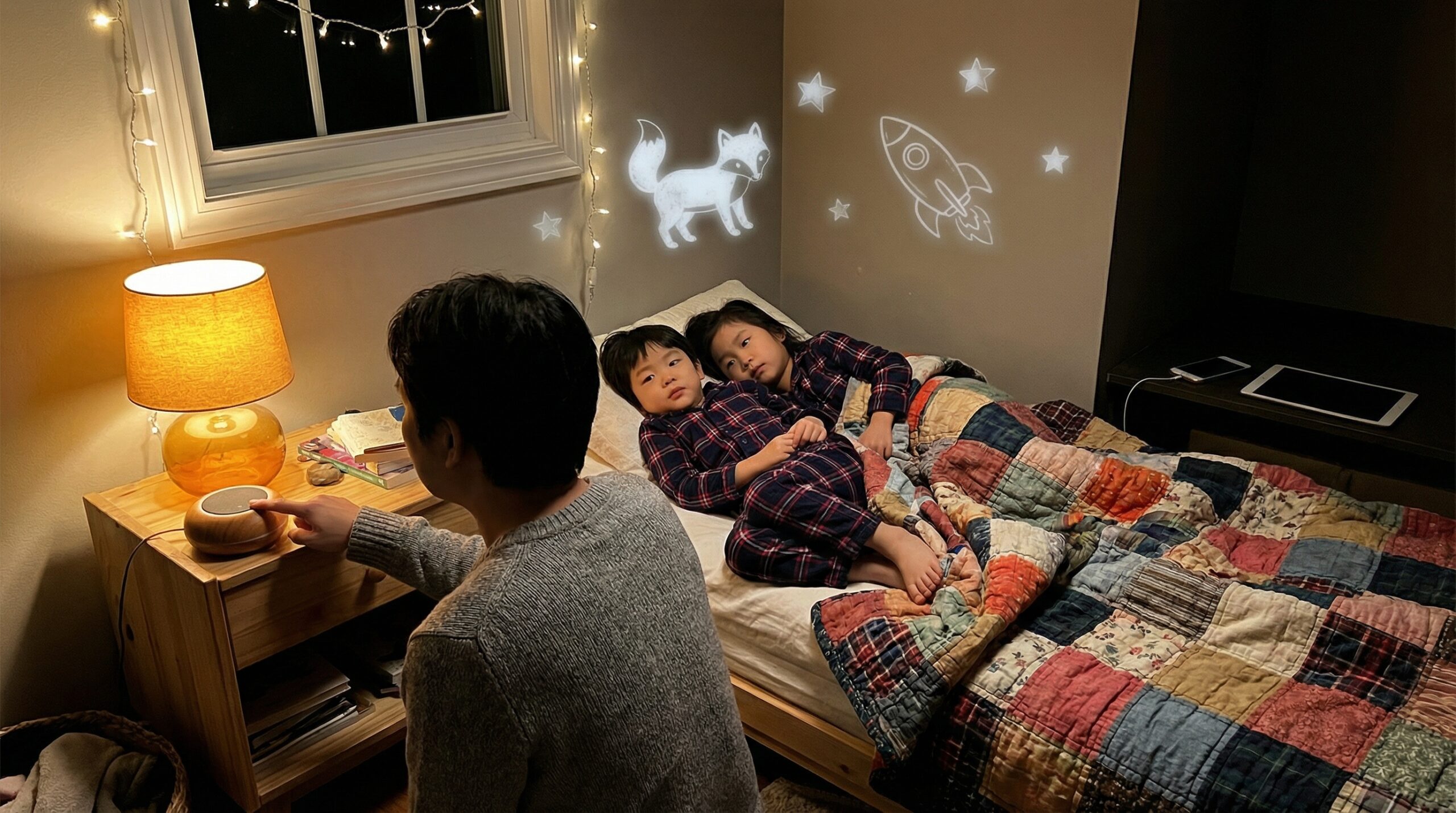
Start small and make it cozy. Swap one 10 to 15 minute screen session for a short audio story. Use a warm lamp and a soft cushion. Pause and breathe. Invite one shared image afterwards. Repeat favorites to build fluency.
Simple ritual ideas
- Choose calm narration with light soundscapes.
- Keep sessions to 10 to 15 minutes.
- Bookmark a single hero story for easy replay.
- Let the child describe one image after listening.
Why imagination grows with audio
Audio hands children language, not pictures. That missing visual detail is a feature. Kids create scenes in their heads. Neuroscience shows imagination uses many of the same systems as perception. When children picture a dragon or a snowy street, they practice creative simulation. A 2025 study revealed that 15-second instrumental soundtrack excerpts evoked vivid, structured mental imagery in participants, demonstrating how auditory stimuli can drive cross-modal visual imagination. Over time, those mental muscles get stronger. Dual coding theory also suggests words plus self-made images stick better.
Sleep, routine, and inclusion
Short pre-bed audio reduces blue-light exposure and lowers arousal. That supports sleep routines. Also, audio fits hands-free moments like bath time and car rides. Design still matters. Avoid dense sound effects. Pick clear narration and thoughtful pacing. This keeps cognitive load low and comprehension high. A 2025 psychophysiology experiment showed a significant increase in physiological arousal when listening to audio versus watching video, indicating that audio narratives impose additional imagery-related cognitive effort.
Quick tips and a gentle next step
Try these quick tips this week:
- Pick age-appropriate narration.
- Keep sessions short and cozy.
- Create a tactile ritual basket with a bookmark and a soft toy.
Start with one swap this week and watch attention settle. If you want a ready place to begin, explore Storypie picks for short, audio-first stories and charming reads. Visit Storypie picks or Get the Storypie app for more cozy options.
Note: For curated audio picks, see Storypie picks at Storypie picks and Get the Storypie app at Get the Storypie app.