
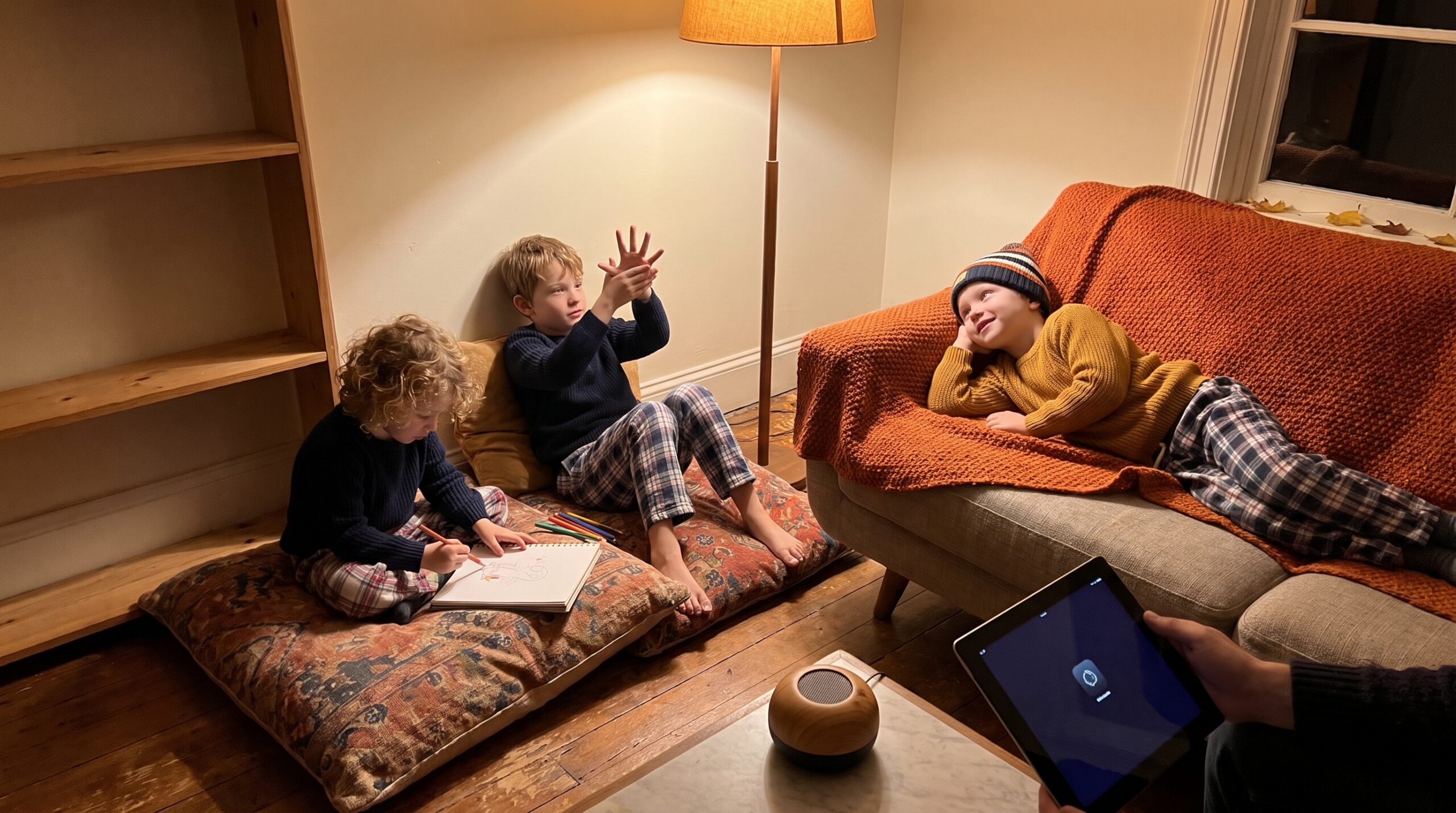
Audio-first stories for children calm evening rush and spark quiet wonder. At Storypie, we pick audio-first stories to lower cognitive load and boost imagination. A 2024 study found that viewers reported significantly higher cognitive load when watching subtitled videos without sound, illustrating how audio can significantly reduce cognitive load compared to visual-only content.
What audio-first stories for children means
Audio-first means voice-led storytelling comes before visuals. Instead of bright screens, a child hears a spoken story. That change reduces sensory clutter. So the listener can focus on meaning and feeling.
How listening reduces cognitive load
Cognitive load has three parts: intrinsic, extraneous, and germane. Visuals and fast changing images add extraneous load. Therefore the brain must manage more competing inputs. Remove those images and working memory can focus on comprehension. In plain terms, fewer inputs means more attention for the story itself. A 2026 study found that cognitive load was significantly higher when watching subtitled videos without sound compared to with sound, further emphasizing the cognitive load advantages of audio over visual content.
How listening sparks imagination
Listening asks children to make pictures inside their heads. Descriptive narration reliably evokes mental imagery. Also, brain scans show listening can activate areas used for seeing. That inner cinema acts like creative practice. Kids who listen often build scenes, characters, and emotions without a screen. The result can be surprisingly big wonder from a small device. Research from a 2023 meta-analysis found that reading while listening offers a small overall comprehension benefit, which is beneficial for children’s learning and imagination.
Language, literacy, and attention
Spoken stories expose children to richer vocabulary and varied sentences. Regular listening supports vocabulary growth and narrative comprehension. It also builds listening skills that help later reading. Short episodes, around 10 to 15 minutes, match many children’s attention spans and family routines. For busy evenings, a brief episode can be calming and perfectly satisfying. According to a 2026 report by the National Literacy Trust, 47.3% of children aged 8 to 18 listened to audiobooks or podcasts, highlighting the growing popularity of audio content among children and reinforcing the relevance of audio-first storytelling.
Sleep, routine, and inclusion
Audio avoids screen light that can lower melatonin. That makes audio-first ideal for bedtime when calm matters most. Audio formats also support inclusion. Children with dyslexia, low vision, or beginning decoding skills can access the same rich stories. Oral storytelling is an ancient human practice. Today apps like Storypie make it easy to keep that practice alive.
Simple, low-effort steps for families
- Dim the lights and pick a short episode. Ten to fifteen minutes is a sweet spot.
- Keep volume moderate and avoid in-ear headphones for very young children.
- After listening, ask one open question. For example, “What did you imagine when the dragon flew away?”
Safety and practical notes
Monitor volume and choose age appropriate content. Use audio as part of balanced screen time habits. Audio reduces overstimulation from fast visuals and ads, which can ease transitions to bedtime.
Where to find stories
High quality audio content is easy to find. Try the Storypie app for short, child friendly episodes and gentle bedtime rhythms. Visit the Storypie app or the Storypie homepage to explore episodes.
Why it matters
An audio-first approach gives children fewer distractions and more imaginative space. It also delivers richer language input. On busy evenings, a spoken story can turn routine into ritual. It is simple, human, and surprisingly powerful.