
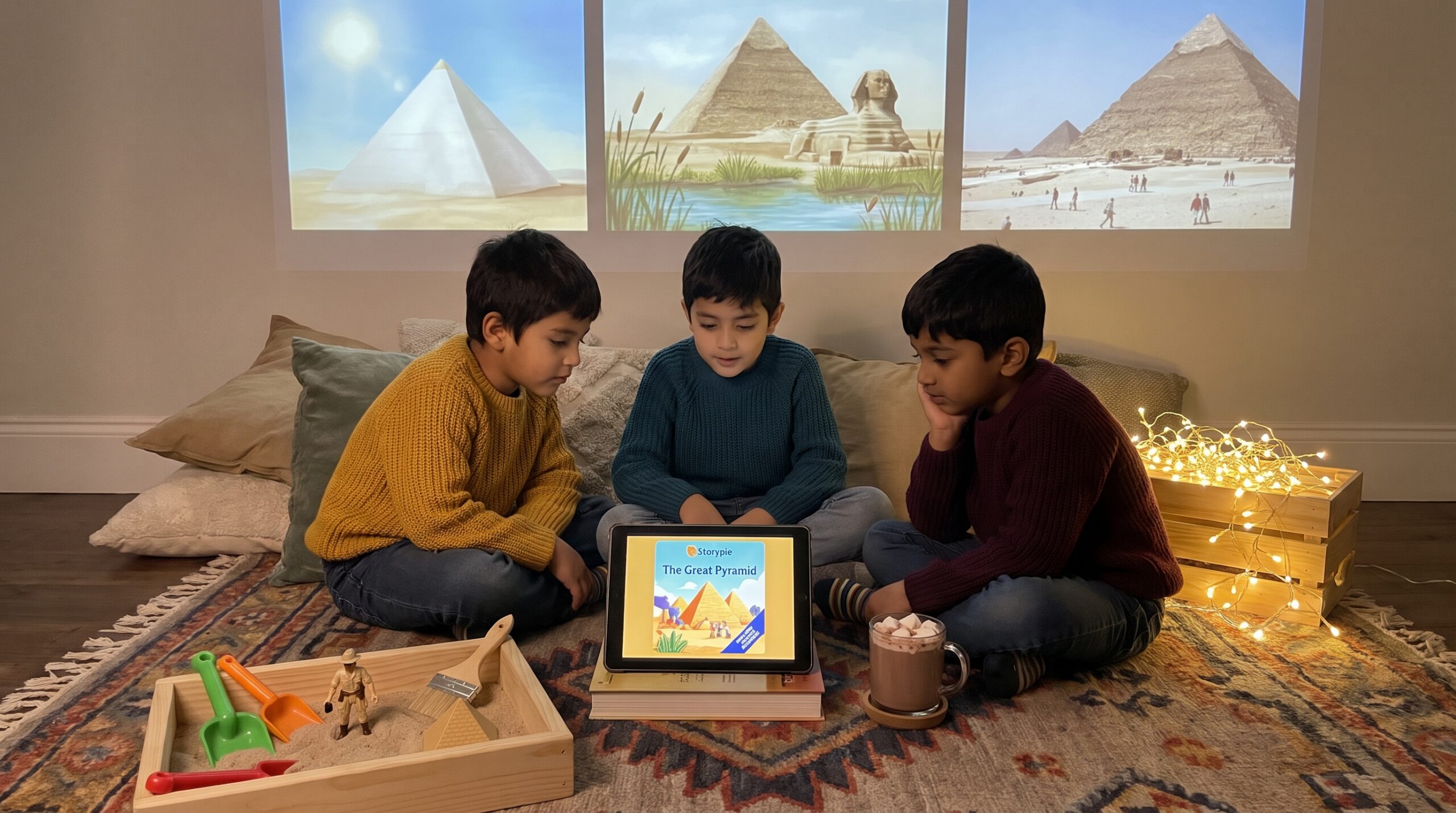
Pyramids of Giza for families make a perfect bedtime story and a real place to wonder about. I picture the plateau as a playground of giant blocks. Also, the three main pyramids sit on a high ridge near the Nile, just outside Cairo.
Pyramids, names, and ages
The three royal tombs are Khufu, Khafre, and Menkaure. Built by 4th Dynasty pharaohs, they date to about 2600 to 2500 BCE. That means they are roughly 4,500 years old. Wow indeed. The Great Pyramid of Khufu originally rose to about 146.5 meters (481 feet), but today it measures around 137 meters (449 feet) due to the removal of its outer casing stones. This transformation illustrates the impact of time on this ancient structure. The Great Pyramid’s base originally measured about 230 meters (754 feet) per side, though today it measures around 227 meters (745 feet) per side, showcasing its architectural significance as well.
Scale and materials
The Great Pyramid holds about 2.3 million stone blocks, with an average block weight of about 2.5 tons, and the heaviest blocks weighing up to approximately 9 tons. Builders used local limestone for the cores. They used shiny Tura limestone for the casing. Also, they used Aswan granite for inner chambers. The pyramid aligns to the cardinal points with impressive precision. Inside, passages, the Grand Gallery, and the King and Queen chambers spark questions and imagination.
Pyramids of Giza: human stories behind the stones
What makes the Pyramids of Giza amazing is scale and human effort. Archaeology shows organized teams of skilled workers. Excavations found a workers village, bakeries, graves, and papyri. For example, the Diary of Merer records how limestone moved to Giza. Also, a completed solar boat for Khufu was found in a pit. It reminds us that the afterlife mattered deeply to ancient Egyptians.
Site highlights and conservation
The Giza plateau includes the Great Sphinx and many smaller tombs, temples, and causeways. Moreover, Giza is part of the Memphis and its Necropolis UNESCO World Heritage Site. Conservation work continues. Wind, sand, pollution, and urban growth threaten the stones. Because past building reuse removed much of the casing stone, the pyramids now look rugged and dramatic.
Practical family notes
Go early or late to avoid the heat. Also, interior access is often limited and can be tight and warm, so plan separate tickets if you want to go inside. Climbing is not allowed. Expect crowds and lots of sun. According to Egypt’s Ministry of Tourism, the Giza Plateau saw roughly 3.5 million visitors in the most recent full operating period, highlighting the ongoing interest and tourism surrounding these remarkable structures.
- Bring hats and water.
- Plan a museum stop, such as the Grand Egyptian Museum.
- Use shade breaks for little explorers.
Read or listen to a story about Pyramids of Giza now: Read or listen to a story about Pyramids of Giza now: For 3-5 year olds, For 6-8 year olds, For 8-10 year olds, and For 10-12 year olds.
Try a tiny experiment tonight
Try a simple activity to bring history home. First, stack three boxes and name each after a pyramid. Next, count blocks and guess how many people helped. Finally, celebrate with a quick drawing and one question: Why build such big tombs? Short, playful, and curious.
At Storypie we tell the Great Pyramid of Giza’s 4,500-year story in a cozy 15-minute listen. It turns screen time into story time and sparks curiosity. Also, you can get the app for gentle bedtime listening: Get the Storypie app.
Because we correct myths and keep wonder alive, the Pyramids of Giza feel both human and huge. Enjoy a warm listen tonight and let small explorers ask big questions.