Good morning. Storypie here. Pongal – Indian is a bright Tamil harvest festival of thanks. It runs in mid January, usually around January 14 to 17. In 2023, for instance, Pongal was celebrated from January 15 to January 18, showcasing the timing of this vibrant festival.
What is Pongal – Indian?
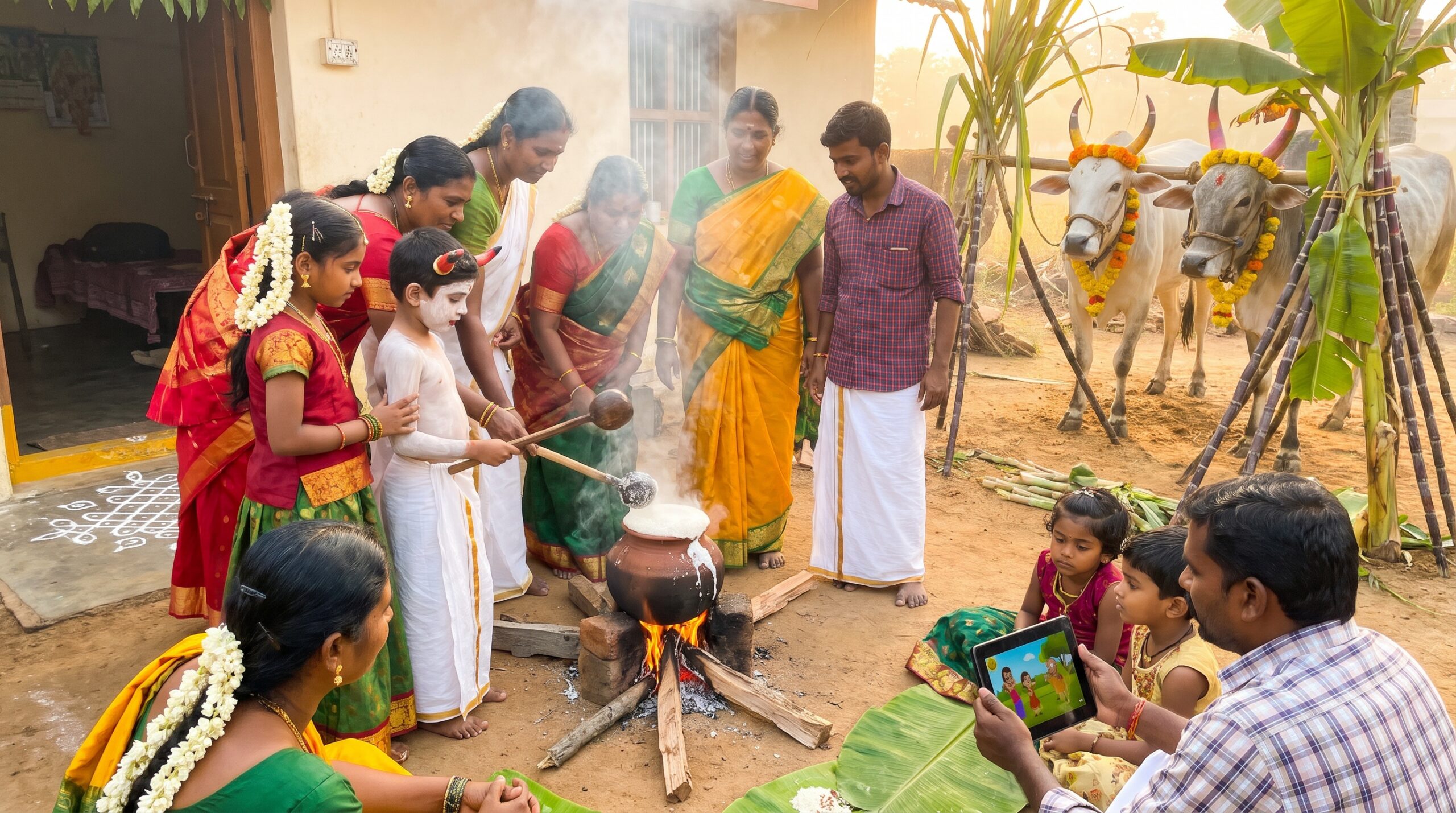
Pongal – Indian celebrates a rich harvest. The name comes from a Tamil word that means to boil over. Families watch new rice bubble and spill from a decorated clay pot. Then everyone shouts Pongalo Pongal in delight. The festival honors Surya, the sun, and thanks cattle and farm helpers for their work. The festival is celebrated over four days: Bhogi Pongal, Surya Pongal, Mattu Pongal, and Kanum Pongal, each with its unique significance, contributing to the cultural richness of this event.
The four days of Pongal – Indian
Each day has its own focus. Together they make a warm, community-minded holiday.
- Bhogi – A day to clear out the old. Families burn or discard worn items in a small bonfire. Keep children safe around flames.
- Thai Pongal (Surya Pongal) – The main day. Fresh rice, milk, jaggery, and ghee cook into sakkarai pongal in a decorated pot. People offer the dish to the Sun. Ven pongal, a savory rice-and-lentil meal, also appears.
- Mattu Pongal – A day for cattle. Cows and bulls are bathed, garlanded, and fed treats. This thanks the animals for their labor.
- Kaanum Pongal – A social day. Families visit neighbors, take outings, and share relaxed feasts. In 2023, for example, 134 foreign tourists participated in a traditional Pongal feast in Madurai, Tamil Nadu, highlighting the festival’s appeal to international visitors.
Rituals, symbols, and foods
Common sights sparkle with color. Kolam designs appear at doorways. People display turmeric, sugarcane, and fresh produce. Decorated pots and temple pujas to Surya are also common.
Sakkarai pongal is sweet and often has cashews and raisins. Ven pongal makes a comforting breakfast or prasadam.
Kid-friendly activities and safety
Want fun ideas that feel safe and sweet? Try simple, hands-on activities that children can join.
- Make a paper kolam using colored paper and rice-flour glue.
- Decorate a mock pongal pot with stickers and child-safe paints instead of real fire.
- Start a gratitude jar. Each morning, whisper one thing you are thankful for and drop a paper leaf inside.
- Sing a short breakfast prompt: “One thing I am thankful for today is…” Pass the turn around the table.
Practical tips for visitors and families
Dress modestly for temple visits and bring a small offering like fruit or sweets. Supervise children near hot pots, bonfires, and painted animals. Many communities adapt rituals for safety and the environment. For example, some groups use low-smoke fuels and non-toxic paints. The festival draws significant crowds, with nearly 14 lakh (1.4 million) people departing Chennai and adjacent areas for Pongal festivities, traveling by government buses, private buses, and trains.
Start your Pongal morning
Play our 10-minute Pongal story at breakfast to teach gratitude and spark a short family chat. For a gentle start, try our story and a small kolam.
Read or listen to a story about Pongal – Indian now: For 3-5 year olds, For 3-5 year olds, For 6-8 year olds, For 8-10 year olds, and For 10-12 year olds.
Final thought
Pongal – Indian turns rice, sun, and cattle into joyful moments. Share a story, make a small kolam, and smile together. If you want age-friendly prompts, Storypie is ready to help you make the day extra joyful.