
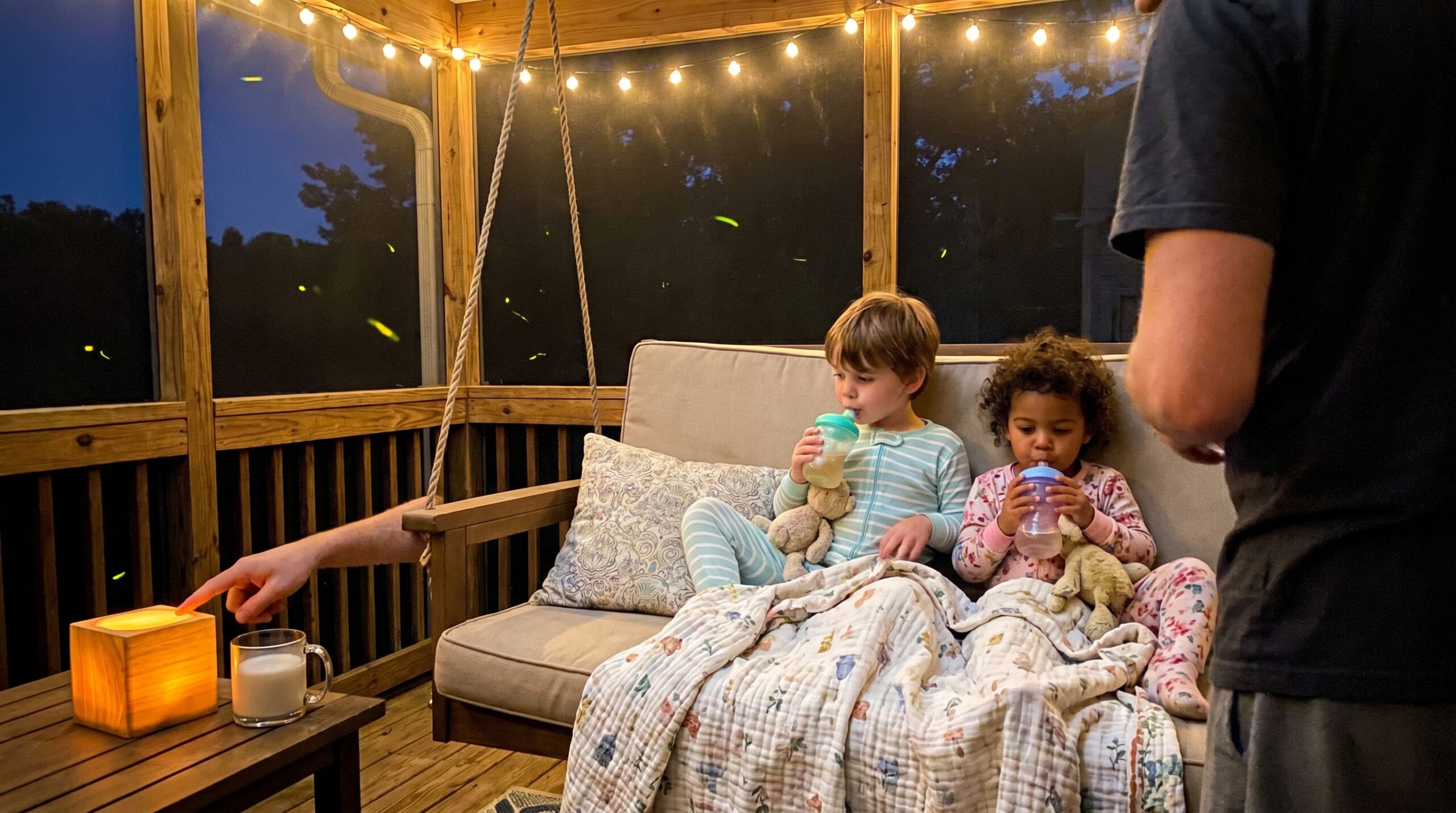
The bedtime mini story ritual is a short, predictable story or listening moment. It helps children move from evening activity into sleep. Use three to ten minutes. Keep the voice soft and the lines familiar.
Why the bedtime mini story ritual works
The ritual signals that it is time for bed. Next, it lowers emotional and physical arousal. Research shows short, predictable stories help children fall asleep faster and wake less at night. A 2024 systematic review in the Journal of Sleep Research found that bedtime-routine consistency was associated with reduced sleep-onset latency, particularly at ages 1 and 2. Additionally, these moments boost vocabulary, listening skills, and emotional calm. Best of all, the child receives focused caregiver attention in a cozy setting. A 2025 study also reported that consistent bedtime routines, including storytelling, were associated with longer sleep durations by age 3, highlighting the long-term benefits of early bedtime storytelling on children’s sleep patterns.
Age-friendly notes
- Infants and very young toddlers: try a brief spoken rhyme or a one-line story.
- Preschoolers: choose slightly longer, repetitive tales with comforting themes.
- Older children: offer a calm chapter excerpt or an audio-only clip that stays gentle.
Story formats and sleep hygiene
Use live telling, a parent recording, audiobook snippets, or app audio. Prefer audio-only formats and dim screens for sleep-friendly practice. In fact, a 2024 randomized clinical trial showed that removing screen time in the hour before bed resulted in improvements in sleep efficiency and reductions in night awakenings, supporting the importance of creating a calming bedtime environment. Consistency matters. Keep the same time, tone, and tuck every night.
Adapt for sensory needs
For children with sensory differences, change volume, length, or touch. These small adjustments reduce bedtime distress. For example, lower the volume and slow the pace.
Sample script and simple stretch
Read this aloud in about sixty seconds. Then repeat slowly to reach five minutes.
Tonight we visit Luna the quiet rabbit. Luna tiptoes through the moonlit garden and finds a tiny blue star. She tucks the star in her pocket and hums one soft song. The garden listens. Luna yawns. The star glows and says, “Sleep now.” Luna closes her eyes and dreams of soft, windy clouds.
Stretch the script by repeating lines slowly. Add one brief sensory detail each repeat. Pause for a slow, rhythmic breath between lines.
Three quick steps to a perfect mini story
- Choose a calm, familiar story or an audio clip.
- Keep volume low and pace steady.
- Repeat the same excerpt nightly to build the cue.
Practical tips and seasonal use
Mini stories travel well. They work for co-sleeping and for long summer evenings. Avoid suspenseful or stimulating content near lights-out. Instead, pick steady, soothing passages without cliffhangers. A 2025 survey indicated that 90% of parents of 1–6-year-olds reported having a bedtime routine for their child, with 67% including reading bedtime stories, emphasizing the common practice of reading stories as part of these routines.
Storypie tip: on warm summer nights, play a five-minute mini story before bed. For quick access, try the Get the Storypie app page.
Caregiver note
“Five minutes and he knows it’s time. We both breathe slower, and that little hand in mine relaxes,” says Sara, parent of a three year old. Simple, real, and powerful.
Final thought
A bedtime mini story ritual is small in time and huge in effect. It builds routine, soothes bodies, and strengthens bonds. Make it simple, make it sweet, and make it yours. For tools and ideas, explore Storypie.