
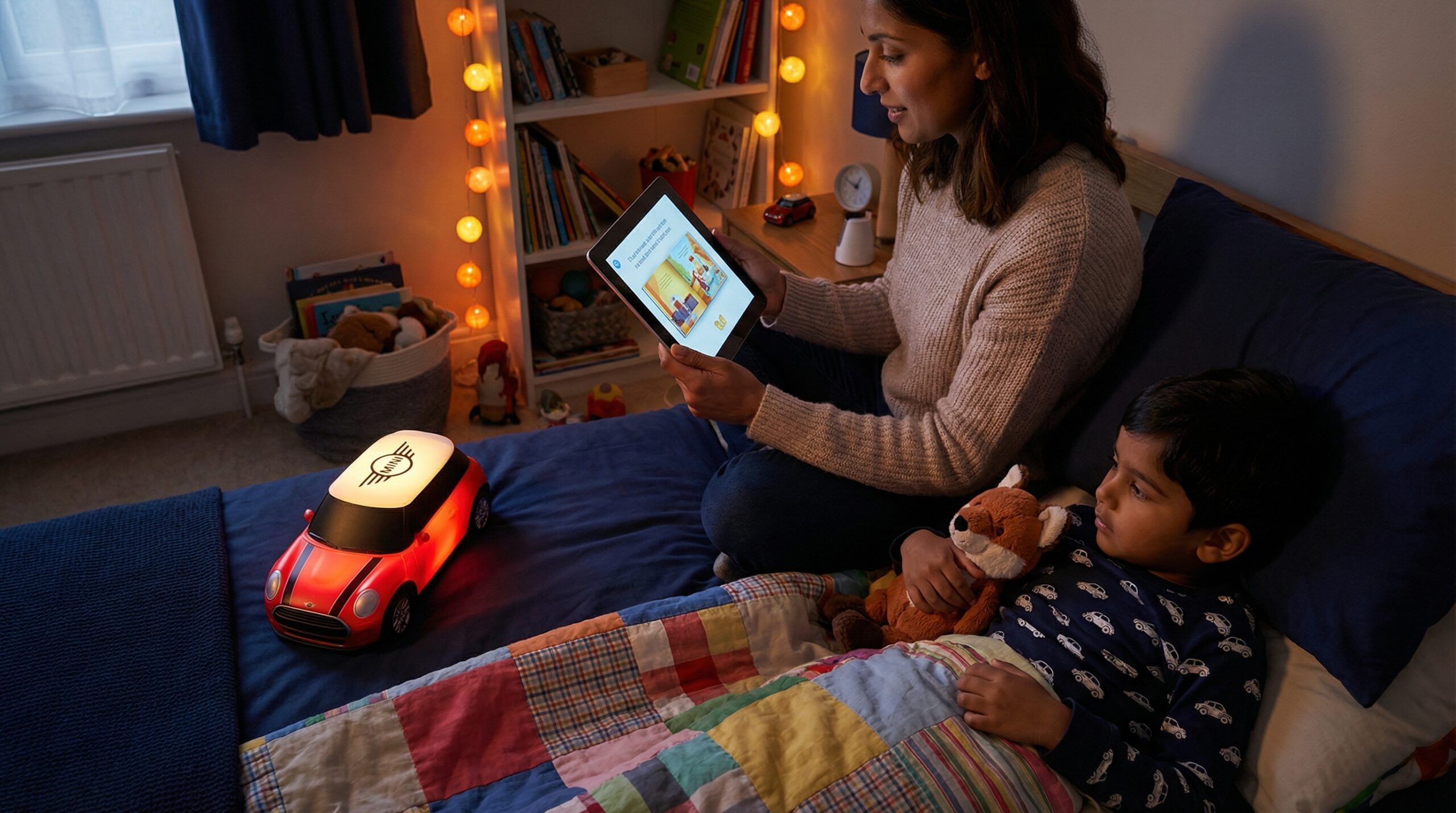
Bedtime wind-down mini story ritual: a small, mighty cue
A bedtime wind-down mini story ritual helps families close the day with calm. This short, predictable story lasts three to seven minutes. Done nightly with dim lights and a soft voice, it signals the shift from wakefulness to sleep. In fact, a 2025 survey found that 71% of parents agreed that storytelling helps their children wind down at bedtime, with 49% naming it their preferred method.
Why the bedtime wind-down mini story ritual works
A steady, short routine calms the nervous system. Over time, the same closing line or lullaby trains a child to expect sleep next. As a result, you will notice quicker sleep onset and fewer requests for one more. This tiny habit borrows centuries of bedtime storytelling and trims it for modern life. Research indicates that consistent bedtime routines, including storytelling started as early as three months, were associated with fewer night-time awakenings, reduced sleep problems, and longer sleep durations by age three, according to a 2025 study.
Key calming elements
- Calm environment: dim lights and a quiet room.
- Single short tale: three to seven minutes for preschoolers.
- Predictable ending: a clear closing phrase or lullaby.
- Consistency: same time and same sequence nightly.
Age-friendly choices for the bedtime wind-down mini story ritual
Adjust the story to fit your child. For infants, use short vocal routines focused on rhythm and closeness. For toddlers, use simple lines and repetition. For preschoolers, pick gentle tales with clear resolution. For early readers, offer very short chapter starts or quiet stories that soothe. A 2023 CDC study found that establishing a consistent bedtime routine, such as reading a story, helped facilitate children’s healthy sleep behaviors, with average sleep duration reported as 10.8 hours on weekdays.
Sample tiny tale
The sleepy moon tucked the meadow in with a patchwork of stars. A small fox yawned, curled into a blanket, and whispered Goodnight. Simple, soothing, and just long enough to cue sleep.
What makes an ideal five-minute audio
Choose a soft pace and gentle pauses. Prefer audio-only playback to keep lights low and stimulation down. Use a sleep timer so the recording stops after the final cue. A warm, steady voice with slow cadence helps a child breathe out and settle.
Integration with nightly routine
Pair the mini story with other cues like a bath, pajamas, teeth brushing, and a brief cuddle. When time is tight, make the mini story the final signal of a short 15 to 30 minute routine. Consistent timing strengthens conditioning and builds ritual power.
Tech tips and Storypie
If you use an app, turn on airplane mode or do-not-disturb and disable notifications. Prefer audio-only mode and set a sleep timer. Storypie offers short narrations and sleep-friendly playback that help preserve calm and keep screens dark. Explore Storypie bedtime collections or get the app for more short, soothing stories.
Explore Storypie bedtime collections
Troubleshooting
If a child gets more awake, shorten the story or simplify the imagery. Move the story earlier in the routine if needed. If progress is slow, keep consistency for several weeks. Watch for signs of success: faster sleep onset, fewer stalls, and softer sighs at lights out. Notably, a BMJ feature published in December 2024 noted that consistent bedtime routines with calming pre-sleep activities, such as bedtime stories, can promote healthy sleep; nightmares affect approximately 85% of children, making these rituals even more crucial.
Final thought
Small rituals, big sighs. A bedtime wind-down mini story ritual is sweet, simple, and wonderfully effective. Try it tonight and savor the tiny magic. Additionally, a 2026 study found that a two-week nightly bedtime reading routine improved empathy and creativity in children aged 6–8, showing significant gains in cognitive empathy and creative fluency, highlighting the broader benefits of bedtime storytelling.