
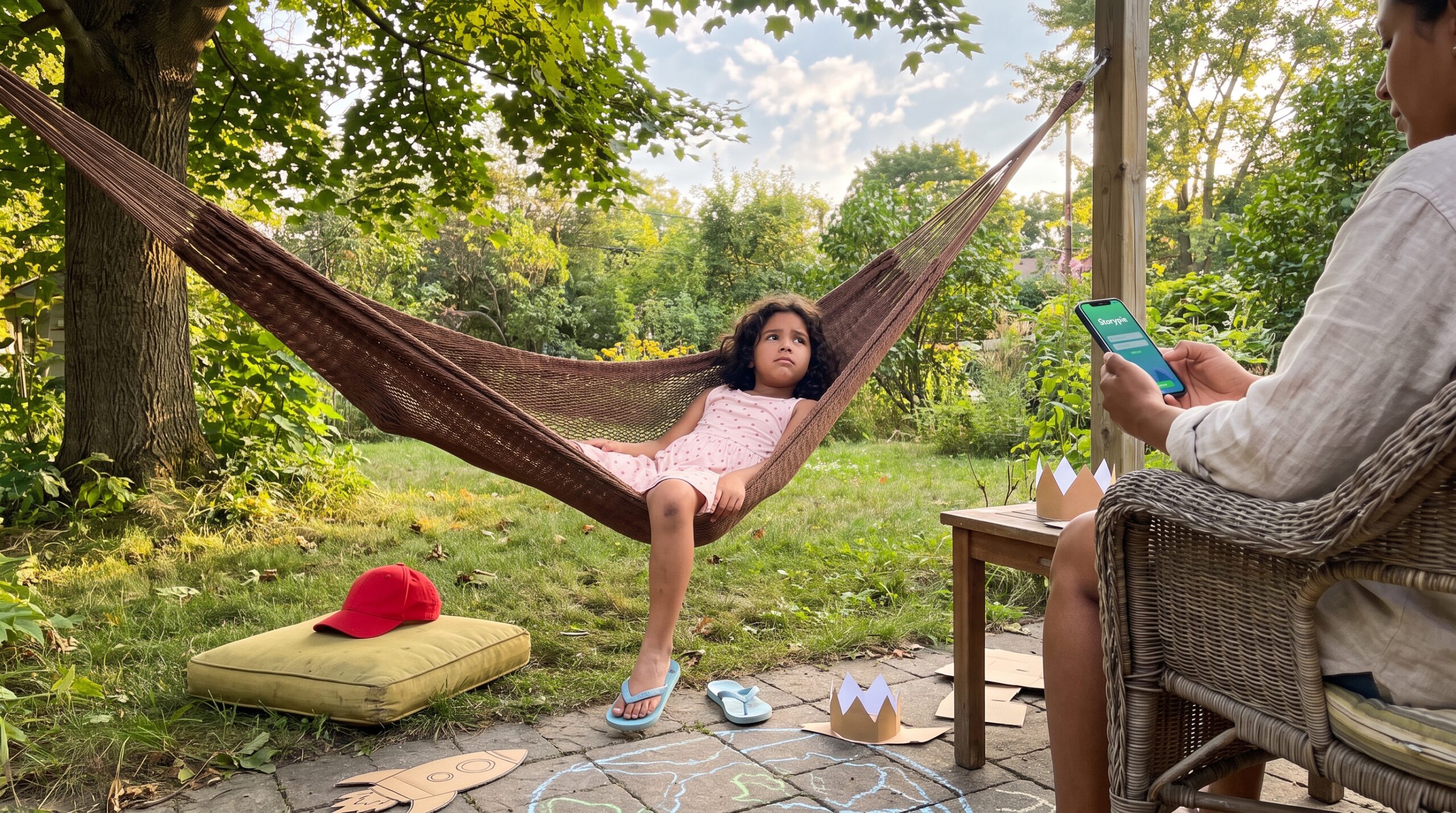
I build products and tell bedtime stories for a living. Boredom in children shows up often. In the first paragraph I name it clearly: boredom in children can be a helpful signal. When a child says I am bored, it is not failure. Instead, it can be a tiny creative invitation.
Boredom in children: why short boredom can be good
Boredom in children signals low stimulation or an unmet need. Psychologists call it low arousal plus dissatisfaction. However, it usually fades if it is short and managed. For kids, causes are simple. Monotony, too little choice, or too much passive screen time often cause boredom. In fact, a study found that approximately 20% of U.S. adolescents reported high levels of boredom, highlighting how common this experience is among children and teens.
Look for small clues. Restlessness, sighing, fiddling, or saying there is nothing to do are common signs. Also watch for instant device requests. These clues show the current activity does not meet a need.
Short boredom can boost creativity
Short, managed boredom gives children thinking space. Then they can daydream and connect odd ideas. Several studies show that brief low stimulation boosts creative thinking and problem solving. Lovely, right? Try to treat short boredom as a tiny lab for ideas.
How I try it at home
Last summer I ran a small experiment. I set a ten minute quiet timer and left paper and crayons on the table. The first five minutes were groans and pacing. Then my child built a paper city with secret tunnels. The win was not the city. Instead, the win was the moment they decided to invent.
Practical tips that work
Keep routines simple and kind. Also make boredom short and safe. Here are easy, parent-friendly tips that often work.
- Timebox it. Give short blocks of unscheduled quiet time, about 10 to 15 minutes.
- Offer open ended materials. Paper, crayons, blocks, or a jar of buttons spark play.
- Limit passive screens gently. When entertainment is always easy, the brain stops inventing.
- Offer two choices, not twelve. Choice helps without overwhelming.
- Model calm. Kids copy how adults tolerate quiet.
Try this simple routine yourself. Be patient and curious. Then step back and watch what happens.
Read or listen to a story about Boredom now: Read or listen to a story about Boredom now: For 3-5 year olds, For 6-8 year olds, For 8-10 year olds, and For 10-12 year olds.
When to pay closer attention
Most boredom is normal. However, persistent boredom may signal deeper needs. If boredom comes with sadness, withdrawal, sleep or appetite changes, or falling school performance, take note. In that case speak with your pediatrician, a school counselor, or a child psychologist. Watch the pattern, not just the phrase.
Final note
Boredom in children is not an enemy. Treated as a small invitation, it can help build creativity, independence, and problem solving. Be a calm guide, offer a few good materials, then step back. Finally, find more gentle stories and activities on Storypie when you want inspiration. Visit Storypie to explore more.