The create your own hero challenge turns a few minutes into bold family fun. Parents and teachers love this weekend imagination challenge. It sparks laughter, bright art, and confident voices.
What the challenge is
The create your own hero challenge asks families to invent a hero together. First, it gives a clear, playful frame. Next, children pick a name, powers, weakness, mission, look, and a sidekick. Each part shapes the hero and makes sharing simple and joyful. In fact, a 2025 study involving 300 children aged 4–6 found that a structured creative prompt, like the hero challenge, significantly enhances imaginative skills, including drawing innovativeness and storytelling plot richness.
Core steps and characteristics
Here are the main elements you will find in this challenge:
- Name. A bold, memorable name that fits the hero.
- Powers. One to three powers with clear reasons why.
- Weakness. A small flaw that makes the hero human and kind.
- Mission. What the hero protects or changes in the neighborhood.
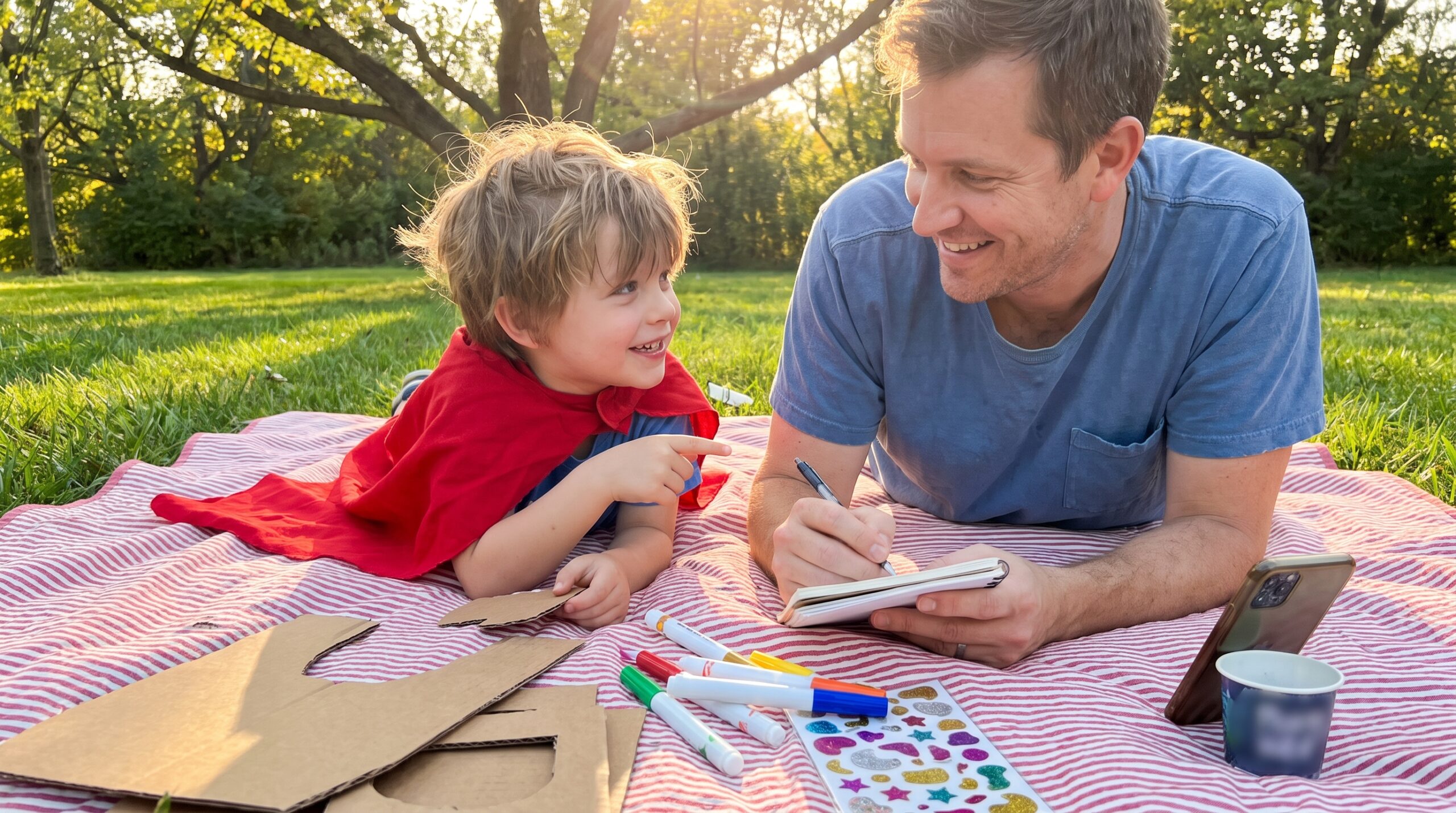
- Look. A costume, badge, or simple drawing that shows identity.
- Sidekick. A pet, robot, or friend who helps the hero.
These parts repeat across versions of the challenge. Therefore the activity stays familiar yet fresh. Kids repeat ideas and refine them each time. Additionally, a 2024 randomized trial with preschoolers showed that children who strongly identify with superheroes tend to take more risks in behavioral tasks, illustrating how superhero identification can encourage boldness in creative challenges.
Why the create your own hero challenge matters
The hero idea has deep roots. For example, ancient myths and modern comics both shaped how people tell heroic tales. However, this specific weekend imagination challenge focuses on quick family play. It boosts language, social thinking, and confident speaking. Research indicates that imaginative pretend play is significantly related to the development of executive functions in young children, reinforcing the value of the hero creation challenge.
Moreover, the challenge encourages explanation. When kids explain why a hero acts a certain way, they practice empathy and reasoning. In short, the challenge blends imagination with meaningful growth.
Age notes and variations
Preschoolers often pick a single visible power and bright costume. Early elementary kids add simple motivations and choices. Older kids and tweens layer backstories and mixed traits. Thus the create your own hero challenge adapts well across ages. Interestingly, a 2026 study found that 47% of preschoolers exhibited a medium level of imagination, with notable differences in gender—40% of girls demonstrated a high level of imagination compared to 26.7% of boys.
For younger children, offer two choices to guide them. For older kids, invite tradeoffs and consequences to deepen thinking. Many families repeat this challenge on Saturdays or during quiet afternoons.
Culture, safety, and sharing
Encourage heroes that reflect diverse genders, backgrounds, and abilities. Representation makes the activity richer. Also protect privacy if you share creations online. Avoid full names and exact locations. Instead, use short hashtags, private groups, or the Storypie app.
Try Storypie for ready prompts and secure audio sharing. For more features, visit Storypie features. For quick access to the app, go to Storypie get-app.
Final thought
The create your own hero challenge is simple and brilliant. It turns crayons, towels, and giggles into meaningful play. Most of all, it celebrates your child and their voice. Try it this weekend and bring snacks, light music, and lots of cheer.