Education through storytelling ages 3-12 helps facts stick. Stories wrap facts in time, cause and feeling so children can hold them. For parents and teachers, this idea feels simple and quietly powerful.
Why education through storytelling ages 3-12 works
First, stories give structure. Memory prefers sequences and causes. Put a fact inside a plot and children link it to an episode they can retrieve later. A 2023 study found that children who learned through storytelling retained 70% of the information, compared to just 10% when taught through traditional methods.
Also, small emotions make details linger. When a child feels a moment, that detail gains staying power. Neuroscience shows that narrative processing lights up memory and social brain networks.
Developmental fit by age
Ages 3 to 5
At this stage, symbolic play explodes. Simple plots and pretend help children map words to meaning. Try a two-line refrain they can join. It anchors new vocabulary in rhythm. Research from a 2025 meta-analysis found that interactive/shared reading produced a moderate aggregate effect on young children’s narrative ability, particularly benefiting 4–5-year-olds.
Ages 6 to 8
Next, sequencing skills grow. Stories help children order events and see why things happen. Ask what came first, next and last to build sequencing muscle.
Ages 9 to 12
Finally, characters gain nuance. Older children weigh motives and consequences. Invite a short debate about which character made the smarter choice and why. A 2024 study involving 76 fourth-grade students found that those exposed to storytelling had an N-Gain of 0.52 in learning outcomes, compared to an N-Gain of only 0.17 in the control group; the difference was statistically significant (p < 0.05).
What research shows
Across studies, story exposure links to larger vocabularies and stronger listening comprehension. Narrative tasks at school entry predict later reading success. In short, stories support memory, language and later reading. A 2023 systematic review and meta-analysis of 18 studies on storytelling-based science education for young children found a large effect size, suggesting significant positive impacts on children’s learning and development.
Because stories let children try on another person’s feelings, they also support empathy and theory of mind. Quality narrative exposure matters a lot here.
Classroom, equity and formats
Stories appear across subjects. History gains human context through personal narratives. Science can sit inside a curious character’s journey. Even math works as story problems that frame operations. A 2025 quasi-experimental study with 170 Spanish primary-school students found that collaborative storytelling increased both narrative cohesion and story length, especially when social communication and inclusive participation were encouraged.
However, stories help only when children can access books and good content. Culturally familiar narratives boost engagement. Meanwhile, stereotyped tales can create lasting misconceptions. Aim for diverse, accurate books.
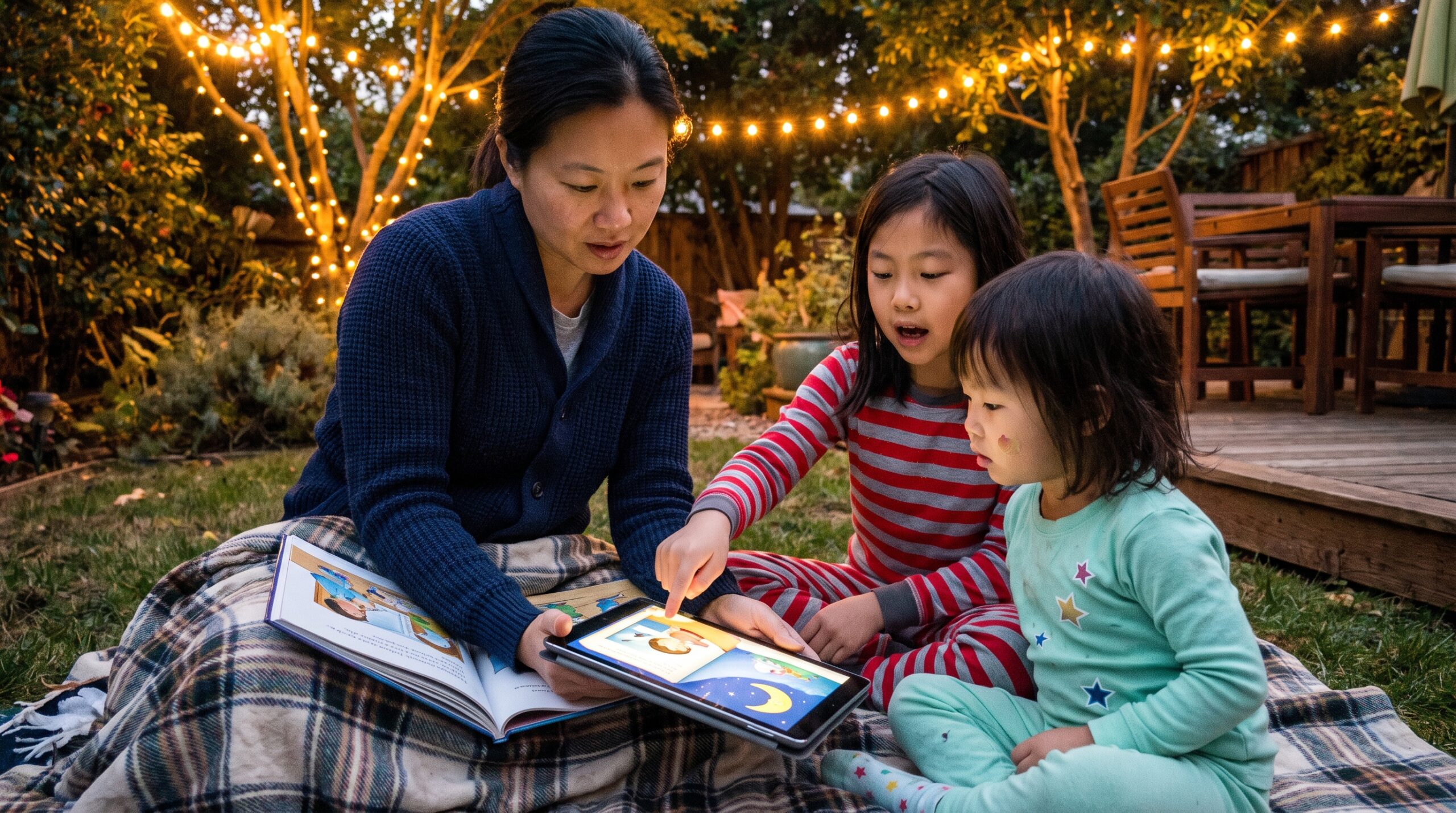
Print, oral, audio and apps each shine in different ways. Read aloud for warm connection. Audio helps on car rides. Interactive digital stories can add vocabulary supports, but watch for distracting bells and whistles. Find curated collections at Storypie and try gentle tools that support focus.
Quick ritual and Storypie tip
A tiny ritual boosts recall in one minute. After storytime, ask your child to retell one sentence in their own words. It is quick, tactile and delightful.
Storypie tip: stories make facts stick by wrapping them in feeling. For warm nights and busy days, pick diverse books and use short rituals to lock in learning. Explore Storypie for curated stories and simple supports.
Visit Storypie or try the Storypie app for collections and family-friendly features.
In brief, education through storytelling ages 3-12 is a durable learning tool. Use short rituals, choose diverse stories, and pair narrative with targeted instruction when precision matters. Small habits, big results.