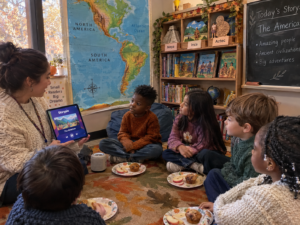
Education through storytelling ages 3-12 helps children hold on to facts. In simple terms, story ties facts to feeling, sequence, and motive. For parents and teachers, that mix makes learning stick. Storytelling is not extra. It is central to how children build meaning.
Why education through storytelling ages 3-12 works
Stories give order. First comes a beginning, then a trouble, then a turn, and finally a fix. That sequence helps young brains see cause and effect. Also, stories add motive. Characters want things, so children learn why things happen. Emotion lights memory. When a child cares about a character, details cling like stickers. In short, narrative organizes facts into people and events. That organization makes recall easier and more joyful. In fact, a 2023 study found that children who learned through storytelling retained 70% of the information, compared to just 10% when taught through traditional methods.
Science, history, and the long view
People taught survival and social rules through oral tales for generations. Cognitive science now backs that old wisdom. Jerome Bruner argued people make sense through narrative. Neuroimaging shows that listening to stories activates memory centers. Studies also find stronger attention and social thinking during stories. Therefore, education through storytelling ages 3-12 links modern evidence to time-tested practice. A 2026 systematic review of educational digital storytelling found small-to-medium, statistically significant positive effect sizes: 0.40 for cognitive outcomes, and 0.479 for affective learning outcomes, underscoring the positive impact of digital storytelling on both cognitive and emotional learning.
Ages 3 to 5: A vocabulary boom
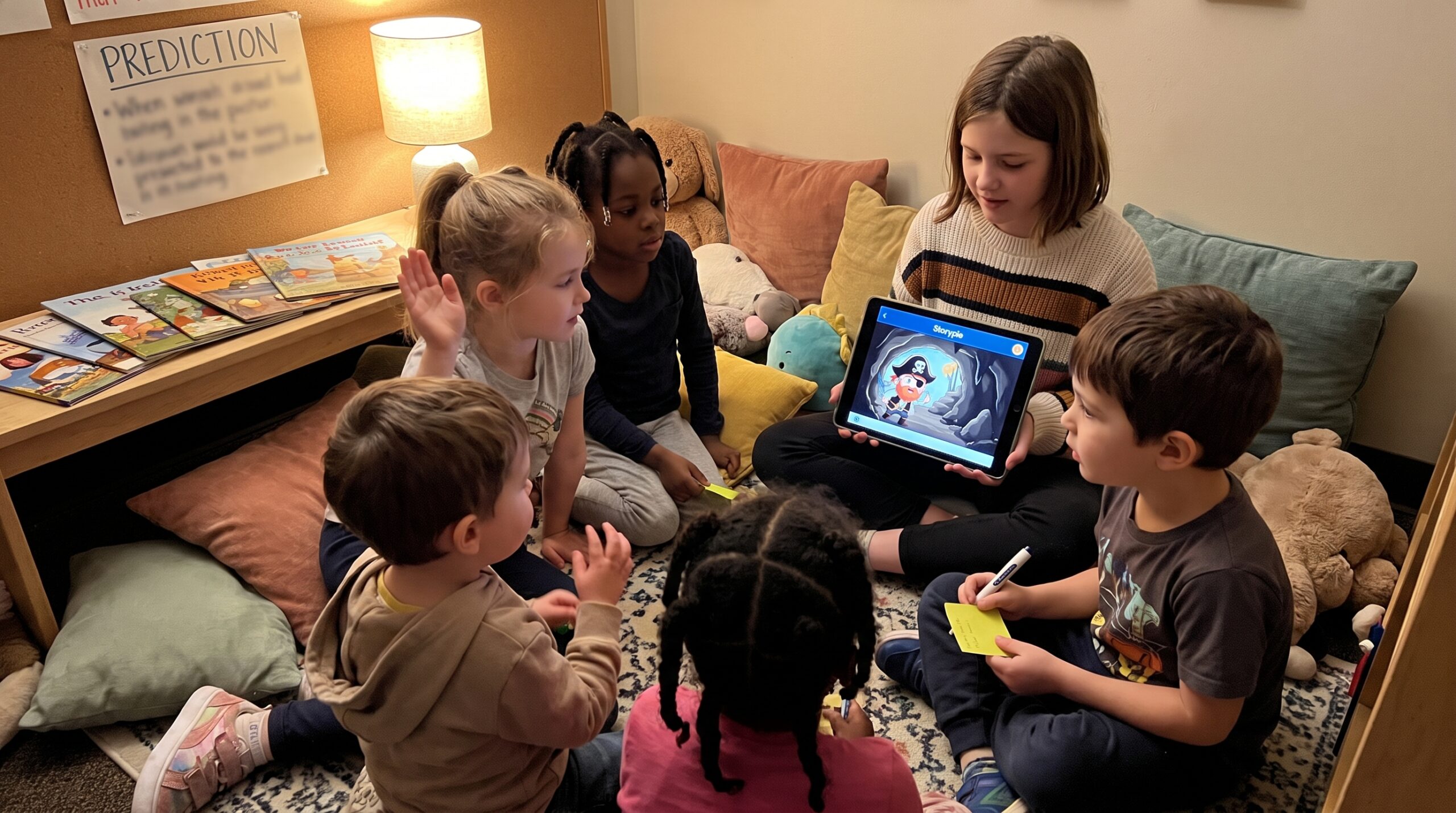
At this age, children learn lots of words fast. Shared stories expand spoken language. Simple plots build routines, rules, and emotional words. For example, a short tale teaches names for feelings and objects. Those words feed later reading. Also, gentle rituals like a face-out book and a low lamp make read-alouds feel like an invitation, not a lesson. A 2025 meta-analysis found that interactive/shared reading produced a moderate aggregate effect on young children’s narrative ability, particularly benefiting 4–5-year-olds, emphasizing the importance of interactive storytelling in developing narrative skills in early childhood education.
Ages 6 to 8: From learning to read to reading to learn
Children begin to read on their own. Story structure becomes a bridge to independent reading. Causal links sharpen reasoning. Prediction supports memory. When a child guesses what happens next, comprehension deepens. Teachers and parents see that narrative tasks predict later reading success. That benefit feels like pure gold. A 2023 meta-analysis of 40 U.S.-based studies on narrative interventions for preschool and elementary-aged children found that group-design studies produced moderate effect sizes for both narrative production and comprehension, supporting the effectiveness of narrative interventions in improving storytelling and comprehension skills among young learners.
Ages 9 to 12: Richer arcs and moral thinking
Narratives grow more complex during these years. Multiple points of view and longer arcs train perspective taking. Children practice stitching themes across chapters. This practice supports social study, science reasoning, and empathy. In other words, stories serve as a safe gym for thinking about motives and consequences. Moreover, a 2026 scoping review in the Journal of Pediatric Nursing found that 75% of studies measuring knowledge outcomes showed significant gains, and 89% of studies measuring attitudes and behavior demonstrated short-term benefits, providing strong evidence of the broad benefits of narrative interventions in educational settings, particularly in pediatric contexts.
Where stories live and why representation matters
Story-based learning travels well. It works in oral telling, picture books, chapter books, audio stories, classrooms, museums, and apps. Because it costs little, read-alouds boost equity. Moreover, when children see themselves in a tale, engagement and retention rise. Representation helps a child care, and caring helps memory.
Simple actions caregivers can try
- Read a short story aloud. Then ask one question.
- Invite a retell to see what landed.
- Encourage a guess about what comes next.
These small moves reveal learning and make the story sticky. Also, they keep moments calm, playful, and effective.
Keep going because stories match how children think
Narrative ties facts to people, feeling, and sequence. That mix makes information memorable and usable. In plain words: stories help children hold on to what matters. For families seeking a gentle nudge, Storypie hosts an age-aware library of stories. Visit Storypie to explore child-friendly tales and audio stories that support learning.
Finally, storytelling is a powerful, low-cost tool. Use it often. Little moments add up, and learning sticks.