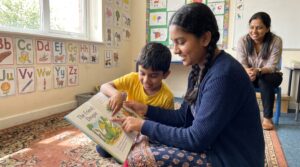
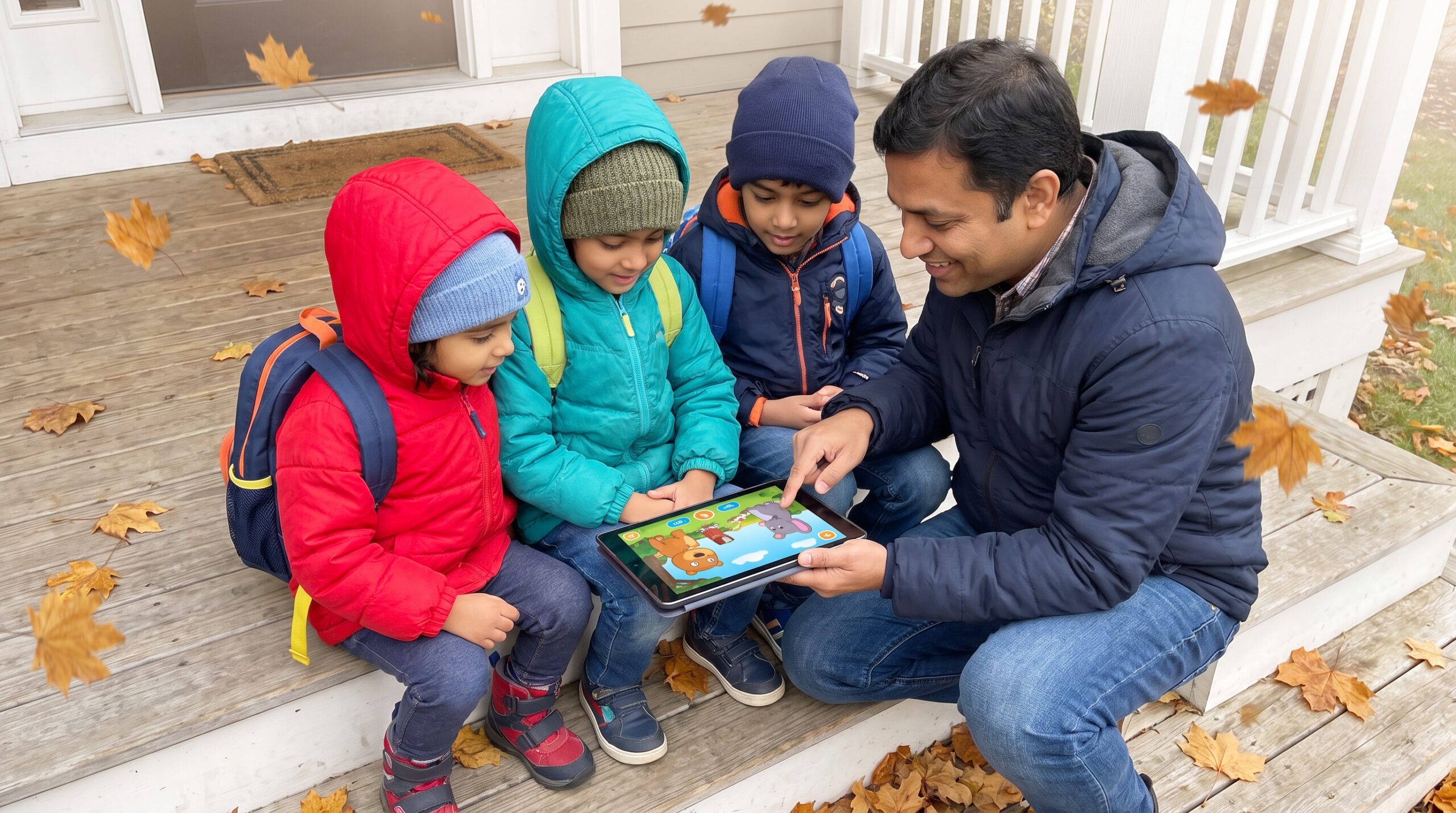
Education through storytelling for ages 3-12 transforms short moments into learning moments. At Storypie we turn lessons into memorable adventures. For example, a ten-minute story before school can boost vocabulary and curiosity. Try the Storypie app for quick, age-tailored picks.
Why education through storytelling for ages 3-12 works
Stories have shaped learning across cultures for millennia. They give the brain a clear map: a beginning, a middle, and an ending. Because of this structure, children link facts to feelings. When a child cares about a character, the lesson becomes memorable and joyful. In fact, a 2023 study found that children taught through storytelling retained 70% of the information, compared with only 10% retention when taught through traditional methods.
Ages 3-5: tiny listeners
Preschoolers grow listening skills fast. Short episodes, vivid images, and rhythmic language win. Stories teach new words in context. Repeat a phrase for a few mornings, and you will hear it in play. As a result, children gain receptive vocabulary and firmer attention. A systematic review published in October 2021 examined narrative-language interventions for preschool and elementary school-aged children, finding significant improvements in narrative production and comprehension (effect sizes of d = 0.51 and d = 0.54 respectively).
Ages 6-8: curious explainers
Early readers handle longer focus and better sequencing. Narrative helps with cause and effect. It supports working memory and makes school lessons stick. Try stories that tuck in one or two new facts. Repeat and build over days. It is delightfully simple and surprisingly sticky. Additionally, a 2025 neuroimaging study found that listening to a chapter of *Alice’s Adventures in Wonderland* activated brain regions that are crucial for social cognition, showing how narrative listening engages important cognitive processes in children.
Ages 9-12: budding critics
Older children handle nuance and moral questions. They like layered plots and motives. Stories become tools for perspective taking and ethical thinking. Narrative supports transfer: a science idea inside a story helps apply that idea later in projects or tests. A 2026 study published in npj Science of Learning reported that first-grade-aged children learning novel object functions via storytelling achieved a mean score significantly above chance, showcasing storytelling’s effectiveness in teaching complex concepts to young children.
What the research says
Research shows stories engage language, emotion, and episodic memory at once. That triple play helps long-term retention far more than lists of facts. A meta-analysis covering over 75 unique samples and more than 33,000 participants found that narrative texts were more easily understood and better recalled than expository texts. Studies and classroom practice show narrative improves recall and conceptual understanding. Parents notice new words used naturally and tidier retellings.
Practical formats and a tiny ritual
Formats that work include read-alouds, audio stories, and short narrated episodes. Apps and podcasts make stories easy to schedule. Also, a tiny ritual helps anchor the habit.
- Keep stories to ten minutes on busy mornings.
- Add a small cushion or a favorite bookmark.
- Introduce one new word card each week.
Repeat favorites twice over a week to lock in vocabulary. Choose tales that match the child’s pace and heart. Next, slot one morning story and one bedtime story on hectic days. Small routines do magical work.
Simple measures for impact
Watch for three signs of learning: new words used naturally, tidy retellings in order, and calmer focus for related tasks. Teachers often see better comprehension too. Finally, use gentle tracking. Celebrate small wins with a sticker or a brief note.
Try it today. Explore Storypie home and curated Storypie collections for age-focused picks. A short habit can nudge vocabulary, empathy, and curiosity. Stories are tiny engines of learning, and they stick.