
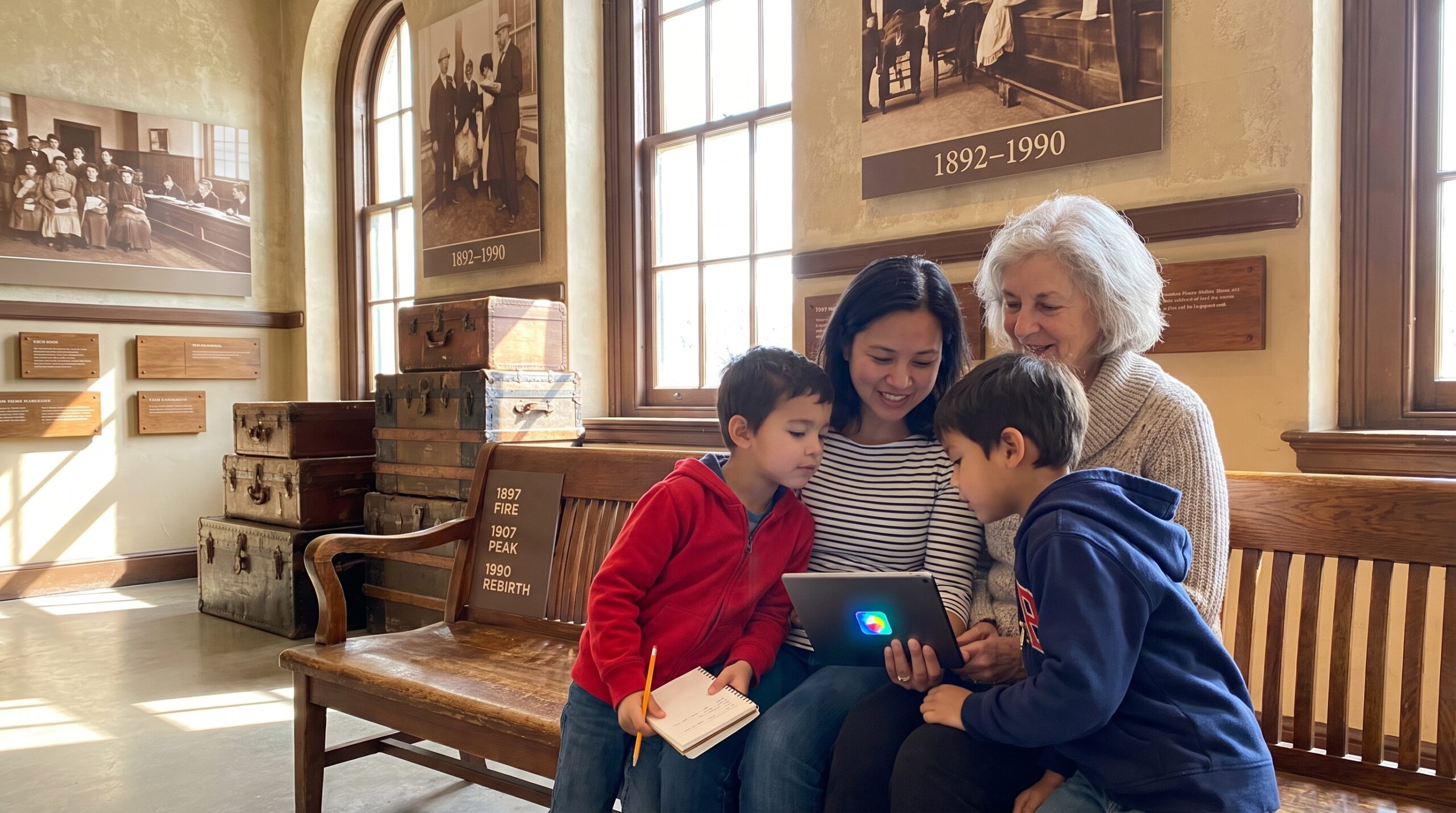
Ellis Island for families opens a window onto hope, bravery, and new beginnings. First, the island stood in Upper New York Bay near the Statue of Liberty and Manhattan. For decades, it served as the busiest federal immigration station in the United States, processing over 12 million immigrants between 1892 and 1954.
Ellis Island for families: Where it is and why it mattered
The federal station opened on January 1, 1892. For example, the first person processed that day was Annie Moore, age 15 from Ireland. Between 1892 and 1954, roughly 12 million people passed through Ellis Island. The busiest year was 1907, with over 1.2 million arrivals. On a single day, April 17, 1907, Ellis Island processed a record 11,747 immigrants, showcasing the operational capacity and urgency of immigration during that time period.
How the island grew
At first, the station used wooden buildings. Then a 1897 fire changed things. Officials rebuilt in brick and stone. Over time, workers added landfill to expand the island. The main Registry Room, often called the Great Hall, became the heart of arrivals.
How Ellis Island worked
Families and individuals passed through medical exams and legal inspections. Doctors checked for contagious illness. Officials asked about identity, money, and plans. Most people were processed within a few hours. However, some people stayed longer. Officials detained those who needed more medical care or legal review.
The island included a hospital complex on the north side. Nurses and doctors treated patients in wards and separate rooms. Officials sometimes refused entry for medical reasons, lack of a sponsor, or other legal grounds. Today, the museum preserves artifacts and passenger records that tell these stories.
Quick timeline for families
- 1892 Opening: The federal station begins processing new arrivals.
- 1897 Fire and rebuilding: Wooden buildings gave way to brick and stone.
- 1907 Peak year: The busiest year with more than one million arrivals.
- 1954 Closure: The federal station closed and sea processing declined.
- 1990 Rebirth: Restored buildings reopened as the Ellis Island National Museum of Immigration.
Scale and human stories
Ellis Island was more than numbers. It was accents, tiny suitcases, and relief after long voyages. For many families, it marked a brave new start. Approximately 40% of current U.S. citizens can trace at least one ancestor to Ellis Island, emphasizing the lasting legacy of this site on American identity and genealogy. Annie Moore helps us connect to those lives. Today the museum and records keep those memories alive.
Visiting tips for parents and teachers
Getting there is simple. Ferries depart from Battery Park in New York and Liberty State Park in New Jersey. Also plan ahead by checking museum hours and booking ferry tickets. Expect security screening at both departure points.
- Bring basics: snacks, water, and a stroller if needed.
- Make it playful: ask, If you had to start over in a new place, what two things would you bring?
- Bring a map for curious kids. Above all, keep visits gentle and short for young children.
For parents and teachers who want to dig deeper, the American Family Immigration History Center offers records to trace family stories. Also explore Storypie for friendly audio tales that make history warm and human.
Read or listen to a story about Ellis Island now: For 3-5 year olds, For 6-8 year olds, For 8-10 year olds, and For 10-12 year olds.
Explore Storypie: Storypie offers short audio tales that help families feel history. Finally, Ellis Island for families remains one of the most human, moving places in American memory.