Francisco Vásquez de Coronado led a major overland expedition from Mexico into the present day U.S. Southwest and Plains. In February 1540, he set out from Compostela, Mexico, with approximately 336 Spaniards, over 800 Tlaxcalan warriors, and 6 Franciscans, searching for the legendary Seven Cities of Cíbola. Parents and teachers will find this history full of big moments and hard facts.
Who was Francisco Vásquez de Coronado?
Coronado was a Spanish explorer and conquistador born about 1510. He wanted riches and fame. However his journey did not find gold. Instead it mapped new lands and changed many lives. His expedition from February 1540 to June 1542 consisted of at least 1,500 people traveling on foot and horseback, covering some 4,000 miles from west-central Mexico to the Great Plains and back. This extensive journey illustrates the scale and ambition of his mission.
Where his 1540 expedition traveled
He departed with several hundred Spaniards and many Native and African auxiliaries. First they crossed northern Mexico. Next they rode into Arizona and New Mexico. Then they pushed onto the Great Plains. The route went through Texas, Oklahoma, and into central Kansas. Along the way they saw the Grand Canyon and vast herds of bison. Those images reshaped European maps. To support this journey, Coronado assembled around 1,000 men, plus 1,500 horses and mules, along with cattle and sheep for logistics when gathering at Compostela in February 1540.
Meetings and conflict
Coronado met many Indigenous nations, including Pueblo peoples such as Zuni and Hopi. Some meetings involved friendly exchanges. However, other encounters turned violent. The Tiguex Wars in the Rio Grande valley brought sieges, deaths, and lasting damage. Coronado’s men captured and enslaved some people. These facts are difficult and important to name. The expedition comprised approximately 375 European men-at-arms, over 1,100 horses, and several thousand head of livestock; additionally, at least 1,300 indigenous allied soldiers, meaning roughly three‑quarters of the expedition were native to central and western Mexico, reflecting the complex dynamics of colonial exploration.
Key moments and outcomes
First reports that sparked the search came from Fray Marcos de Niza and a scout named Esteban. Coronado pressed east in hope of gold. In 1541 he reached Quivira, likely in central Kansas. There he found Wichita farming villages and no riches. Finally Coronado returned to Mexico in 1542. He then lost favor and later died on September 22, 1554, in Mexico City, Mexico.
Why this expedition matters
The expedition expanded European knowledge of interior North America. Maps improved and new routes appeared. Later Spanish colonization traced parts of these paths. Still, the legacy is mixed. Exploration brought cartographic gain and deep human cost.
Simple map and timeline for families
Try a small finger-trace map that shows Arizona, New Mexico, Texas, Oklahoma, and Kansas. Also use this short timeline to anchor the story:
- 1539: Marcos de Niza reports riches
- 1540 6/1542: Coronado expedition explores the region
- 1542: Coronado returns to Mexico
- 1554: Coronado dies
Quick activities
These small tasks make the history stick. For example:
- Trace the route with a finger on a map.
- Draw a rim, a river, and a bison herd.
- Compare then and now landscapes.
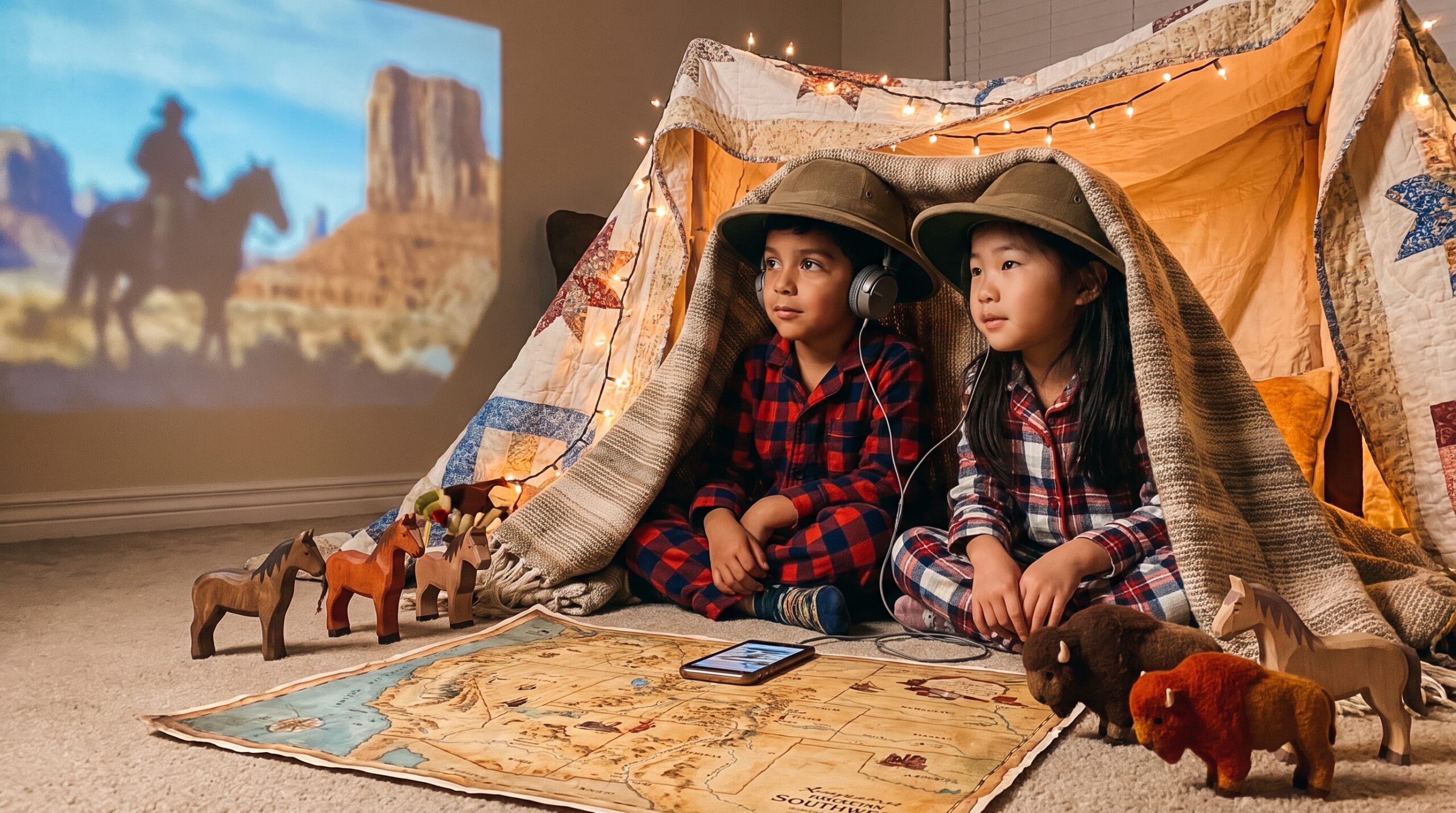
- Try a tiny bedtime ritual: listen to a 10-minute Storypie audio about the journey.
Pronounce his name roughly as Fran-SEES-co VAS-kez de Co-ro-NAH-doh. For older children, invite Indigenous perspectives and careful reading. Parents should not glamorize conquest. Instead, acknowledge violence and disease and teach respect.
Read or listen to a story about Francisco Vásquez de Coronado now: For 3-5 year olds, For 3-5 year olds, For 6-8 year olds, For 8-10 year olds, and For 10-12 year olds.
For more family-friendly biographies and audio, explore Storypie’s biography collection. Also consider visiting local historic sites such as the Coronado Historic Site and Coronado National Memorial to see parts of this history in place.