Great Depression for kids is a warm, simple way to explain a big event. First, I set the scene on an October afternoon in 1929. Stocks fell fast. In fact, the Great Depression began with the stock market crash on October 24, 1929, known as “Black Thursday”. Banks closed. Jobs vanished.
What daily life felt like during the Great Depression for kids
Families faced hard choices. For many, savings disappeared. By 1933, unemployment neared 25 percent, according to the U.S. National Park Service. Farms suffered from drought and poor soil care. Dust Bowl storms forced families to move west. Suddenly, everyday life felt uncertain.
For example, I tell a small scene to make it real. A neighbor carried a steaming bowl of soup. The child asked what that felt like. I said, “Warm. A little like hope.” That image opens a window into breadlines and Hoovervilles. It can be sad and strangely hopeful at once.
Why it happened and quick facts
Many factors combined to cause the Great Depression. Too much risky stock buying made markets fragile. Weak banks could not protect savings. Falling demand slowed factories and shops. Also, high tariffs and lower world trade made recovery harder.
- Nearly 9,000 American banks failed between 1930 and 1933, highlighting the catastrophic economic collapse and its effects on the banking sector during this time, as noted by the Federal Reserve Bank of St. Louis.
- The Dow lost most of its value by 1932.
- Output and jobs fell sharply across the country, with U.S. real output declining by nearly one-third (about –29%) during this period.
How leaders and neighbors responded
President Hoover offered limited relief at first. Then Franklin Roosevelt launched the New Deal. Programs like the CCC, TVA, and WPA put people to work. Social Security began in 1935. The FDIC started in 1933. These changes made life safer for many families.
Neighbors helped too. I often tell a tiny story about a maker who lost his shop. He tried selling apples, but no one bought. Neighbors bought five apples to help. In return, he fixed their boots. It felt like trade and trust. It felt warm and a little funny sometimes.
Art, stories, and hope
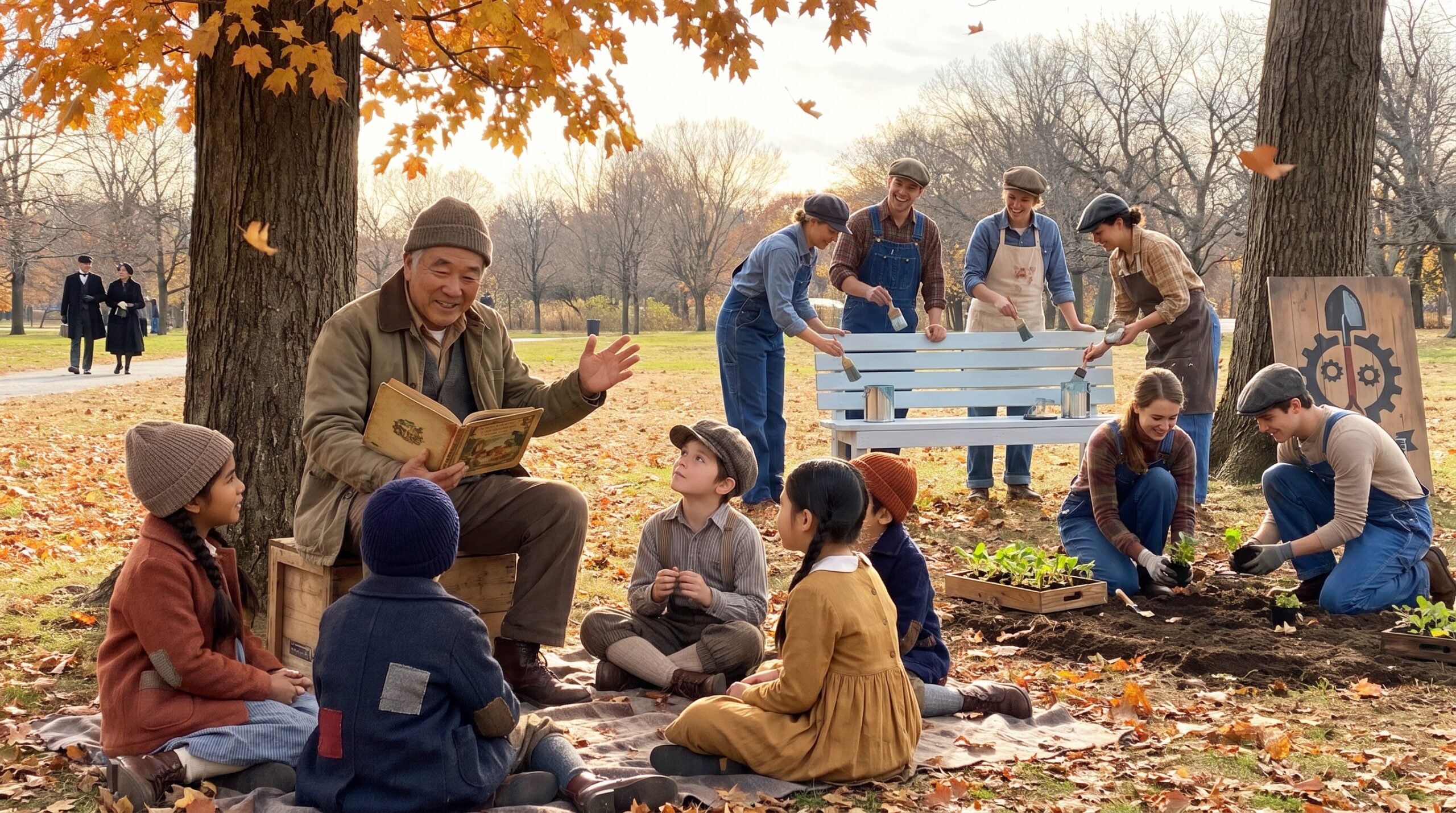
Artists and writers made pain visible. Photographs, novels, and songs showed the world what people faced. Communities shared food, tools, and work. This kept hope alive. In short, everyday kindness mattered a lot.
Read or listen to a story about The Great Depression now: For 3-5 year olds, For 3-5 year olds, For 6-8 year olds, For 8-10 year olds, and For 10-12 year olds.
Finally, the longer lesson is hopeful and practical. Better banking rules and a social safety net can lessen suffering. Public work can rebuild towns. Recovery was uneven. World War II helped speed it, but lessons stayed with us. During this time, the U.S. unemployment rate rose from 2.89% in 1929 to a staggering 22.89% in 1932, according to the Federal Reserve Board.
Explore more family-friendly history on Storypie. Try this small question with your child tonight: name one small thing you would share.