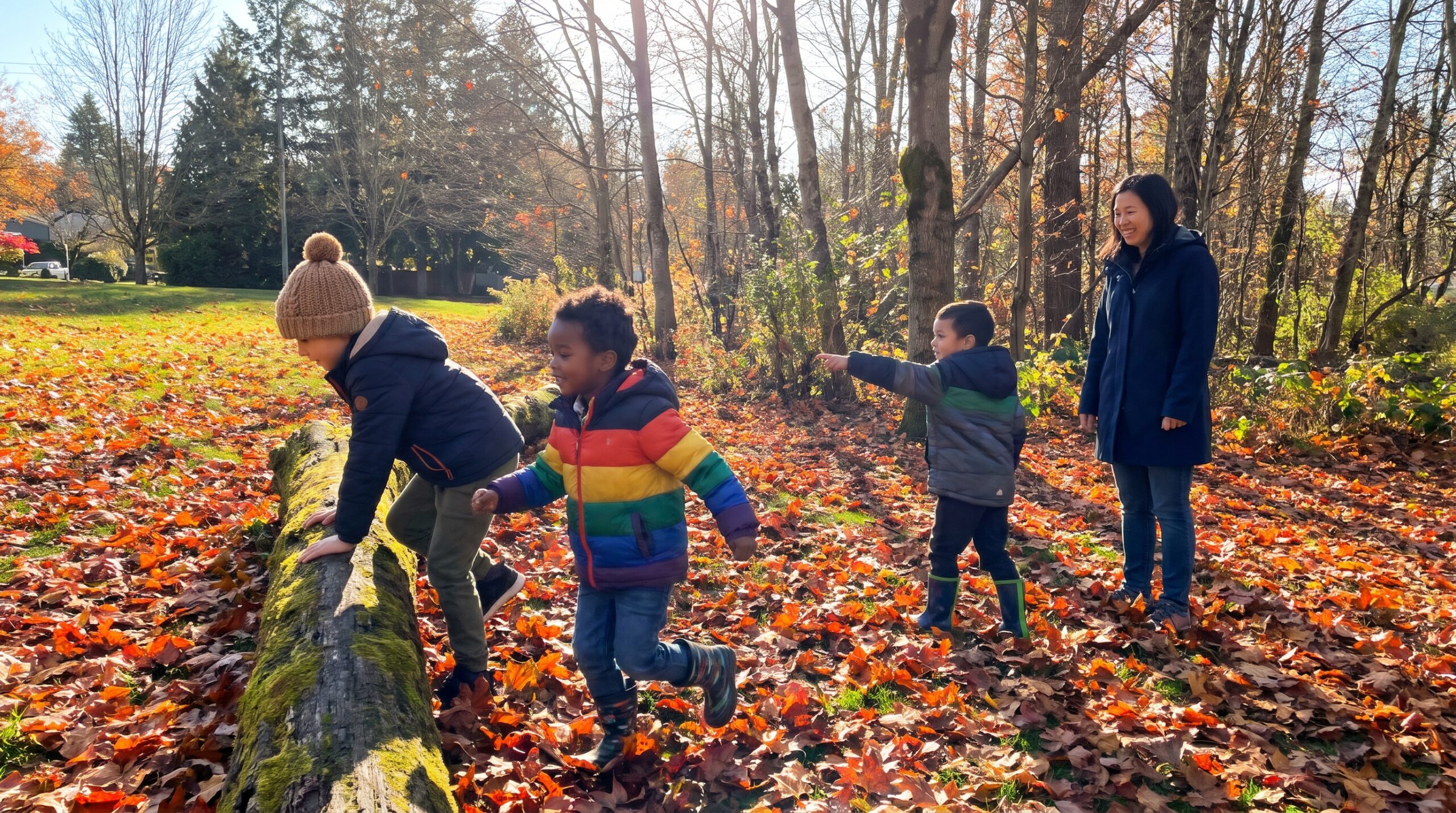
Playing outside with kids is our autumn ritual. We crunch leaves, test puddles and race to a lamppost before dark. That small ritual changed how they sleep and how fast balance returned after months of screens.
Playing Outside with Kids: Why it matters
Outdoor play builds strength. Running, climbing and jumping grow muscles, bones and coordination. Also, it boosts cardiovascular fitness. I watch my children climb and beam with new confidence. Nature eases the mind. Time in parks or woods lowers stress and helps attention reset. In fact, a study of roughly 20,000 people in England found that spending at least 120 minutes per week in nature was significantly associated with better self-reported health and well-being, highlighting the importance of outdoor activities for everyone, especially children (ScienceInsights).
Daylight improves sleep. Small wins outdoors can mean calmer evenings indoors. Play grows real skills. Risk taking in safe doses teaches problem solving and social rules. Unstructured play sparks creativity. It also helps immunity through varied outdoor microbes. Improved balance matters. When kids steady themselves, they try harder things. Children learn resilience, not just rules. However, it’s concerning that, according to a 2025 Mott Poll, 1 in 10 parents of preschoolers and toddlers report their child plays outdoors as little as once a week or less, underscoring the need for more outdoor activity.
Quick checklist before you go
Plan a short outing. Pick a place and set a return check-in. Short plans reduce fuss and keep things simple.
- Dress in layers and waterproofs so kids adapt to changing weather.
- Pack a basic kit: water, snack, wipes, plasters and a phone for older kids.
- Set boundaries and a buddy rule. I tell them the boundary and we practice it.
- Use helmets and safety gear for bikes and scooters. Choose snug, standard helmets.
- Inspect the area briefly for broken glass, slippery leaves, deep water, nettles or ticks.
How much time
Health bodies recommend about 60 minutes a day of active play for school age kids. For toddlers, spread active play across the day. Even short bursts add up. Three ten minute sessions can shift the mood of an evening. Marvelous, really. Alarmingly, in 2021, 37% of U.S. preschool-aged children (ages 3–5) played outdoors for one hour or less per day on weekdays, and 24% did so on weekend days, highlighting how limited outdoor playtime can be for young children (CDC).
Season and location tips
Autumn is perfect for playing outside with kids. Crisp air helps bodies warm up and leaves provide endless fun. However, watch for slippery piles and damp clothes. In winter, layer up and watch for ice. Near water, always supervise closely. In summer, use sunscreen and watch hydration.
Hygiene and cozy down
Change damp clothes straight away. Warm up with dry layers and a warm drink. Wash hands before snacks and check for cuts and ticks. A warm bath and a healthy snack reset the body and the day.
Try this tonight
Pick a 10 minute leaf hunt. Count shapes, race a short course and tell one short story about the best leaf. Then save a quick recording in Storypie right away. Cozy up after play and celebrate small joys.
Read or listen to a story about Playing Outside now: For 3-5 year olds, For 6-8 year olds, For 8-10 year olds, and For 10-12 year olds. For a general overview, visit Read or listen to a story about Playing Outside now.
Finally, I like to end with a small dare. Go outside. Bring curiosity. Leaves everywhere, hooray. You will thank me.