
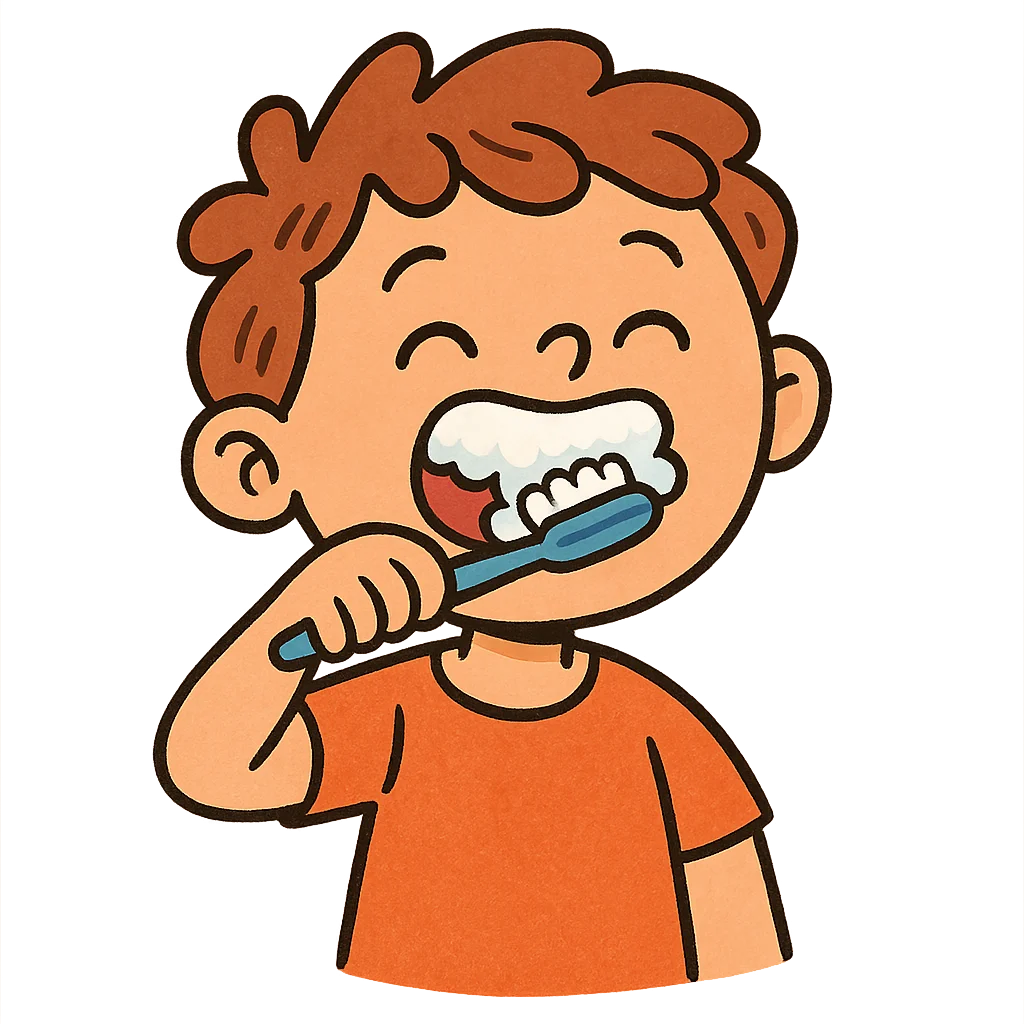
Most children do fine at the dentist. The visits that go badly usually go badly for a reason you can control: a scary word at breakfast, a parent who is more nervous than the child, or a kid who has no idea what the chair does.
This guide covers first visits and routine checkups, roughly ages 3 to 10. Many dentists like to see children by the first birthday, but plenty of families arrive later. Whenever you start, the preparation is the same.
What to say beforehand, and what to skip
Tell your child a day or two ahead. Longer than that gives an anxious child too much time to worry. Keep it short and factual: “On Thursday we are going to the dentist. She will count your teeth and clean them so they stay strong.”
Then stop. You do not need to describe every tool. The office will do that in its own words, and pediatric dental teams are good at it. They call the suction a straw, the polisher a tickle brush, and plaque sugar bugs.
Skip a few words entirely: shot, needle, drill, pull, hurt, and pain. Even “it won’t hurt” plants the idea that it might. If your child asks whether it will hurt, answer honestly and small: “A checkup is mostly counting and cleaning. If anything feels funny, you can raise your hand and the dentist will stop.”
Skip your own history too. If you dread the dentist, your child does not need to know. And never use the dentist as a threat. “If you don’t brush, the dentist will have to drill” turns the person who is supposed to help into the villain.
Play dentist at home
Pretend play is the best preparation for this age group. Take turns being the dentist. Lay your child back with their head in your lap, shine a flashlight, and count their teeth out loud with the handle of a toothbrush. Then let them count yours, or a stuffed animal’s.
Practice the moves the dentist will ask for: a big “tiger mouth,” a “bunny teeth” smile, lying still while you count to ten, and raising a hand to say stop. Children who have rehearsed these at home walk in feeling like they already know the job.
Stories help as well. Storypie has a kid-level page on brushing teeth that you can read together. Some dental offices also have a page where their own staff explain the visit; if yours does, watch it together. If not, here is a sample page where a dentist explains a checkup to kids, so your child can hear what the chair does before they sit in it.
What happens in the chair, step by step
Here is the usual order of a routine checkup, so you can narrate it in advance.
Check-in. You fill in a health history and your child gets to look around. Many pediatric offices have an open layout with several chairs, which helps shy kids see other children doing fine.
The chair. It goes up, down, and back, like a ride. Most kids want to try it. A very young or very nervous child may be seen on your lap instead, knee to knee with the dentist, which is normal for a first visit.
Counting teeth. The dentist or hygienist uses a small mirror and a gentle pointer to count each tooth and look for soft spots. They will usually show each tool on a finger first, then on a tooth. This is called tell, show, do, and it is how good pediatric offices work.
Cleaning. A small spinning cup polishes the teeth with flavored paste. It tickles and makes a buzzing sound. A suction straw clears the water and paste.
Pictures. Older children, or children whose teeth touch closely together, may have X-rays. They wear a heavy apron and bite on a small tab. The dentist decides whether these are needed; many first visits for young children have none.
Fluoride. A thin varnish is painted onto the teeth with a little brush. It feels sticky for a while and tastes of fruit. The office will tell you when your child can eat and when to brush that evening.
The talk. The dentist looks at everything, then talks with you about brushing, snacks, drinks, thumbs or pacifiers, and when to come back.
The prize. A sticker, a toy from the box, or a new toothbrush. Do not underestimate it.
A routine checkup is usually short. Tell your child that too.
Handling fear
Some fear is normal and does not mean the visit will fail. A few things make a real difference.
Tell the office ahead of time if your child is anxious, has had a bad experience, or has sensory needs. Ask whether they offer a quick “happy visit” where the child simply rides the chair, meets the team, and leaves.
On the day, your calm is the signal. Keep your voice level. If you stay in the room, let the dentist lead the conversation. Many pediatric offices ask parents to be a quiet partner, because a child can only listen to one adult at a time.
Bring a comfort item. Agree on a stop signal. Count out loud during the cleaning. Praise the specific thing your child is doing well while it is happening: “You are keeping your mouth so wide.”
If it falls apart, let it. A first visit that ends with a look and a count is still a success, and the dentist will suggest a shorter follow-up. Do not scold in the car. Crying at the dentist is not a character flaw.
For older children, 6 to 10, fear usually comes from information: a friend’s story about a filling, or a loose tooth that seems alarming. Answer at their level, and if treatment is needed, let the dentist explain the plan. Ask the office what words they use for numbing so you can match them at home.
What to do after
Praise effort, not bravery. “You opened wide and held still” tells your child exactly what to repeat next time. Let them tell the story to a grandparent or sibling. Skip the candy reward; a trip to the park sends a better message.
Put the next appointment on the calendar and mention it now and then in a neutral voice, the way you would mention a haircut. Routine visits are easier when they feel routine.
Keep the home habits going: brushing twice a day with a pea-sized amount of fluoride toothpaste, a parent helping or checking until about age 7 or 8, and flossing once the teeth touch. If the dentist gave you specific instructions on toothpaste, flossing, or snacks, those come first. Every mouth is different, and your own dentist knows your child’s.
A note for dental offices. If you run a pediatric dental practice and would like a page of your own where your team answers the questions families ask before they come in, see Lobbypie for pediatric dentists.