
Vitus Bering for kids begins as a simple, cozy story at bedtime. First, say his name like this: VEE-tus BEER-ing. He came into the world on August 5, 1681, in Horsens, Denmark. Then he joined the Russian navy during Peter the Great’s drive to build a fleet. That choice sent a Danish boy on voyages that changed maps and imaginations.
Early life and the First Kamchatka Expedition
In the 1720s, Bering led the First Kamchatka Expedition, which commenced in 1725 and concluded in 1730. The goal was clear and giant: Were Asia and North America joined by land? He sailed from Okhotsk to Kamchatka and checked the icy coasts. In short, he showed the lands were separate. Bering and his crew aboard the ship Saint Gabriel reached latitude 67° 19′ N on August 16, 1728, thereby opening what is now the Bering Strait. That answer helped mapmakers picture the world more accurately, confirming that Asia and North America are separated by a strait, later named the Bering Strait.
The great second voyage and Alaskan landfalls
Next came the larger voyage as part of the Great Northern Expedition, also known as the Second Kamchatka Expedition, which Bering commanded from 1733 to 1742. In June 1741, Bering left Kamchatka with two ships, the St. Peter and the St. Paul. This expedition included about 600 people at its outset and later expanded with “hundreds more” recruited as participants, making it vastly more ambitious than the first expedition. Fog and storms split the ships. Still, both captains saw parts of the Alaskan coast. For example, Aleksei Chirikov made the first documented European landing on the northwest coast. Bering later made landfalls on islands off Alaska. Tragically, the St. Peter eventually wrecked on what we now call Bering Island. Many men suffered scurvy and hunger. Sadly, Bering died on the island on December 19, 1741, at age 60 and received a simple burial there.
Science, nature, and difficult encounters
The voyage carried scientists who recorded new animals. Georg Wilhelm Steller described creatures unfamiliar to Europeans. He wrote about Steller’s sea eagle and the huge Steller’s sea cow. Also, the expedition brought back charts, collections, and reports that guided later explorers.
However, exploration had a harder side. Encounters with coastal peoples began trade and new contacts. They also brought disease and disruption. We should tell that part of the story with care and respect.
Bering’s name on the map and legacy
Bering left a clear name on the map. Today the Bering Strait, the Bering Sea, Bering Island, and the region called Beringia recall where he sailed. Historians and museums still study the expedition logs and artifacts. In fact, those charts opened the way for further Russian voyages and the Alaska fur trade.
A short family activity
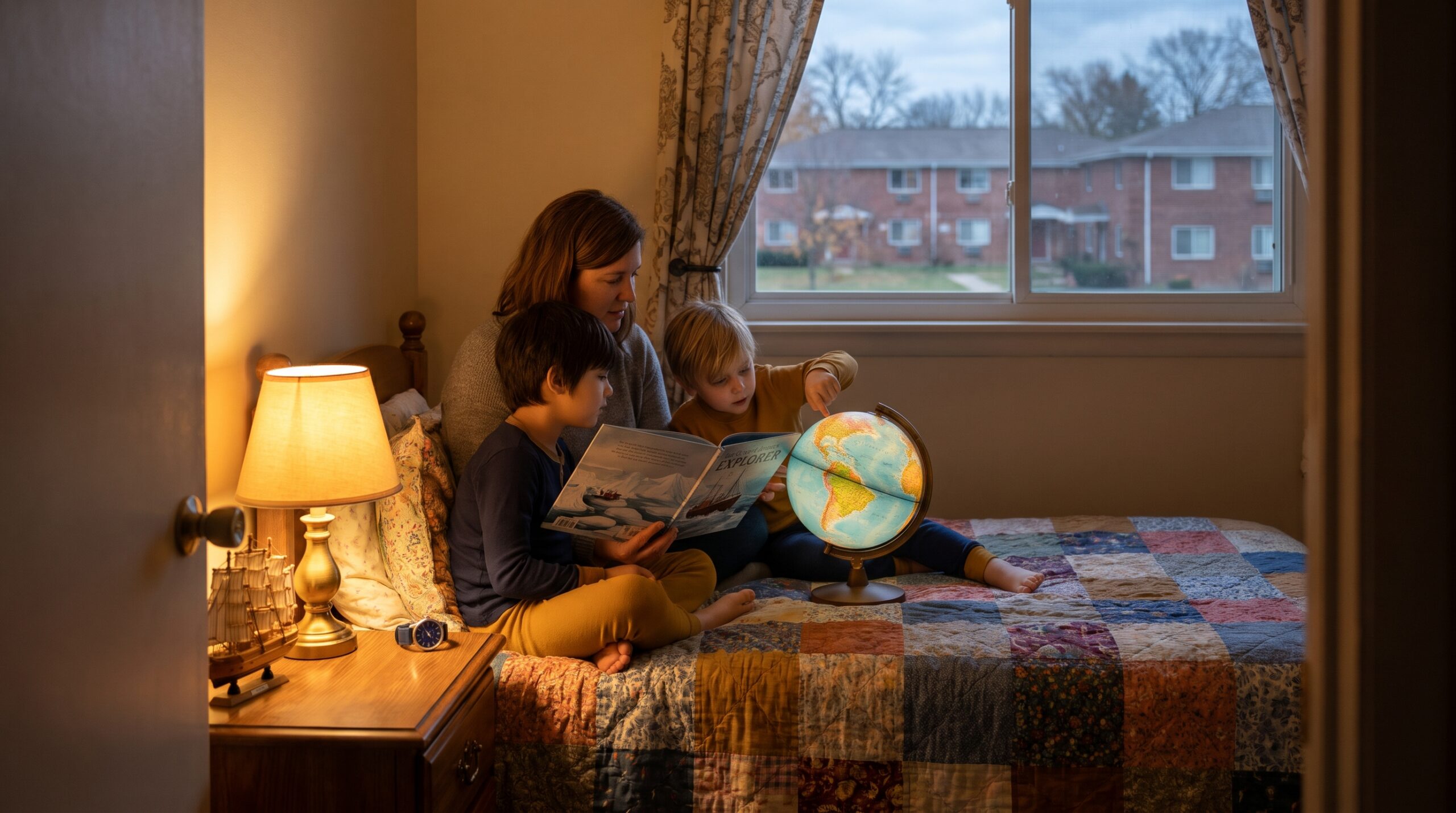
Make this a tiny family adventure after the story. Show a globe and trace Bering’s route from Kamchatka east to the islands. Put a sticker at the Bering Strait. Then ask your child to point to Asia and North America. Also, sketch one animal the naturalists recorded, like Steller’s sea eagle. Finally, compare a modern map with an 18th century chart and talk about how exploration changed maps.
This autumn at bedtime, travel with explorer Vitus Bering for a gentle lesson in geography and history. Tip: after the tale, ask your child to point out Asia and America on a globe to build their geography sense.
Read or listen to a story about Vitus Bering now: For 3-5 year olds, For 3-5 year olds, For 6-8 year olds, For 8-10 year olds, and For 10-12 year olds.
For more stories and listening, visit Storypie. Cozy up, point at the globe, and enjoy a travel-by-bedtime tale tonight.