
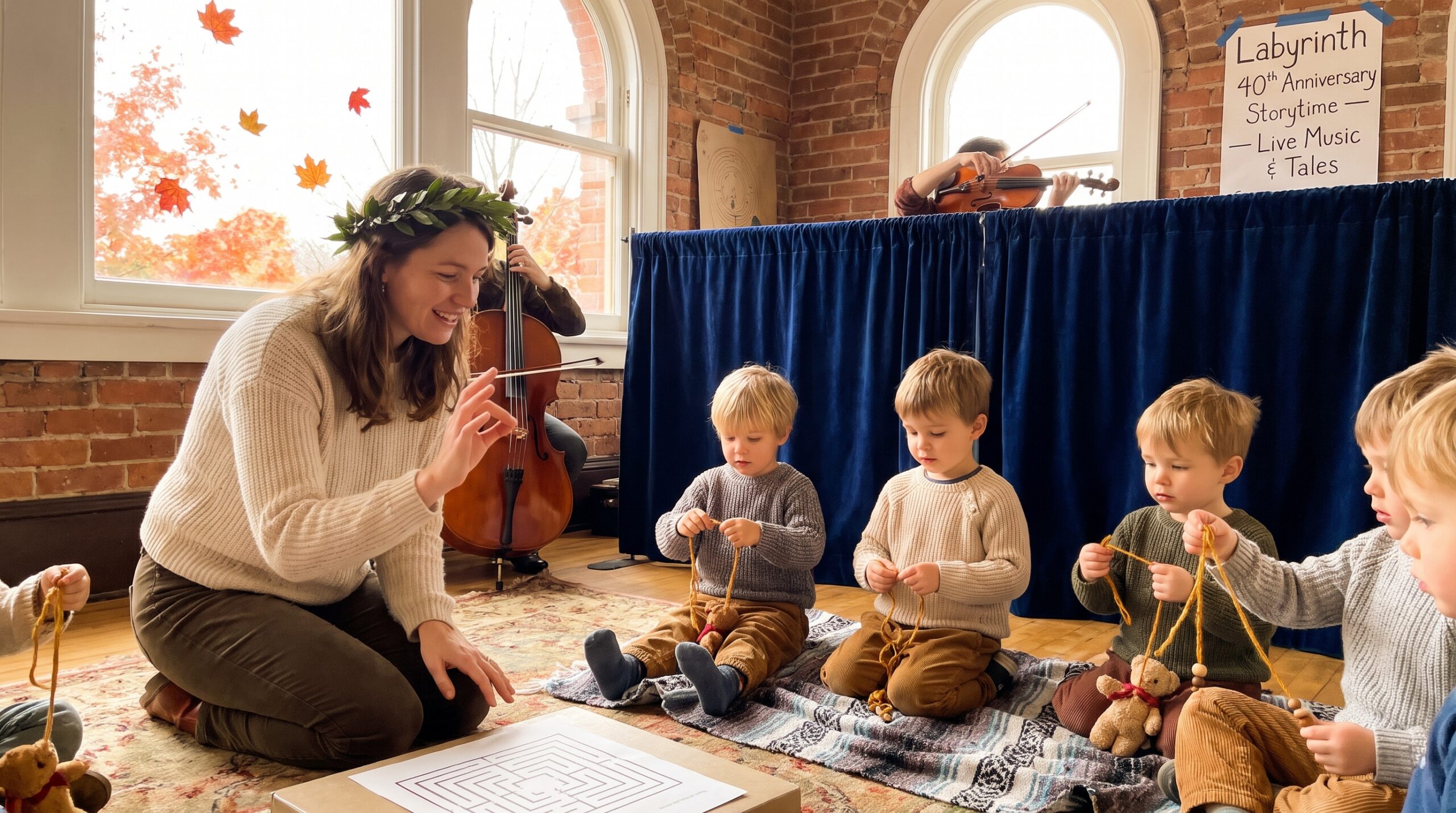
A cozy autumn hush makes the Labyrinth feel like a soft story to hold. The Labyrinth story for families blends myth, history, and gentle safety ideas.
Labyrinth story for families: Origins and history
Long ago, storytellers told of King Minos and a strange creature called the Minotaur. The craftsman Daedalus built a complex place named the Labyrinth. Theseus entered, fought the Minotaur, and escaped with a thread from Princess Ariadne.
Classical authors then passed the tale down. Later archaeologists pointed to Knossos on Crete. Sir Arthur Evans excavated there. Some scholars note a link to the word labrys, a double axe symbol from Minoan Crete.
Where myth and place meet
Knossos is a large, confusing palace. Therefore it likely inspired storytellers who saw winding rooms and many courts. Over time, the simple tale gained layers and detail. For families, the story becomes both adventurous and warm.
What is a labyrinth?
A true labyrinth has one unfolding path to the center and back out. In contrast, a maze offers many choices and dead ends. Ancient labyrinth patterns, like the seven circuit design, appear around the world.
For example, you find labyrinth patterns in medieval cathedrals and Scandinavian stone art. You also see similar motifs in Native American designs such as the Man in the Maze. Today, people walk modern labyrinths to breathe, think, or feel calm.
The Labyrinth and meanings for children
The Labyrinth story for families offers simple themes. It speaks about bravery, help from others, and clever thinking. Ariadne’s thread, sometimes called a clew, gave us the English word clue.
These ideas work well with children. They invite conversation about maps, safety, and small puzzles. Also, the image of a golden thread can feel like a tiny comfort.
Hands-on ideas for families
Small, sensory activities help children hold the tale. Try short, supervised projects that echo the myth in soft ways.
- Draw a simple seven circuit labyrinth on paper. Use crayons and make the center a bright dot.
- Tape a winding path on the floor with painter’s tape and walk it slowly. Breathe in and out at each turn.
- Make a short yarn bracelet as a golden thread for pretend play. Keep it short and always supervised.
Safety note
Think of a safety thread: a small toy or a routine children can carry into new situations. This helps them feel steady. Avoid long loose cords and strings for toddlers.
Simple safety thread ideas include:
- A small soft toy to carry
- A short sewn loop on clothing
- A tiny ritual phrase to say together
Always supervise thread play. Keep children safe and calm while they play and imagine.
Read or listen to a story about The Labyrinth now: For 3-5 year olds, For 3-5 year olds, For 6-8 year olds, For 8-10 year olds, and For 10-12 year olds.
In popular culture, the film Labyrinth, released in 1986, has left a significant mark with its unique storytelling and memorable soundtrack. It had an estimated production budget of $25 million and grossed approximately $34 million worldwide, showcasing its impact and legacy in cinema. On its opening weekend, the film debuted at number 8 in the U.S. box office, earning $3,549,243 from 1,141 theaters. By the end of its theatrical run in the United States, it grossed $12,729,917, which was just over half of its production budget.
Critically, Labyrinth holds a Tomatometer rating of 63% based on 128 critic reviews on Rotten Tomatoes, and a higher audience “Popcornmeter” score of 86% from over 250,000 user ratings, reflecting its enduring appeal. The soundtrack, featuring five new original songs by David Bowie, was released just days before the film’s U.S. theatrical debut, adding to its cultural significance.
Finally, the Labyrinth is a handy, lovely image. When a child returns to the story, the quiet work of the tale has begun. For more stories and listening, visit Storypie.