There is something wonderfully old and forever new about nursery rhymes and chants. These short sung rhymes, spoken chants, action rhymes, and fingerplays have lived in laps and playgrounds for centuries. Also, their simple sound patterns make them easy to learn and impossible to forget. In fact, a 2026 longitudinal study found that nursery rhymes predicted language development, particularly among low-SES children, highlighting their importance in nurturing young minds.
What are nursery rhymes and chants?
Nursery rhymes and chants include lullabies, counting verses, nonsense songs, ring games, and fingerplays. They use simple melodies, steady beats, and repeating words. In addition, they spotlight rhyme, rhythm, and alliteration that children hear and play with. Research shows that among children ages 0–8, 45% “often/sometimes” watch nursery rhymes or songs, with this figure rising to 66% among children aged 2–5, according to a 2020 report by Common Sense Media. This illustrates their significant presence in today’s media landscape.
A short history of the songs
Oral traditions carried these tunes for generations. Then printed books began to appear in the mid 1700s. For example, Tommy Thumb’s Pretty Song Book and early Mother Goose collections helped preserve many familiar lines. The nursery rhyme timeline compiled by NurseryRhymes.info counts 306 rhymes with firm publication dates; the oldest recorded is “Early to Bed” (1496) and the most recent is “Baby Shark” (2016), showcasing their evolution and continued relevance in modern culture. Yet, many regional variants stayed local and delightfully merry.
Developmental benefits of nursery rhymes and chants
- Phonological awareness: Rhyme familiarity supports early reading. A 2011 meta-analysis found that nursery rhyme experiences were the best predictors of phonological and print-related literacy outcomes.
- Memory and vocabulary: Repetition and melody help new words stick.
- Motor skills: Action rhymes and fingerplays build coordination and timing.
- Social learning: Ring songs teach turn taking and group rules.
- Emotional bonding: Singing together creates warmth and shared joy.
Age-friendly ideas to try right away
- Infants (0 to 12 months): Choose two-line lullabies and gentle chants. For example, try “Soft moon, soft night, little one sleep tight.” The calm rhythm soothes and links sound to sleep.
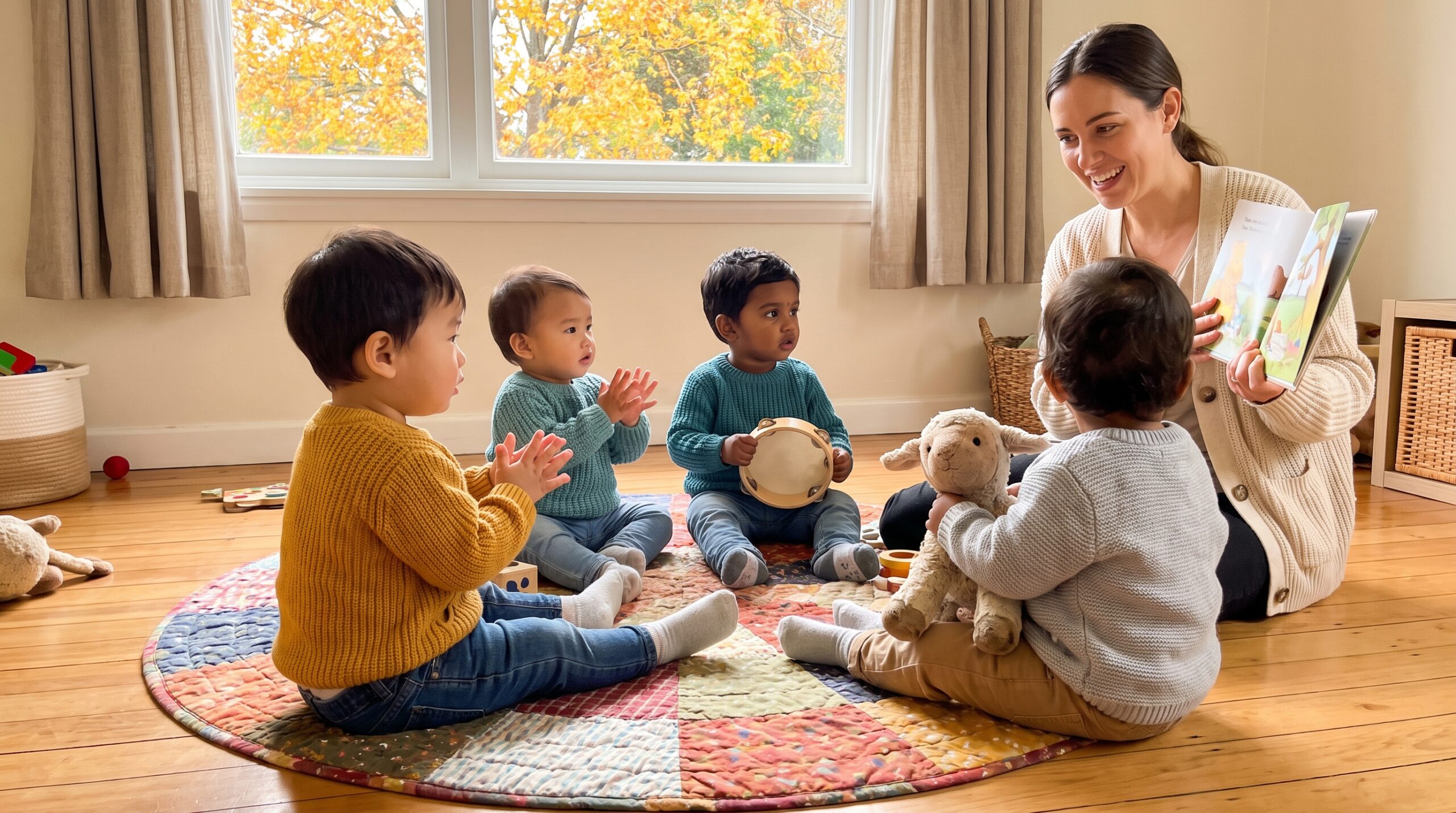
- Toddlers (1 to 3 years): Use action rhymes and fingerplays like Pat-a-cake and Itsy Bitsy Spider. Then add simple props to make the rhyme physical and sticky.
- Preschoolers (3 to 5 years): Introduce counting rhymes and longer nonsense verses. Also, clap syllables, predict endings, and play ring games for turn taking and sequencing.
Practical tips for caregivers
- Make rhymes routine. Sing one rhyme after naptime to calm and boost words.
- Repeat favorites. Repetition equals learning and more giggles.
- Add actions and props. Movement makes songs memorable.
- Modernize language when verses feel outdated. Skip lines that feel off.
- Sing live when you can. The human voice invites response more than recordings.
Cultural notes and preservation
Every culture has its own chants and nursery songs. Many traditional rhymes are public domain, so printed anthologies and recordings are easy to find. However, some historical explanations and dark origins remain debated. Recently, a 2024 study identified and rectified gender stereotypes in rhymes and poems, showcasing contemporary efforts to improve the content of nursery rhymes and make them more inclusive. Use curiosity and care when sharing older verses.
Read or listen to a story about Nursery Rhymes and Chants now: For 3-5 year olds, For 6-8 year olds, For 8-10 year olds, and For 10-12 year olds.
Finally, nursery rhymes and chants are more than quaint lines on a page. They are playful lessons, cultural threads, and memory-makers. Tiny tunes lead to big learning. For more prompts, recordings, and gentle activities, open Storypie at Storypie.