Onam Indian festival is Kerala’s great harvest celebration and a warm homecoming. It honors the generous king Mahabali and his yearly visit. Pronunciation tip: Onam is OH-nam. The main day, Thiruvonam, is thiru-VOH-nam. The festival usually arrives in August or September, and it sparkles with color and music. In 2026, Thiruvonam, the most important day of Onam, falls on August 26.
What Onam looks like
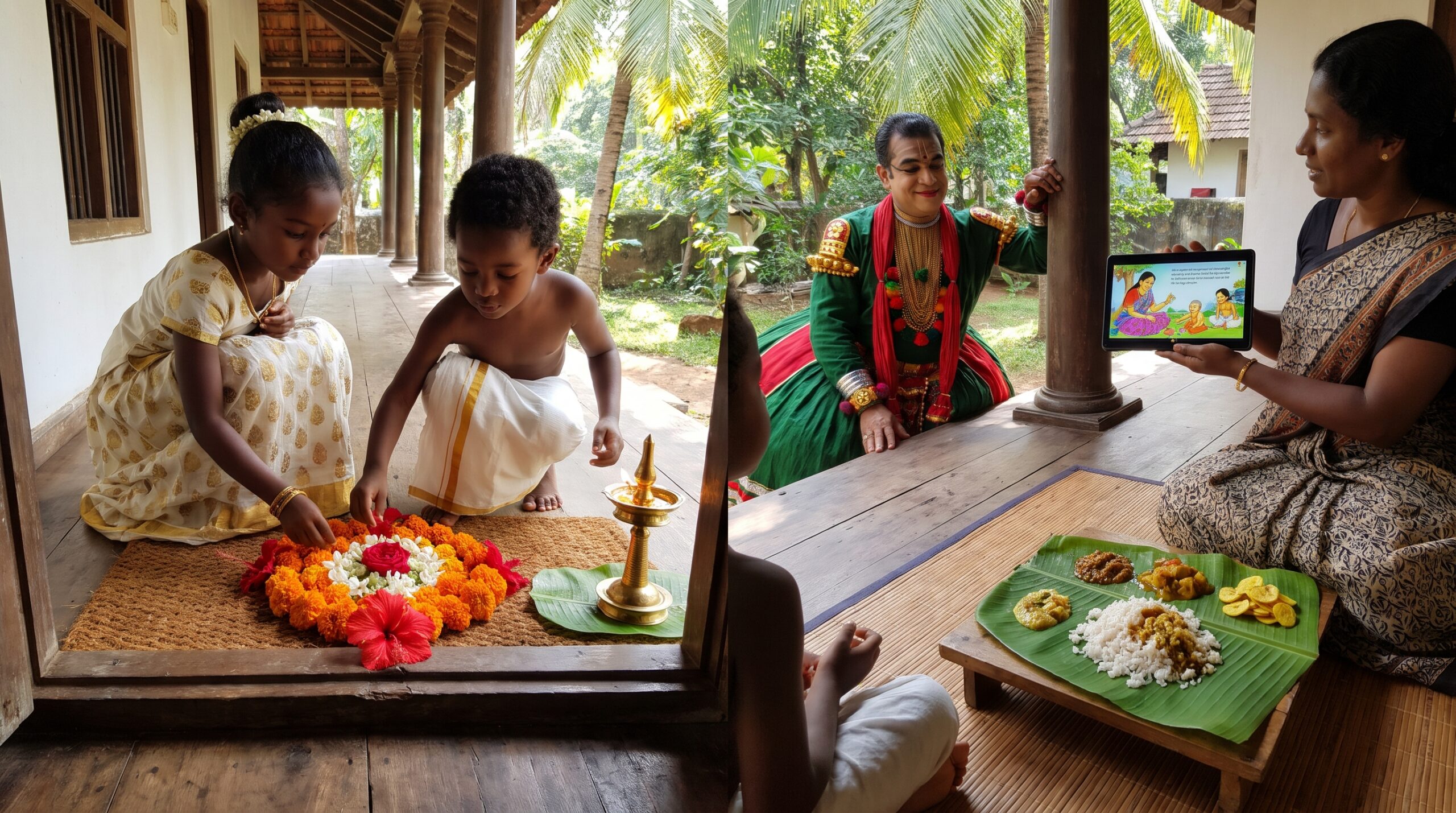
The celebration runs for several days, beginning with Atham and culminating on Thiruvonam, with each day holding special significance. Families build pookkalam, layered flower carpets that grow day by day. Villages fill with Kathakali performers, Pulikali tiger dances, Kaikottikali circle dances, and the roaring Vallam Kali snake-boat races.
Onam Indian festival traditions
Community pride and family reunions sit at the heart of the Onam Indian festival. Children love the boat races and the bold painted tigers. Also, concerts, parades, and small local fairs add joyful bustle. For many, the festival celebrates home, kindness, and a happy harvest. During the eight-day Onam period up to the Uthradam day in 2026, the Kerala state booze retailers sold alcohol worth ₹771.29 crore, including ₹126.31 crore on Uthradam alone, illustrating the economic impact of the festival.
The simple legend
The Onam legend is gentle and moving. Mahabali was a kind king who made his people happy. Vishnu, as the dwarf Vamana, asked for three steps of land. When Vamana grew and covered the earth in two steps, Mahabali offered his head for the third step. As thanks, Vishnu allowed him to visit once a year. That yearly visit is Onam.
Senses and the Sadhya feast
Sadhya is the grand vegetarian feast that fills an Onam table. Served on banana leaves, the Sadhya includes rice and many small dishes. Expect sambar, avial, olan, thoran, pachadi, rasam, pickles, papad, and multiple payasams for dessert. The smell of coconut, curry leaves, and sweet payasam is warm and comforting. Many people sit on the floor and eat with their right hand, as a friendly custom.
Easy family activities
You can invite children to enjoy small Onam crafts and activities. For example, make a paper or petal pookkalam. Add one layer each day to watch it grow. Also, watch a recorded snake-boat race or a short Kathakali clip and clap for the drummers. Next, try a simple vegetarian payasam together and taste a little at each step. These small acts bring the festival to life.
Tips for visitors and hosts
When you attend a Sadhya, please remove shoes before entering. Wash hands before you sit. Try to eat with your right hand if you can. The best places to see big public events include Alappuzha for boat races and Thrissur for Pulikali. Kochi and Thiruvananthapuram host rich cultural programmes too. Modern celebrations may be shorter or adapted by the diaspora, but the core themes remain: flowers, food, dance, and the Mahabali story.
Read or listen to a story about Onam – Indian now: Read or listen to a story about Onam – Indian now: For 3-5 year olds, For 6-8 year olds, For 8-10 year olds, and For 10-12 year olds.
Finally, explore Storypie for narration and age-friendly prompts that help families share this lovely tradition. In addition, neat recordings and kid-focused notes make storytelling simple and fun.