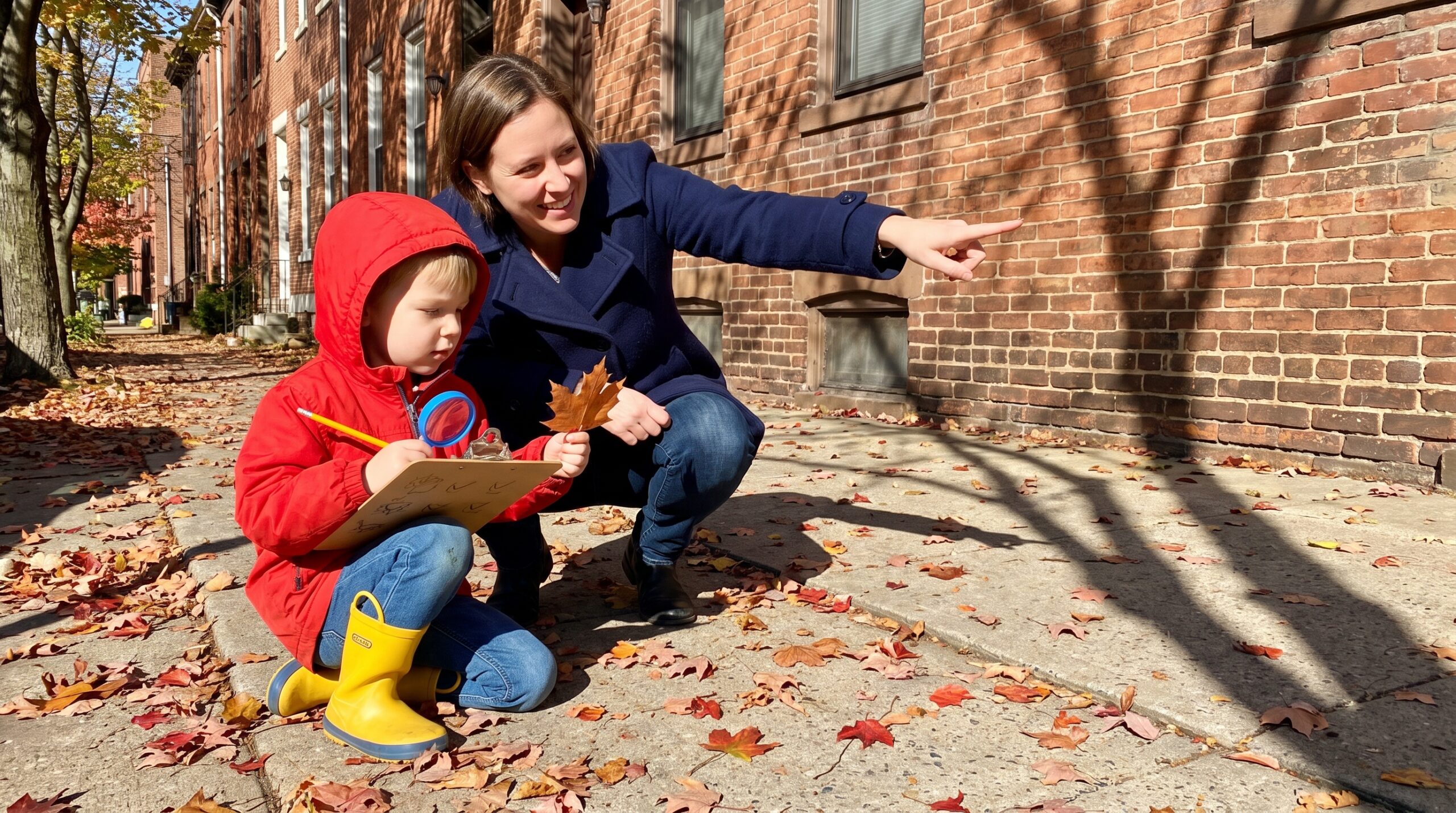
Patterns for kids are everywhere and easy to spot. I take my child on a ten minute walk each week to hunt small, smart patterns. Patterns turn a short outing into a tiny science lab. They show up in snowflakes, zebra stripes, and ancient art. This early fall afternoon, try finding three repeating patterns: leaves, bricks, and shadows. Small practice builds curiosity and attention.
What patterns for kids are
A pattern is any arrangement that repeats or follows a rule. For example, shapes, colors, sounds, movements, or numbers can form patterns. Simple repeating patterns look like AB or AAB. Symmetry acts like a mirror pattern. Rotational and radial patterns turn around a center. Progressive patterns change size or direction. Tessellations tile a floor without gaps. Fractals repeat the same shape at different scales. Interestingly, a recent study published in the Journal of Big Data introduced Constricted Spatio-Temporal Sequential (CSTS) patterns, highlighting the evolving nature of how we understand patterns in various contexts.
Where you find patterns
You will see patterns in nature and in towns. First, leaf spirals, sunflower seed spirals, and pine cone scales follow Fibonacci rules. Next, snowflakes show sixfold symmetry because of ice crystal structure. Also, animal stripes and spots help with camouflage and signaling. Humans use patterns in brickwork, tile, fabric, and ancient mosaics. Honeycomb hexagons are a natural tessellation and a brilliant bit of engineering. Moreover, research published in the European Journal of Educational Research shows that understanding patterns is crucial not only in nature but also in educational contexts, particularly in subjects like algebra.
Why patterns matter for children
Spotting and making patterns builds early math skills. Children learn sequencing, prediction, and number sense. Patterns sharpen memory and attention. They help with music, language rhythm, and early coding ideas. In short, pattern skills in early childhood often predict later math success. That is a big payoff for small games. In fact, studies highlight that recognizing patterns is linked to cognitive processes and psychological aspects, which can influence how children approach learning and problem-solving. For example, a study in Scientific Reports examined how pattern recognition relates to beliefs and perception, underlining the depth of understanding patterns holds in our cognitive development.
Quick, playful activities
Try these low-prep activities. They are short, simple, and fun.
- Toddlers (2 to 4): Clap-stomp AB patterns and stack red-blue blocks. Praise every correct repeat.
- Preschool (4 to 8): Make AAB strips with beads or draw alternating bands. Ask your child to say the rule.
- Older kids (8+): Find Fibonacci spirals in seed heads and fold paper tessellations. Try a small number sequence rule to continue.
Simple template to try tonight
Use this tiny plan to make patterns part of your day. First, pick a spark we both notice and name it. Next, set a six-sentence goal. Then make the pattern and say the rule. Finally, record one reading and cheer the tiny triumph. Small wins feel huge.
How to observe patterns: look for repetition, alternation, mirror images, rotation, and rules you can continue. Bring a notebook, pencil, camera, or magnifying glass. Stay on sidewalks and watch traffic when outdoors. For rainy days, hunt stripes in socks, make paper chains, or clap rhythm patterns inside.
Read or listen to a story about Patterns now: For 3-5 year olds, For 6-8 year olds, For 8-10 year olds, and For 10-12 year olds.
If you want more ideas, visit Storypie. It is full of short, friendly resources to inspire curious kids.
Ask simple prompts while you walk: What repeats here? How could you keep the pattern going? Can you make that pattern with your fingers? Small questions lead to big curiosity. Make it regular and playful. You will have a better walk and a clever kid by bedtime.