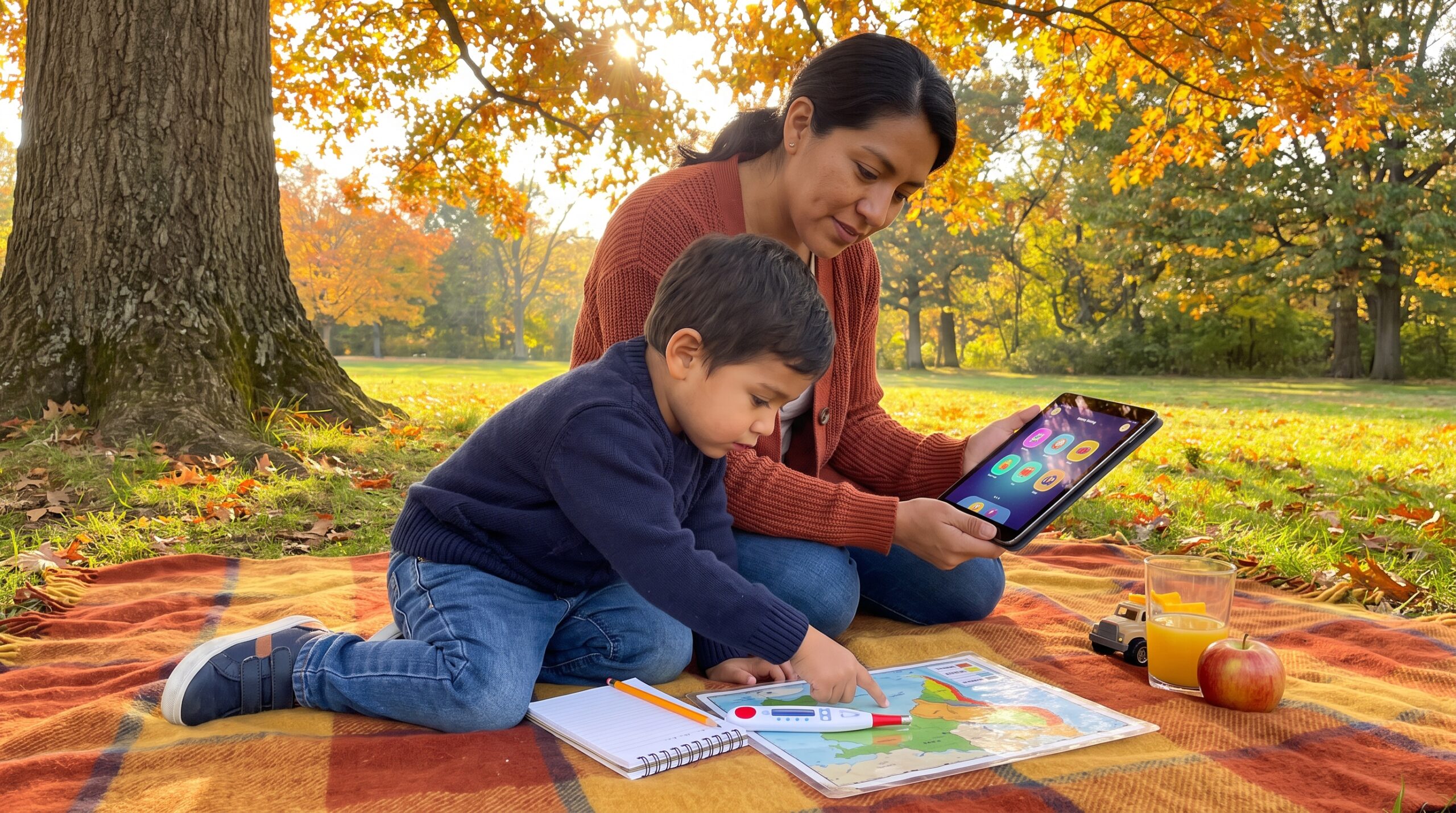
Regional climates for kids explains how long-term weather patterns shape a place. Parents and teachers can use clear examples to spark curiosity tonight.
What climate means
Climate shows long-term averages of temperature, rainfall, wind and seasons. Weather changes day to day. Scientists often use 30 year normals to describe a region. In 2023, the contiguous United States experienced its fifth-warmest year on record, indicating a trend of increasing temperatures that is crucial for understanding regional climate trends, according to NOAA National Centers for Environmental Information.
One popular system, the Köppen system, groups climate into broad types. These groups help us compare places, plants and animals.
Types of regional climates for kids
Here are friendly examples you can share. Each bullet is short and image-ready.
- Tropical — warm all year with lots of rain. Think rainforests and beaches.
- Dry or desert — very little rain. Think cacti and sand.
- Temperate or Mediterranean — mild winters, dry summers. Think southern Europe and olives.
- Continental — big seasonal swings. Think snowy winters and hot summers inland.
- Polar — very cold with short summers. Think tundra and ice wildlife.
- Monsoon — a strong rainy season followed by a dry season. Think parts of South Asia.
- Highland — cooler because of altitude. Think mountain slopes and changing plants with height.
Measurements that teach about climate
Simple numbers make climate concrete. Show monthly mean temperatures or total yearly rainfall. For example, in 2023, the U.S. experienced 28 weather and climate disasters, each incurring losses exceeding $1 billion, highlighting the economic impact of climate-related disasters, as noted by NOAA National Centers for Environmental Information.
- Mean monthly temperature
- Total precipitation
- Frost days and growing season length
- Humidity and extreme events
For example, 250 mm a year is very dry. Meanwhile, 1500 mm is very wet. Children love comparing those numbers.
Microclimates: local detective work
Microclimates are small, local differences inside a larger climate. A south facing garden warms sooner. Cities can be warmer than nearby fields. In December 2023, temperatures in the northeastern United States were 3.6 to 9 degrees Fahrenheit above normal, illustrating localized effects of climate change, particularly in major urban areas like New York City, according to Cornell University.
Kids can measure two spots with a thermometer. Then, they can watch where snow melts first. This kind of detective work feels like play and science at once.
Why regional climates matter
Regional climates shape food, homes, clothes, travel and play. Farmers and animals rely on seasonal patterns. Teaching this builds curiosity and care for the planet. For instance, during meteorological spring (March–May) 2025, the continental U.S. average temperature was 54.1 °F, which was 3.2 °F above average, indicating ongoing temperature trends, as reported by NOAA National Centers for Environmental Information.
Simple activities and a tiny experiment
Try easy family activities that connect to climate. They are quick and delightful.
- Keep a one month weather diary, then compare it to 30 year normals.
- Map what grows in your neighborhood.
- Find a microclimate in your garden or street and record differences.
- Try a tiny experiment tonight: measure two spots and make a one sentence prediction.
Also, ask your child: Is today what you expect from our climate? This small question builds great observation skills.
Humans can change regional climates over decades. You can mention earlier springs or shifting seasons gently. Keep the tone hopeful and action-minded, not alarmed.
Quick rules of thumb are helpful. For example, tropical months average 18 C or more. Polar warmest month sits below 10 C.
Read or listen to a story about Climate (Regional Climates) now: For 3-5 year olds, For 6-8 year olds, For 8-10 year olds, and For 10-12 year olds.
Learn more on Storypie for families who love curious questions. Visit Storypie for kid-friendly stories that match what you explore together.
Try this tonight with curiosity and joy. Small experiments make big learning moments.