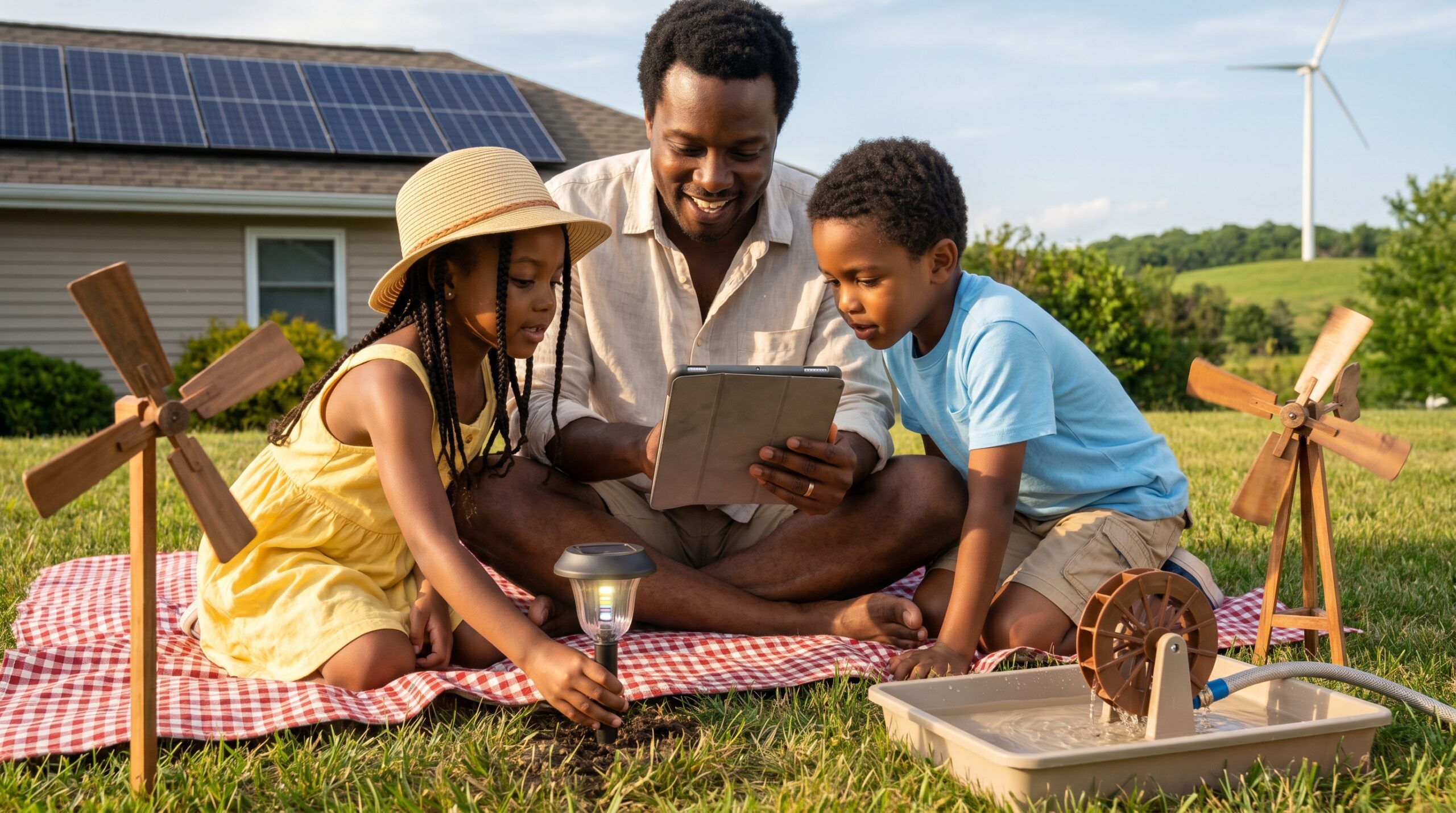
What is renewable energy for kids?
Renewable energy for kids means energy that naturally refills. For example, sunlight, wind, flowing water, Earth heat, and plants all renew themselves. In simple, tactile ways children can see how it works. Globally, renewable energy sources accounted for 32% of electricity generation by the end of 2023, an increase of 7% from the previous year, driven primarily by significant additions in solar and wind power capacity.
Quick, clear examples
A solar garden light charges in the sun. A toy windmill spins in a breeze. A small water wheel clicks as water runs over it. These little wonders make big ideas feel friendly and fun. In fact, by the end of 2024, the United States had an estimated total solar power capacity of 139 gigawatts (GW), enough to power over 61 million average American homes.
Five types to know
Parents and teachers can introduce the main types in short bursts. Each type has a simple idea and a hands-on example.
- Solar: Panels convert sunlight into electricity. Try a garden light and watch it charge.
- Wind: Blades catch moving air and turn a generator. Toy windmills show the idea.
- Hydropower: Flowing water spins turbines. Think of an old mill by a stream.
- Geothermal: Earth heat warms buildings or makes steam. Hot springs are an old example.
- Biomass: Plant material or captured gases turn into heat or fuel when managed well.
A little history, quick and curious
People used water wheels and windmills for centuries to grind grain and pump water. Then, in the late 1800s, the first hydroelectric plants began to make electricity. Over the 20th century, early wind turbines and the first silicon solar cells arrived. Today shiny panels join old river wheels in a long, lively story.
Why it matters
Renewable energy usually makes far less greenhouse gas while running. As a result, communities get cleaner air and a cooler future. In 2023, renewable energy sources accounted for approximately 25.7% of the total net electricity generation in the United States, while coal’s share declined to 15%. Costs for solar panels and batteries have fallen a lot. So more homes and schools can consider them.
Hands-on ideas and safety
Short activities help children feel the power of nature. Also, safety matters. Always supervise and follow kit instructions.
- Set a small solar garden light in the sun and time how long it glows.
- Build a tiny water wheel from a bottle and spoons. Supervise closely around moving parts and water.
- Sketch a wind turbine and label the blades, tower, and generator.
- Compare shady and sunny spots, and note differences. Then talk about why they matter.
Safety quick notes: never put electrical devices in water, keep small batteries out of reach, and follow manufacturer instructions for kits.
Challenges to know
Sun and wind can be intermittent. Therefore they need storage like batteries or backup systems. Also, some projects require space or careful siting to protect wildlife and landscapes. Finally, panels and batteries need recycling plans when they reach end of life.
Home and school uses
Rooftop solar, small turbines where allowed, and heat pumps work for many families and schools. Community solar programs expand access for those without ideal roofs. In addition, school projects can turn a concept into a routine learning moment. In 2024, the world added a record 585 GW of renewable power capacity, bringing total global renewable power capacity to about 4,448 GW; renewables accounted for over 90% of global power capacity additions that year.
Read or listen to a story about Renewable Energy now: Read or listen to a story about Renewable Energy now: For 3-5 year olds, For 6-8 year olds, For 8-10 year olds, and For 10-12 year olds.
Finish with hope
Small experiments feel like tiny victories and build confidence. Bright, warm, and quietly powerful, renewable energy teaches children that their choices matter. Design a learning moment like a little ritual, and it will return often.
Want more simple stories and activities? Visit Storypie for friendly, age-targeted tales and guides.