
Warm Welcome
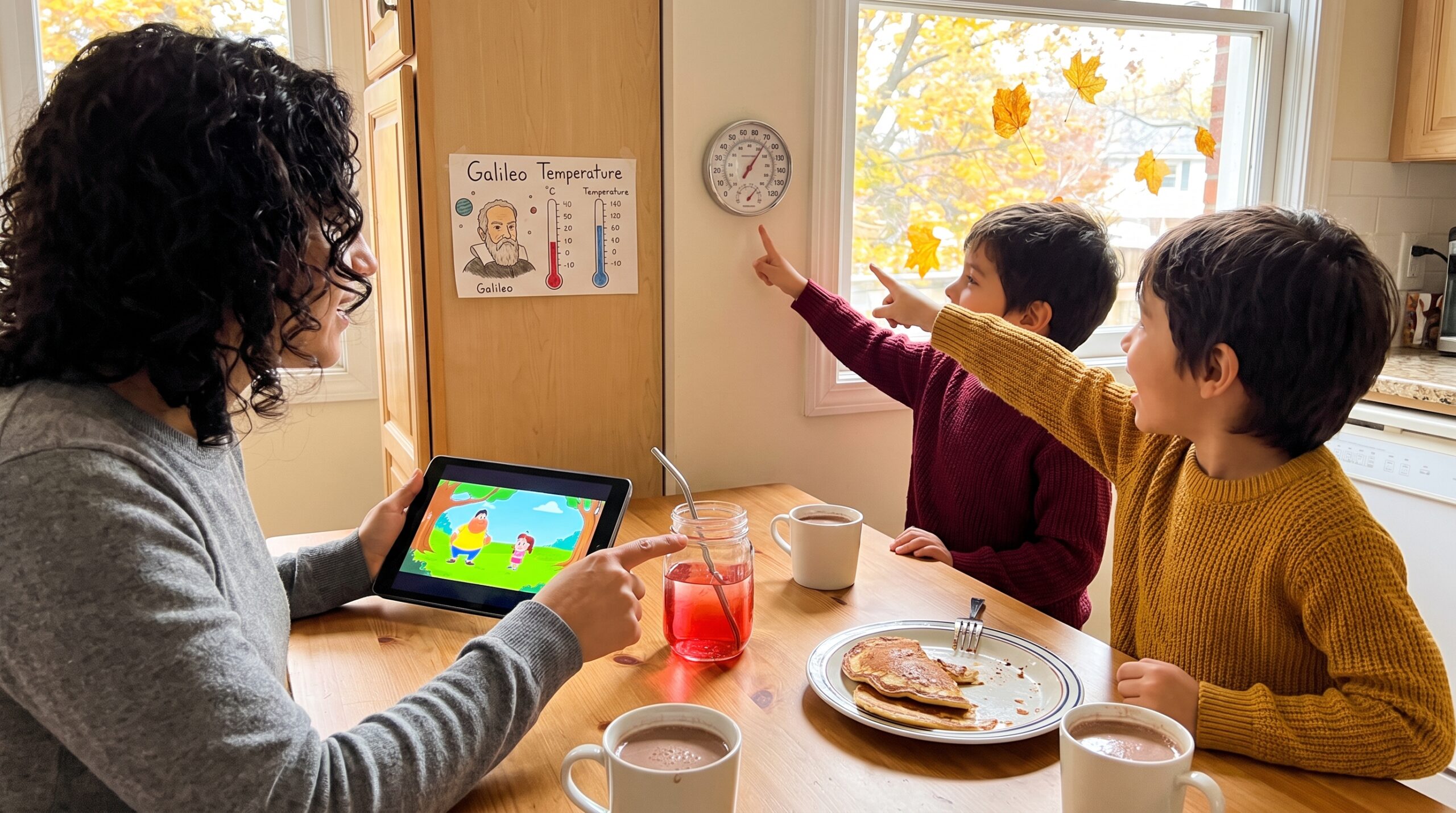
Temperature for kids is a helpful way to talk about hot and cold. First, this idea comes from measuring how particles move. Even so, the word feels friendly and concrete. It invites questions and tiny experiments that spark wonder. In recent years, however, the concept of temperature has taken on greater significance as global warming trends have become more evident. For instance, in 2023, Earth’s average surface temperature was 2.12°F (1.18°C) above the 20th-century average, making it the warmest year on record since 1850.
What Is Temperature?
Temperature tells us how hot or cold something feels. Scientifically, it links to the average motion of tiny particles. Faster motion means a higher temperature. However, heat is different. Heat is the energy that moves from warm places to cool ones. Understanding temperature is crucial in the context of climate science, as the ten warmest years on record have all occurred since 2014, with 2023 surpassing the previous record set in 2016 by 0.27°F (0.15°C).
The Zeroth Law Makes Measurement Possible
If A equals B and B equals C, then A equals C in temperature. Therefore we can compare readings and trust thermometers. That simple rule lets us build reliable tools to measure temperature for kids and adults alike.
How We Measure Temperature
People use three main scales: Celsius, Fahrenheit, and Kelvin. For example, water freezes at 0 Celsius and boils at 100 Celsius at sea level. Those points are 32 and 212 degrees on the Fahrenheit scale. Kelvin begins at absolute zero, which is minus 273.15 Celsius.
Use these quick conversions: F = C × 9/5 + 32 and C = (F − 32) × 5/9. Also, always choose the right tool for the job.
Common Tools
- Liquid-in-glass thermometers with colored alcohol.
- Digital probes using thermistors or thermocouples.
- Infrared guns that read surfaces quickly.
- Bimetallic strips in thermostats that bend with heat.
Note that different tools may show slightly different numbers. The sensor type and where it measures both matter.
Everyday Numbers and Safety
Share friendly anchors with kids to make temperature fun. For example:
- Freezing: 0°C or 32°F
- Boiling (sea level): 100°C or 212°F
- Normal body: about 37°C or 98.6°F
- Comfortable room: 20 to 22°C or 68 to 72°F
- Fridge: roughly 4°C or 40°F
- Freezer: about −18°C or 0°F
For safety, set hot water heaters near 48 to 49°C or 120°F to protect small children. Also, fever often starts around 38°C or 100.4°F when measured rectally. Finally, food safety zones keep hot food above 60°C and cold food below 5°C.
Quick, Cheerful Experiments
Short tests make tiny science moments magical. Try these gentle ideas:
- Compare indoor and outdoor readings with two thermometers.
- Drop ice into two cups, then add salt to one cup to watch melting change.
- Measure a warm mug with an infrared surface reading and then with a probe.
These activities teach about temperature for kids in simple, playful ways.
Read a Story and Explore More
Read or listen to a story about Temperature now: Read or listen to a story about Temperature now: For 3-5 year olds, For 6-8 year olds, For 8-10 year olds, and For 10-12 year olds.
Final Thought
Temperature is easy to notice and full of wonder. Kids often think cold means no energy, but particles always move a tiny bit. Mention absolute zero as the place where particles barely wiggle. In fact, in 2023, global sea surface temperatures reached a record high, surpassing the previous record set in 2016 by 0.23°F (0.13°C). With a few tidy experiments and a short chat, ordinary moments can become tiny science adventures.
To explore more stories and activities, visit Storypie and play a short tale at breakfast. It makes a perfect five minute science chat.









