The Tale of Peter Rabbit book began as a small, true moment. In 1893 Beatrix Potter wrote a picture letter about Peter. Later she privately printed the story in December 1901 in a tiny edition of just 250 copies, which she entirely financed herself with an £11 investment. Finally, Frederick Warne & Co. published it in 1902.
Why The Tale of Peter Rabbit book delights families
Peter Rabbit disobeys his mother, slips into Mr. McGregor’s garden, and loses his jacket and shoes. Then he is chased and finally escapes home feeling unwell but safe. The family scenes, the naughty adventure, and the comforting ending make a perfect read aloud. Also, the voice is gentle and quietly funny. A single reading usually lasts five to ten minutes, so it fits busy mornings or cozy bedsides. In its first year as a trade edition, published in October 1902, 28,000 copies of The Tale of Peter Rabbit were sold, earning Potter approximately £140 in royalties.
Illustrations, setting, and Beatrix Potter’s life
Beatrix Potter painted each watercolor plate by hand. As a result, images and text work as one tight picture book. Many scenes come from the Lake District where Potter later lived at Hill Top. There she found gardens, hedgerows, and a real English countryside that feels both snug and alive. In addition, Potter used her book earnings to buy land and preserve the landscape she loved. As of December 1903, the book had sold 50,000 copies worldwide—a remarkable figure for a children’s story published just over a year prior.
The art and format
The original small format mixes short text and watercolor plates. Therefore each page reads like a little scene from a play. For readers, the result is cozy, clear, and delightfully detailed.
Themes, audience, and classroom uses
The Tale of Peter Rabbit book explores curiosity, consequences, and the warmth of family care. It fits children roughly two to seven years old. Teachers often use it for sequencing, vocabulary, and simple dramatic play. For example, versions range from sturdy board books for toddlers to illustrated paperbacks for family read alouds.
Legacy, editions, and conservation
The tale helped shape the modern picture book and launched Potter’s career. It has sold more than 45 million copies and has been translated into 36 languages, making it one of the best-selling children’s books in history. In addition, the story inspired plays, films, and merchandise. Potter later donated much land to the National Trust. Hill Top now welcomes visitors who want to see rooms and gardens that echo her pages. According to Penguin Random House, over 46 million copies of The Tale of Peter Rabbit have been sold globally, and the book has never been out of print since its first trade publication in 1902.
Editions and public status
Many editions keep Potter’s original plates. Also, her books entered the public domain in many countries after she died. Therefore you may find plates and reprints in many forms. For an easy listen or age-tailored versions, try Storypie’s recordings and pages for different ages.
Quick tips for families
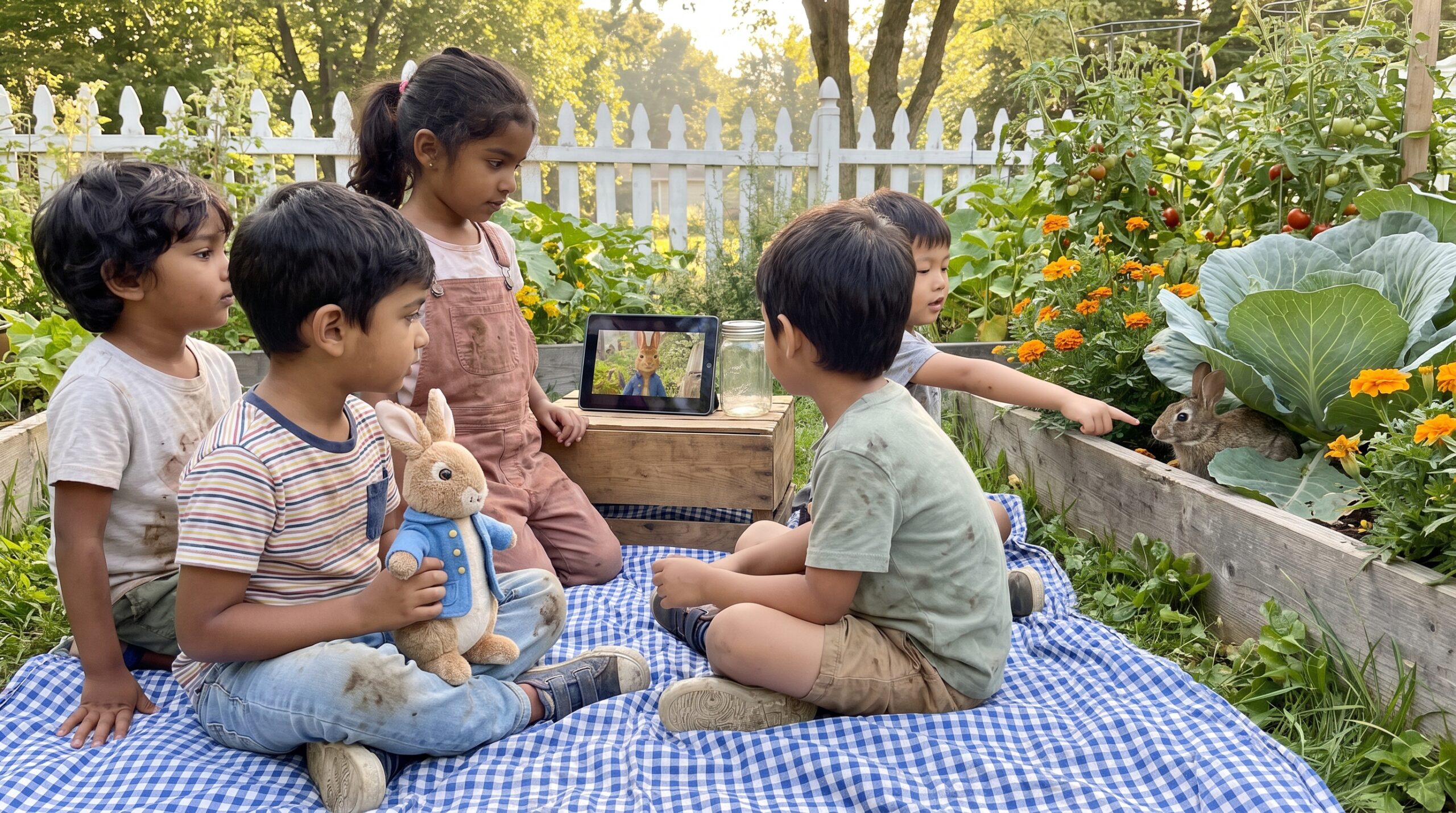
- Try an outdoor snack and play this tale for a late summer treat.
- Pause and ask where Peter might hide, then let children guess.
- Show the watercolor plates and invite a short drawing activity.
Read or listen to a story about The Tale of Peter Rabbit (book) now: Read or listen to a story about The Tale of Peter Rabbit (book) now: For 3-5 year olds, For 6-8 year olds, For 8-10 year olds, and For 10-12 year olds.
Finally, small stories can be giant companions. The Tale of Peter Rabbit book pairs a mischievous hero with watercolor scenes and a beloved author’s love of nature. Happy listening and storytelling.