
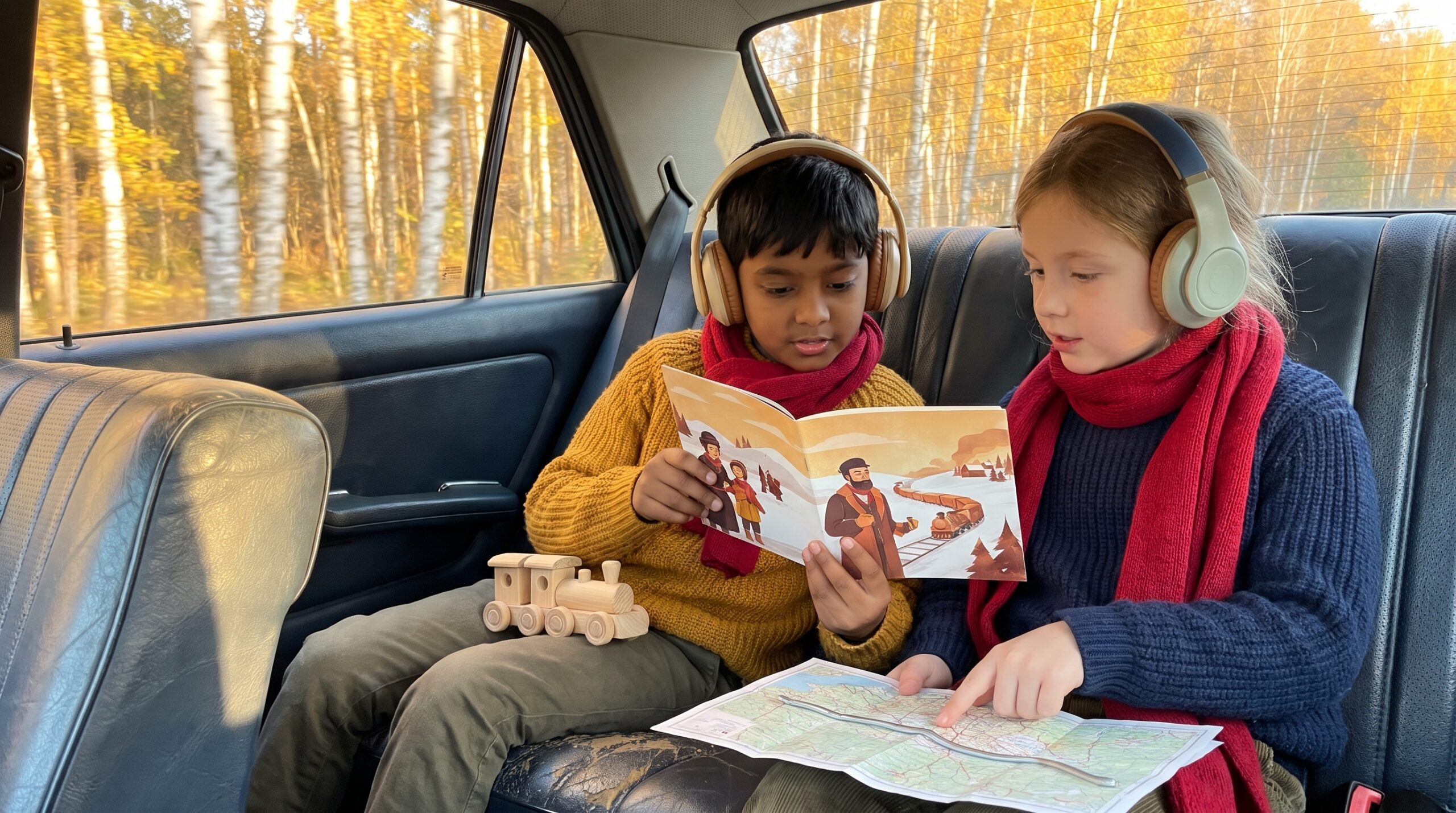
The Trans-Siberian Railway for families feels like a long, living story. It links European Russia to the Pacific. Families can imagine tsars, builders, and steam engines stretching across frozen land.
Big Picture and Brief History
The Trans-Siberian Railway began as an imperial idea in the 1890s. Tsar Alexander III wanted to bind and develop eastern lands. Sergei Witte and other leaders guided the money and policy. Construction of the Trans-Siberian Railway began on March 9, 1891, and it officially opened on June 21, 1904.
Construction took decades and enormous human effort. Workers were regular labourers, soldiers, exiles and prisoners. They battled permafrost, swollen rivers, endless taiga and brutal winters. Today the line spans approximately 9,289 kilometers (5,772 miles), making it the longest railway line in the world and still stitches a continent together.
Route Highlights and Hero Stops
The classic Moscow to Vladivostok route is roughly 9,289 km. It crosses many time zones. Major stops include Moscow, Yekaterinburg, Omsk, Novosibirsk and Krasnoyarsk.
Also important are Irkutsk by Lake Baikal, Ulan-Ude, Chita, Khabarovsk and Vladivostok. Lake Baikal feels like a hero stop. The Circum-Baikal section hugs cliffs with tunnels and viaducts. It often feels cinematic.
Branch Lines and Later Routes
In addition, branches like the Trans-Mongolian and Trans-Manchurian routes link to Beijing. The Baikal Amur Mainline sits farther north as a later Soviet counterpart. Each route adds its own kind of wonder.
What the Line Looks Like Today
Today, the Trans-Siberian Railway for families moves freight, people and ideas. It reshaped Siberia by speeding settlement, trade and culture. The railway has a maximum freight transport capacity of approximately 100 million tons of gross freight weight per year, with around 80 trains operating daily. You will still see diesel in remote stretches and electric power near cities. In fact, the railway is fully electrified, operating under both 3 kV DC and 25 kV AC 50 Hz overhead power systems.
Named sleepers such as the Rossiya usually take about six days end to end. Russian tracks use broad gauge. Seasons change the story. Summer brings green forests and mosquitoes. Winter brings glittering cold and quiet landscapes.
Practical Notes for Family Trips
Services range from basic to surprisingly comfortable sleepers. Check visas, seasonal schedules and local rules. For family trips, plan short legs between cities like Irkutsk and Ulan-Ude.
Also pack layers, snacks and patience. The Circum-Baikal is jaw-dropping but rugged. Bring a tiny ritual to connect children to the journey, such as a short recorded story.
Quick Ritual to Spark Curiosity
- Pack a napkin and pen.
- Pick three station names and make one the hero stop.
- Draw a quick map and ask which climate and creature lives there.
Try this short game on a 20 to 30 minute car ride. It makes maps come alive and curiosity grow.
Packing, Planning and Practical Tips
Plan short travel legs for younger children. Also check which sections are electrified. Remote stretches may need diesel locomotives.
Bring snacks, layers and small comforts. Expect simple dining cars in many trains. Above all, pack wonder and patience.
Read or listen to a story about Trans-Siberian Railway now: For 3-5 year olds, For 6-8 year olds, For 8-10 year olds, and For 10-12 year olds.
Hear the route on Storypie or open the app to play a short story on your next short ride. Visit Storypie for gentle stories and listening ideas for kids.
Families who love long trains and grand landscapes will find the Trans-Siberian Railway for families utterly transportive. It is history, geography and imagination on rails.