
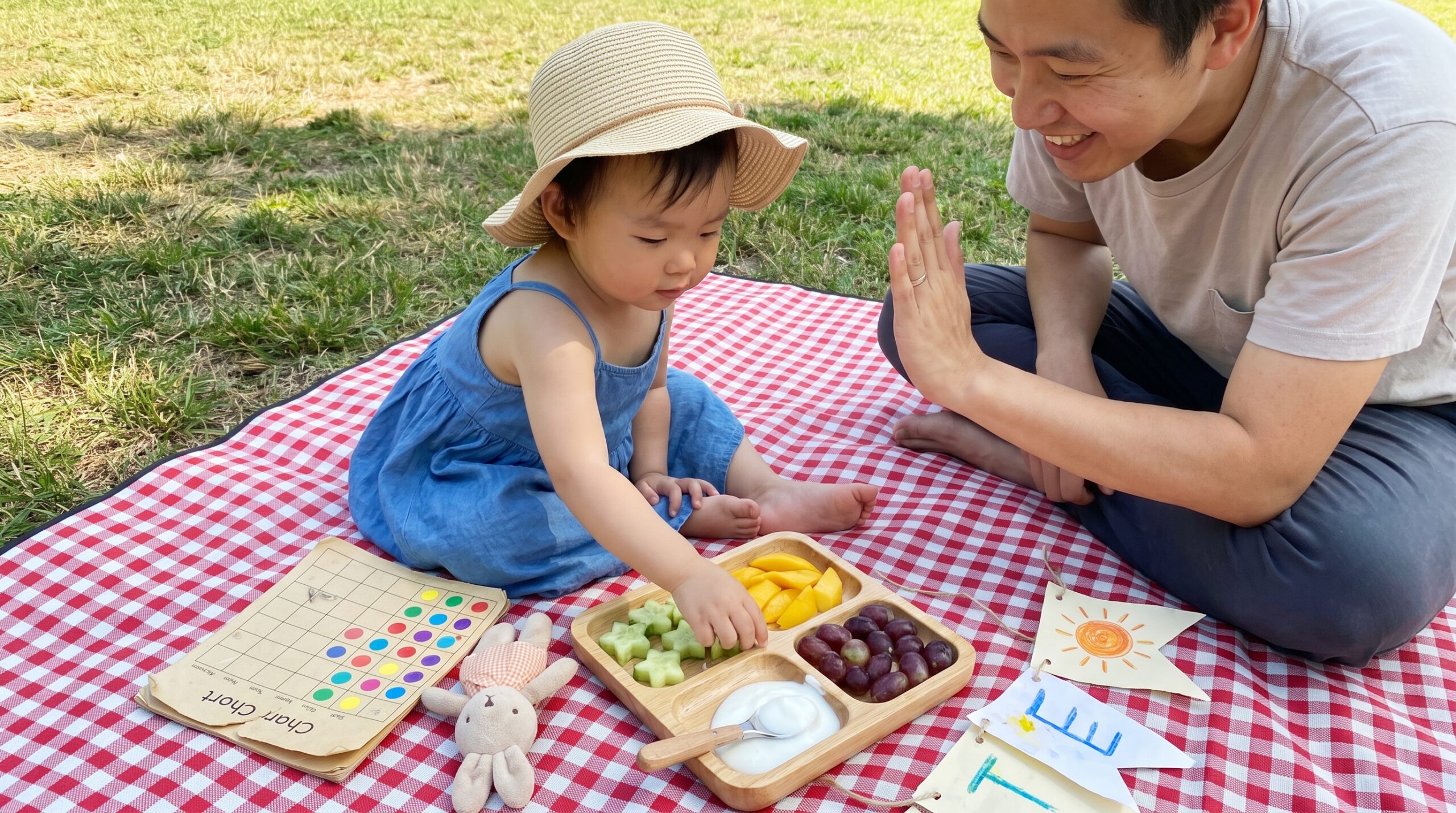
Trying new foods with toddlers can feel huge. At the table, small bites often bring big feelings. Yet each tiny taste can become a joyful little victory. In fact, in a 2023 survey, 55% of U.S. consumers stated they try new foods at restaurants because they are looking for something different, which highlights a growing trend of seeking new culinary experiences.
Trying New Foods with Toddlers: Why small bites feel huge
Reluctance at meals is normal. Between about ages two and six, many children show food neophobia. In other words, they may be wary of new foods. This caution is healthy and common. Still, a single pea sized taste can be a yippee moment. Celebrate it with a smile.
Quick background
Taste begins early. For example, flavors travel through amniotic fluid and breast milk. Thus variety during pregnancy and breastfeeding can build early familiarity. Children naturally prefer sweet tastes and may be wary of bitter ones. Therefore vegetables often get pushback. Also, acceptance usually takes many small tries. Experts note children often need 8 to 15 calm exposures before liking a new food.
Interestingly, a 2023 survey found that 53% of Americans consider themselves adventurous eaters, with many adding different seasonings or using different base ingredients in their meals. This adventurous spirit can be a wonderful attitude to foster in our toddlers as well!
A simple sensory routine
Keep steps playful and pressure free. First, tell a tiny food story. For example, say, “Once upon a plate, be a delicious detective.” Then follow these gentle steps.
- Present calmly. Choose steady, evidence friendly steps and avoid pressure.
- Sniff and touch. Let them look, smell, and gently touch the food to reduce anxiety.
- Lick or tiny bite. Offer a pea sized taste. There is no need to finish a whole piece.
- Celebrate attempts. Smile, high five, or sticker it. Keep praise light and fun.
Why repetition and modeling matter
Research shows many children need repeated, neutral, or positive exposures. Instead of pressure, model the food yourself. When kids see family members and peers enjoy something, curiosity follows. Also peers can spark brave nibbles and big smiles. In fact, a recent survey indicated that 47% of respondents are tired of cooking the same foods at home, suggesting that variety can inspire enthusiasm in mealtime habits.
Texture, temperature, and playful presentation
Texture and temperature shape acceptance. For example, a steamed carrot can win over a crunchy raw piece. Offer one or two new items alongside familiar favorites. Let children help with safe tasks like washing berries or arranging a tiny taste board. Playful language makes trying feel like a summer-afternoon adventure.
Safety, allergies, and when to seek help
Manage choking risk. Cut grapes, cherry tomatoes, and raw carrots into small pieces for toddlers. Introduce common allergens according to pediatric guidance. Often that means introducing some foods around four to six months, but always check with your child’s pediatrician if there is family allergy history.
Most picky phases pass. However seek professional help if your child refuses nearly all foods, loses weight, or shows extreme distress around textures. A pediatrician or feeding specialist can help.
Practical tips to try today
- Offer choices, not pressure. Two small options gives control and calm.
- Use nonfood rewards sparingly. Stickers or extra storytime work well.
- Keep meals screen free and calm. Family meals build strong modeling.
- Celebrate tiny triumphs. Every sniff, lick, and nibble matters.
Storypie helps your little food explorer make mealtime playful. Tip: let your child sniff, touch, take a tiny bite, and celebrate the smallest wins. Yippee for tiny triumphs and delicious detective moments. Remember, as shown by a 2025 Whole Grain Consumer Insights Survey, 46% of respondents mentioned that trying new foods influences their purchasing decisions, so let’s embrace that spirit at home!
Read or listen to a story about Trying New Foods now: For 3-5 year olds, For 6-8 year olds, For 8-10 year olds, and For 10-12 year olds.
For more playful prompts and short stories, visit Storypie. Aim for curiosity, not perfection. Tiny triumphs add up into confident eaters and many future delicious discoveries.